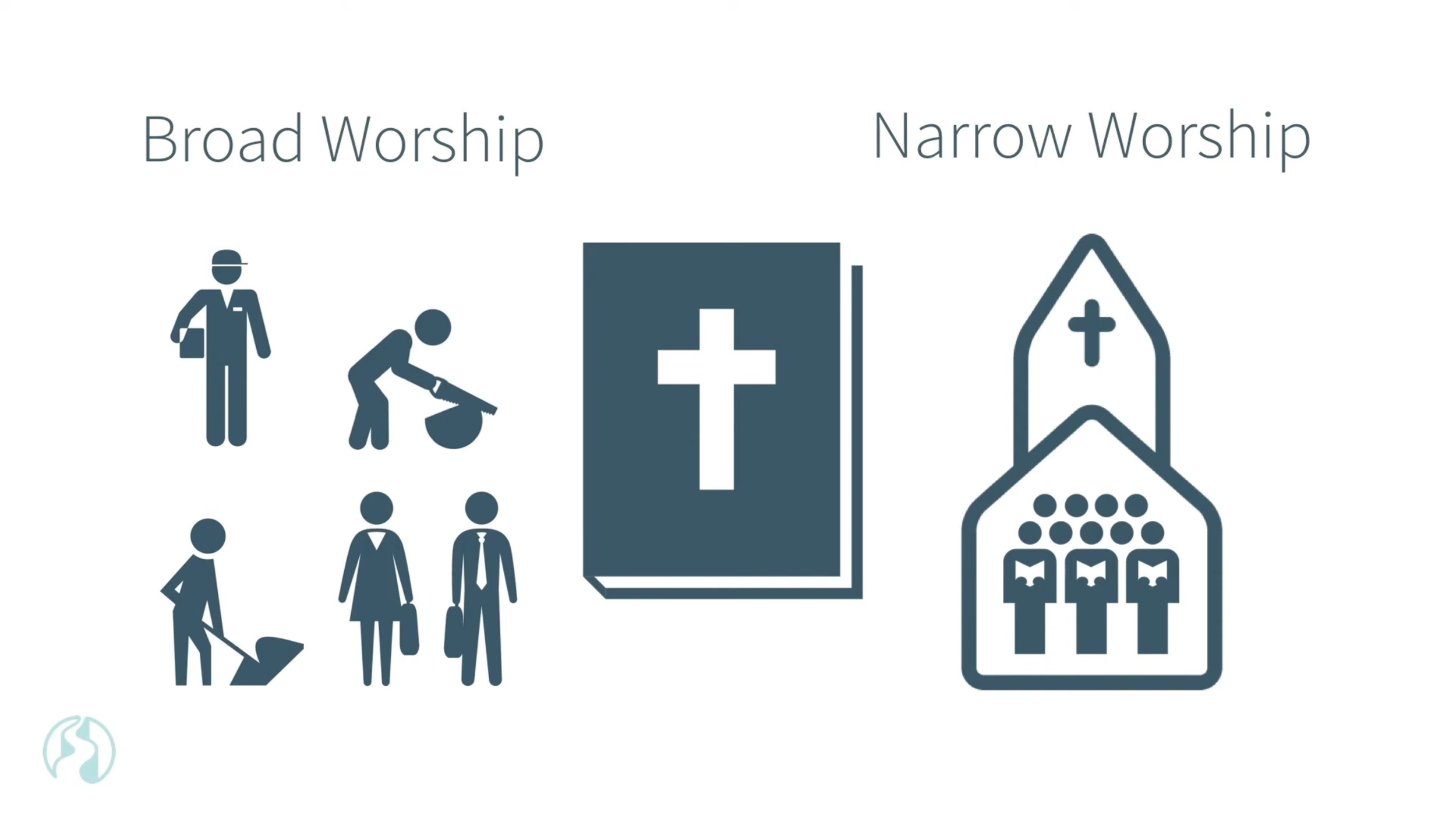
Broad and Narrow Worship
God Seeks True Worshipers
There are a few places in Scripture where we see God seeking something. However, Jesus teaches that the Father is seeking true worshipers:
"But the hour is coming, and is now here, when the true worshipers will worship the Father in spirit and truth, for the Father is seeking such people to worship Him."
Likewise, the Apostle Peter reveals the importance of worship by presenting it as the purpose for which God's people exist:
"But you are a chosen race, a royal priesthood, a holy nation, a people for his possession, that you may proclaim the excellencies of him who called you out of darkness into his marvelous light."
The Meaning of Worship
Hebrew and Greek terms in Scripture used for worship referred to giving honor and service to a superior — rendering to them what is due. Overall, worship means to revere, honor, or describe the worth of another person or object. The Old English definition of Christian worship as "worth-ship" describes it as an act of affirming God's worth — a declaration that God is worthy of our honor and service.
Psalm 96 instructs us: "Ascribe to the Lord the glory due his name." The book of Revelation gives us a majestic picture of worship with myriads around God's throne proclaiming: "Worthy is the Lamb who was slain to receive power and wealth and wisdom and might and honor and glory and blessing."
Worship as Both Praise and Service
Furthermore, the biblical terms for worship give us a picture of more than praising God with our prayers and singing in public worship gatherings. The Old Testament uses the Hebrew word abad for both worship and service. This means we can worship God through our service, and we can serve God through our worship.
Also in the New Testament, common words for worship are the Greek terms proskuneo — the act of giving honor — and latreuo — the act of serving — and the similar word leitourgia, meaning the act of ministering.
In Romans 12, when the Apostle Paul exhorts us to present our bodies as a living sacrifice, holy and acceptable to God, he calls this act our spiritual worship, using the Greek word latreuo.
How People Think About Worship
But for some people, the word worship only suggests images of church buildings where people gather to sing, pray, hear Scripture readings and sermons, and observe sacraments and ordinances. For others, worship is more connected to powerful personal experiences, including extended times of prayer and praise. Still others may think of worship as private devotions and opportunities for service.
Defining Worship Biblically
So how should we define worship? Here are a few definitions that can help us develop a biblical understanding:
John Frame writes: "Worship is acknowledging the greatness of our covenant Lord."
Robert Rayburn writes: "Worship is the activity of the new life of a believer in which, recognizing the fullness of the Godhead as it is revealed in the person of Jesus Christ and His mighty redemptive acts, he seeks by the power of the Holy Spirit to render to the Living God the glory, honor, and submission which are his due."
The Broad Sense of Worship
The Scriptures teach that there is a broad sense of worship that includes all of life. This is what Paul refers to in Romans 12:1 as our spiritual worship. In the next verse, Romans 12:2, he describes spiritual worship when he writes: "Do not be conformed to this world, but be transformed by the renewing of your mind."
Therefore, our spiritual worship includes leaving behind worldly patterns of life and the renewal of our mind. In addition, in the rest of Romans 12, Paul tells us that our spiritual worship includes humbling ourselves and loving others by using our gifts to serve them.
Therefore, this broad sense of worship involves every part of who we are and what we do.
We see this broad sense of worship also described by the writer of the book of Hebrews:
"Through him then let us continually offer up a sacrifice of praise to God, that is, the fruit of lips that acknowledge his name. And do not neglect to do good and to share what you have, for such sacrifices are pleasing to God."
This command is for us to continually offer up a sacrifice of praise to God with our lives, and these sacrifices include doing good and sharing what we have with others.
Worship Expressed Through Giving and Ministry
To illustrate: when the Apostle Paul received needed money from the church at Philippi, he described their giving as an offering:
"I have received full payment and more. I am well supplied, having received from Epaphroditus the gifts you sent, a fragrant offering, a sacrifice acceptable and pleasing to God."
Similarly, in Romans 15:16, Paul refers to the Gentile converts as his offering to God, and he referred to his ministry in approaching death as a drink offering to God.
Consequently, the Scriptures present worship as a comprehensive way to live that involves every aspect of life. In its fullest sense, worship concerns not only our relationship to God, but also our relationships with ourselves, others, and creation.
Coram Deo: Living Before the Face of God
In order to describe this understanding of worship that involves the redirection of all of life, theologians use the Latin phrase coram Deo. This phrase refers to something that takes place coram — before the face of — Deo — God.
Os Guinness writes: "To live coram Deo is to live one's life in the presence of God, under the authority of God, and to the glory of God."
The Narrow Sense of Worship
Now this broader sense of worship comes into focus in a narrow sense when we set aside special times dedicated to worship — in private prayer, with our family, and corporately with members of our church community.
Thus, the Apostle Paul refers to believers as those who come together as a church on the first day of every week. Likewise, the writer of Hebrews admonishes followers of Jesus, saying:
"...stirring one another up, so they are not neglecting to meet together, as is the habit of some, but encouraging one another, and all the more as you see the day drawing near."
And in the book of Acts, we see a beautiful picture of first-century believers' devotion to prayer and worship:
"And they devoted themselves to the Apostles' teaching and the fellowship and to the breaking of bread and the prayers. And day by day, attending the temple together and breaking bread in their homes, they received their food with glad and generous hearts, praising God and having favor with all the people."
Broad and Narrow Worship Work Together
Therefore, a biblical approach to the worship of God includes both the broad and narrow sense of worship. But these approaches are not separate. Your broad sense of worshipping God in all of life fuels and enriches your narrow sense of worshipping God in dedicated times of private and public worship — and vice versa.
The Father is seeking your worship in both the broad and narrow sense.