
The Father's Magnificent Acts in Creation
The Mission of God: Lesson Two
By Steven L. Childers
Listen to the Audio
Want to go deeper? Take the Learning Path.
What is a Learning Path?
A Learning Path is a guided sequence of ten practical steps designed to move you beyond simply understanding biblical truth toward applying it to your mind, heart, and life with others. They include the full lecture transcript with academic footnotes, reflection and discussion questions, a prayer guide, an interactive quiz with answers, hymns for worship, recommended books, and more to help you go deeper.
You can use the Learning Path on your own for personal study—or, even better, invite a friend, spouse, mentor, or small group to walk through the ten steps with you. Better still, consider leading the group yourself. You don't need to be a trained teacher; you simply need to be one step ahead, guiding others through what you've already begun to learn.
Why learn with others—and even more, why lead? Because truth deepens when shared, and nothing teaches us like teaching others. As Seneca said, "While we teach, we learn."
Read the Article (Presentation Notes)
Introduction: What Was God Doing Before There Was Anyone to Save?
Many Christians think God’s mission begins with Abraham, Israel, Jesus, or especially the Great Commission. But God’s mission did not begin with a rescue. It began before humanity and the world needed to be rescued.
In Lesson One, we saw the Bible’s grand story unfold through the Father’s magnificent acts in Creation, humanity’s rebellion in the Fall, the Son’s magnificent acts in Redemption, and the Spirit’s magnificent acts in Restoration.[1]
Now we return to Act One and ask a foundational question: What was God’s original mission for humanity and the world before anything went wrong?
Before there was sin, there was mission. Before humanity needed salvation, humanity already had a calling. And before Jesus gave the Great Commission, the Father had already given humanity a creation commission.
Act One reveals why humanity and the world were created and what human flourishing was meant to look like. It helps us understand why our lives, relationships, and work matter to God, what salvation ultimately restores, and how our lives fit into his mission today.
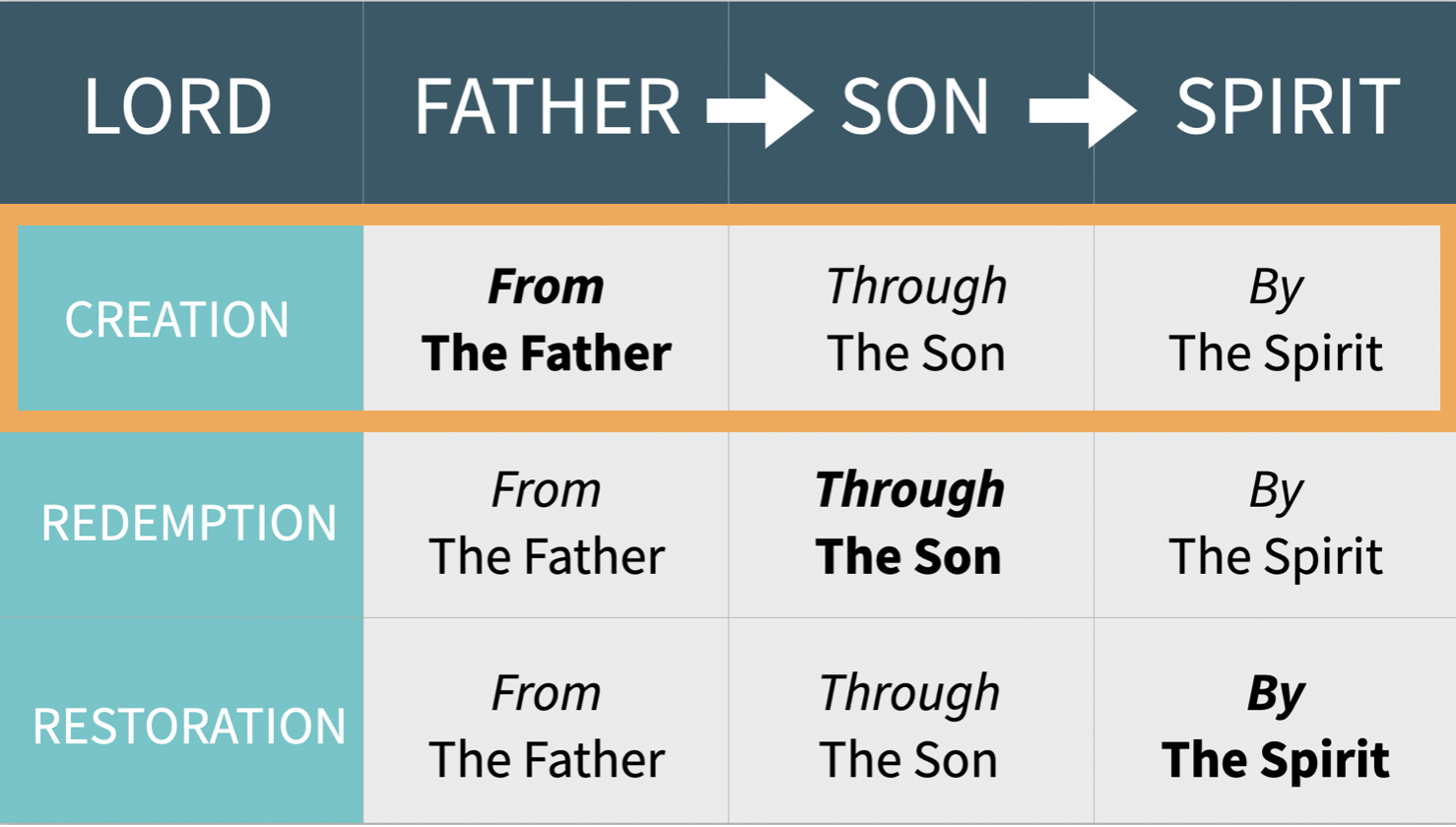
Here's a theological sidebar reminder: Although Scripture gives the Father special prominence as Creator, all three persons of the Trinity always work inseparably as the one true God. The Father creates all things through his Son and by his Spirit.[2]
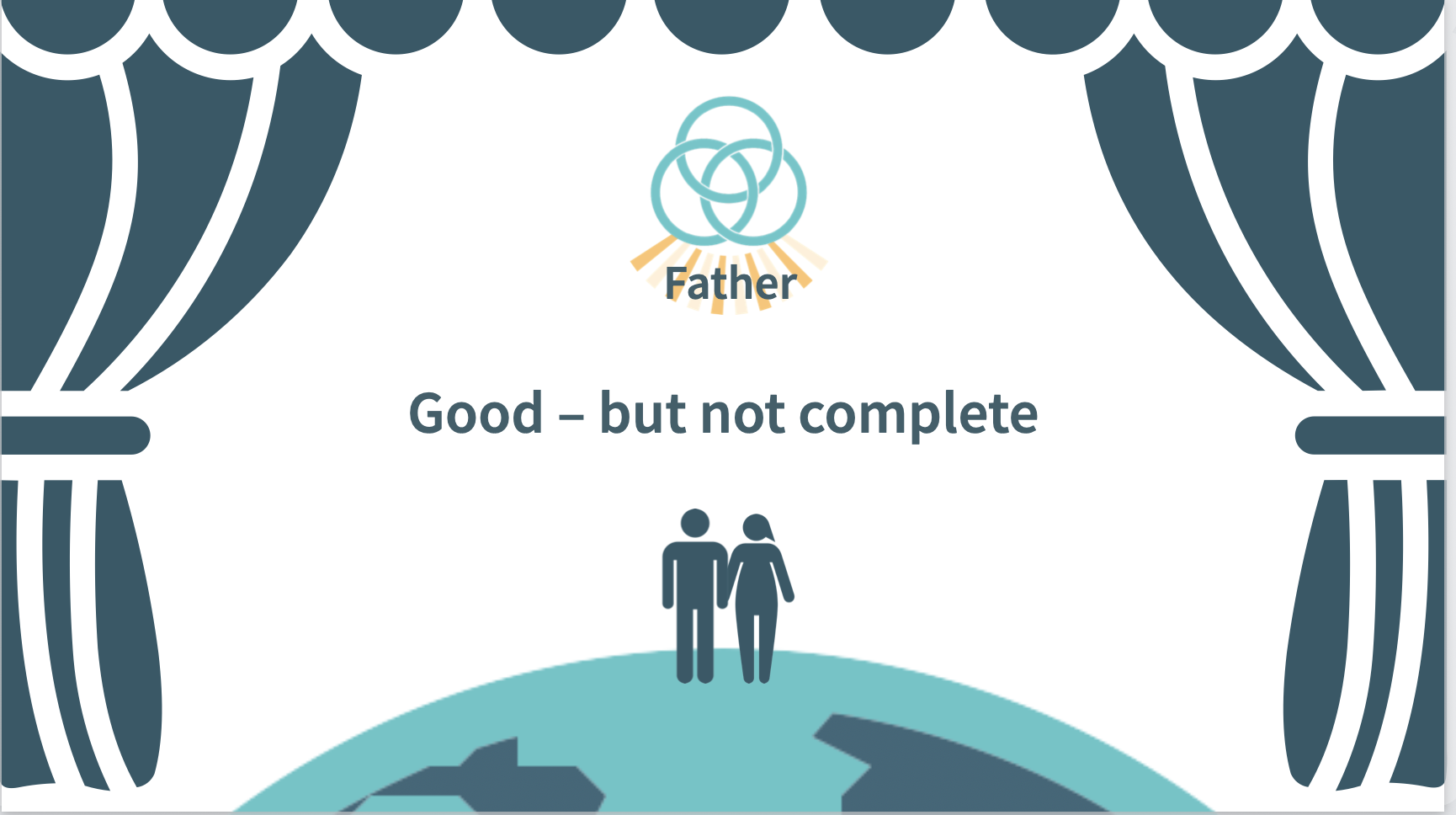
I. The Father Creates Humanity: Good but Not Complete
Genesis 1:26–28 closely connects humanity’s identity and calling: “Let us make man in our image, after our likeness. And let them multiply and have dominion....”
God created human beings in his image to represent him within his creation. In the ancient world, kings placed images of themselves throughout their kingdoms as signs of their authority. In a far greater way, God created living images of himself to reflect his character and represent his gracious rule throughout his world. We are not the King; we represent the King. Psalm 8 therefore describes humanity as crowned “with glory and honor” and given dominion over the works of God’s hands.[3]
God also created humanity for a loving relationship with him, marked by two extraordinary gifts: a perfect standing before God and a pure heart from God.
Their perfect standing meant Adam and Eve lived in complete innocence and acceptance before God. They were without guilt or shame and could enjoy his holy presence without fear. Their pure hearts meant their loves were rightly ordered toward him. They loved God above all else, delighted in him, trusted him, and were free to love one another without the corruption.
But God did not create humanity merely for a private relationship with himself. Their relationship with God was designed to overflow into flourishing relationships with themselves, one another, and the world. This is the biblical picture of shalom—peace, wholeness, harmony, and flourishing. It was, in a very real sense, heaven on earth.[4]
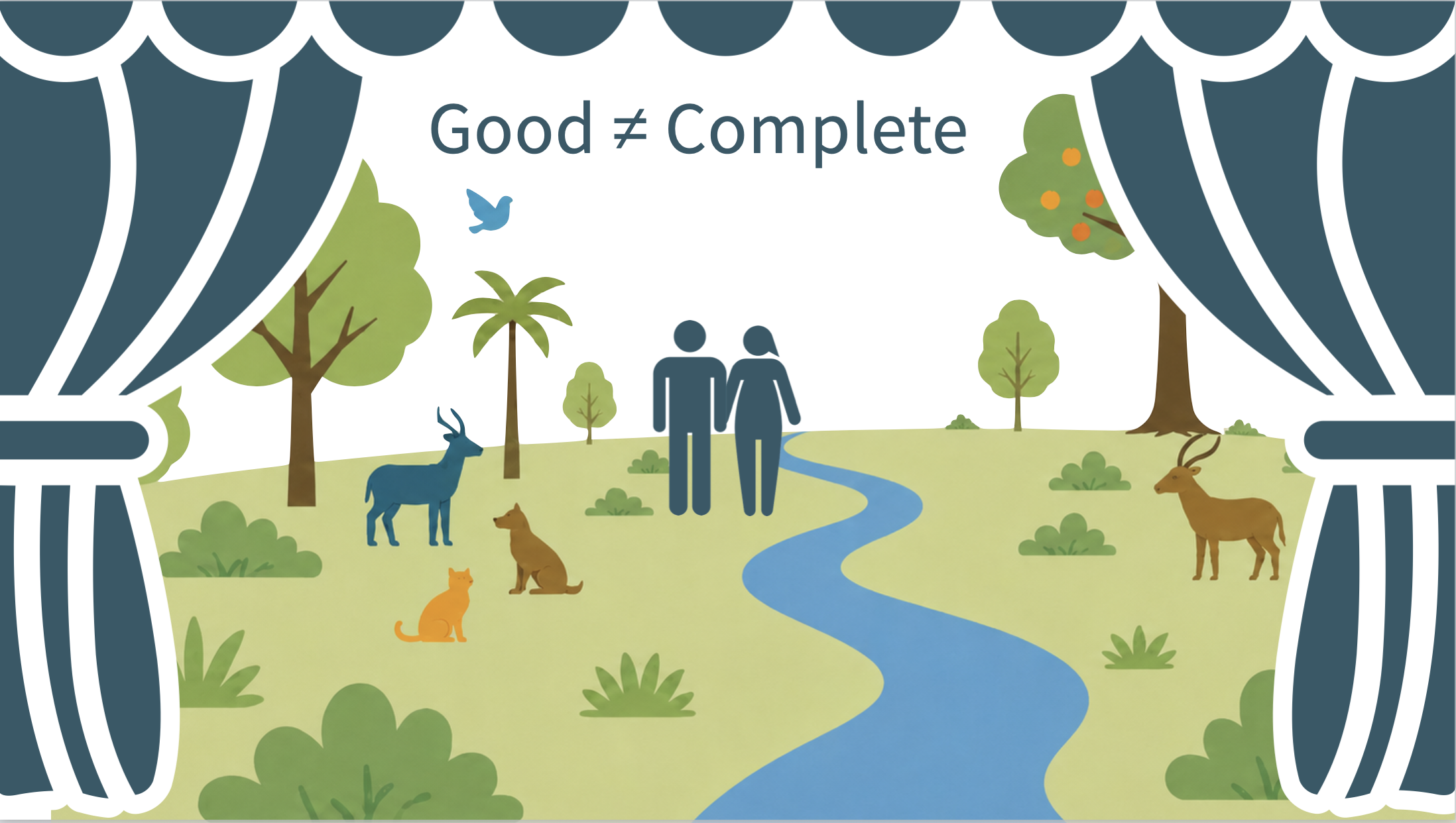
Yet a very important distinction is necessary: Good did not mean complete. Adam and Eve were genuinely righteous, but they had not yet reached the mature humanity God intended.
Augustine described Adam’s original condition as posse non peccare—”able not to sin.” Adam was genuinely righteous, but his obedience had not yet been tested and confirmed.[5] Herman Bavinck similarly writes that Adam stood “not at the end but at the beginning of the road."[6]
Humanity therefore had God-given potential to mature in wisdom, love, holiness, obedience, and faithful service. Their incompleteness was not a defect but part of God’s design—and the same was true of the world entrusted to them.
II. The Father Creates the World: Good but Not Complete
Genesis repeatedly declares God’s creation good, concluding, “God saw everything that he had made, and behold, it was very good” (Gen. 1:31).
The Bible therefore begins with creation as God’s good gift. The physical world, human bodies, work, food, marriage, beauty, creativity, and culture are not evils from which spiritual people should escape, but gifts to be received, cultivated, and enjoyed under God’s gracious rule.
This was the third dimension of humanity’s original blessing. God gave Adam and Eve not only a perfect standing and a pure heart, but also a perfect world in which to flourish and carry out his mission.
But again, perfect did not mean complete.
Creation was perfectly good, but not fully developed. It contained enormous, untapped potential that human beings were called to cultivate.
Sounds could become music; trees could become homes, books, or instruments; raw materials could become art, technology, institutions, and culture.[7]
God creates. Human beings cultivate what God creates. Through that cultivation, God's world (sometimes called culture) develops.
This progression can be summarized simply: Creation → Cultivation → Culture
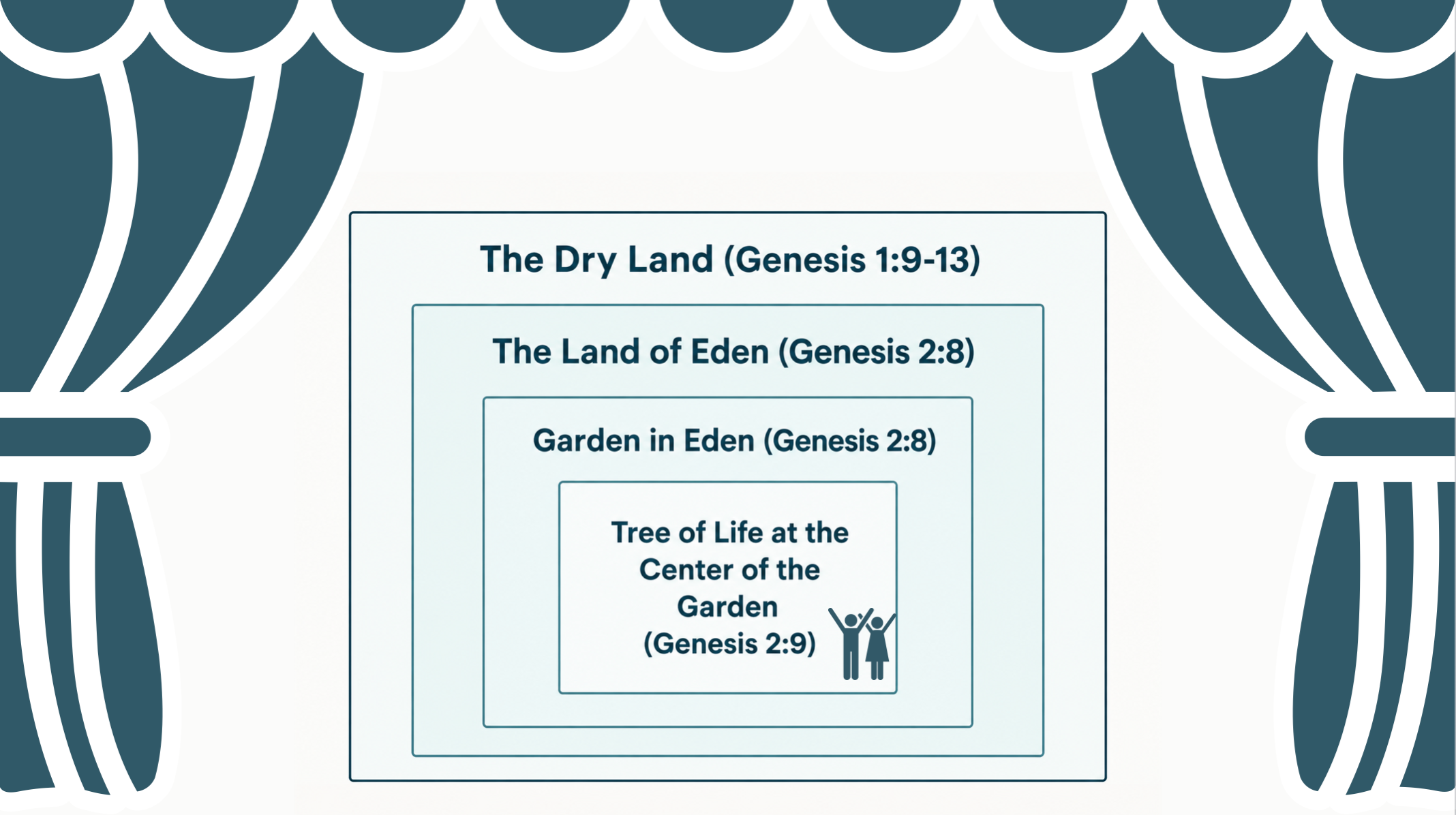
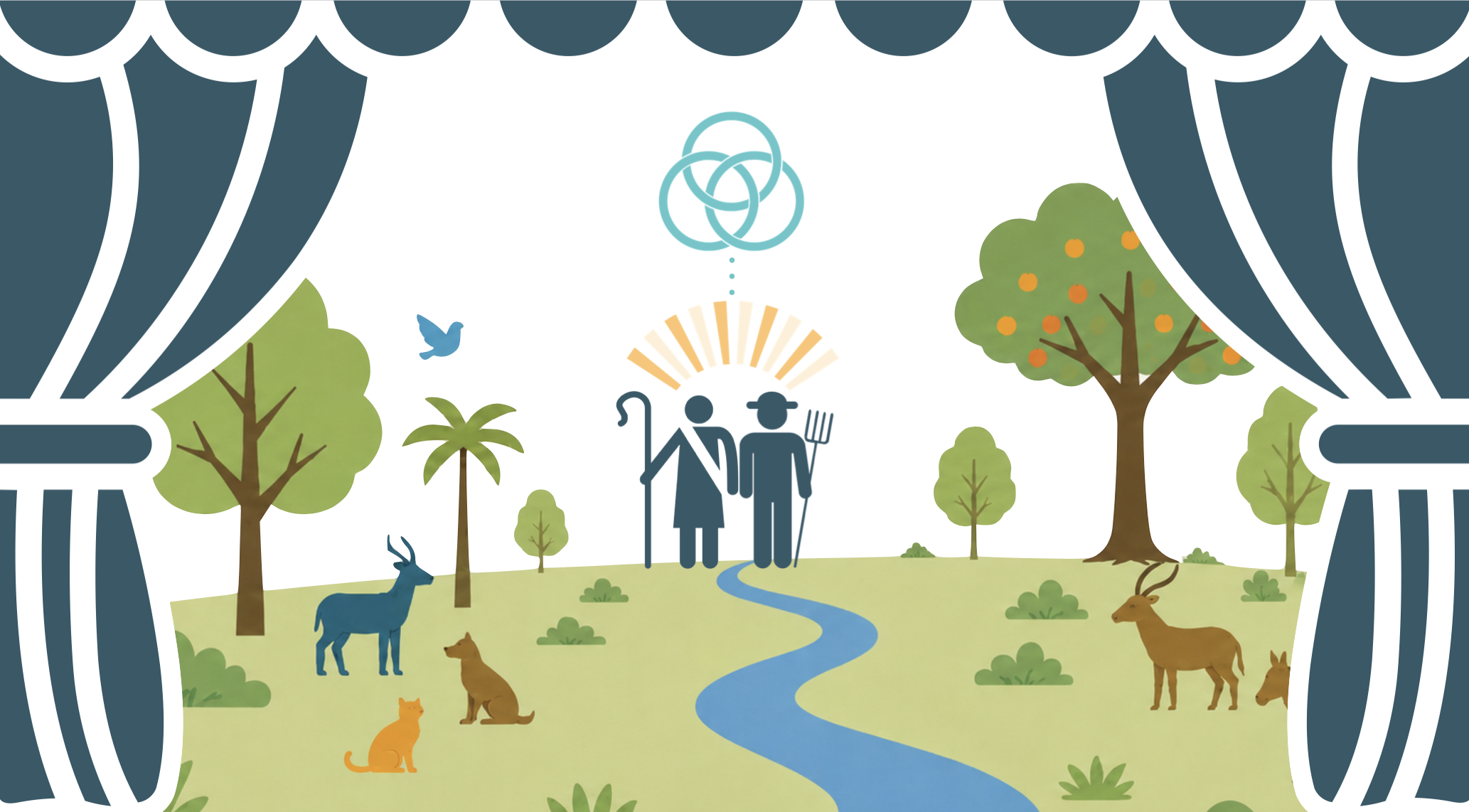
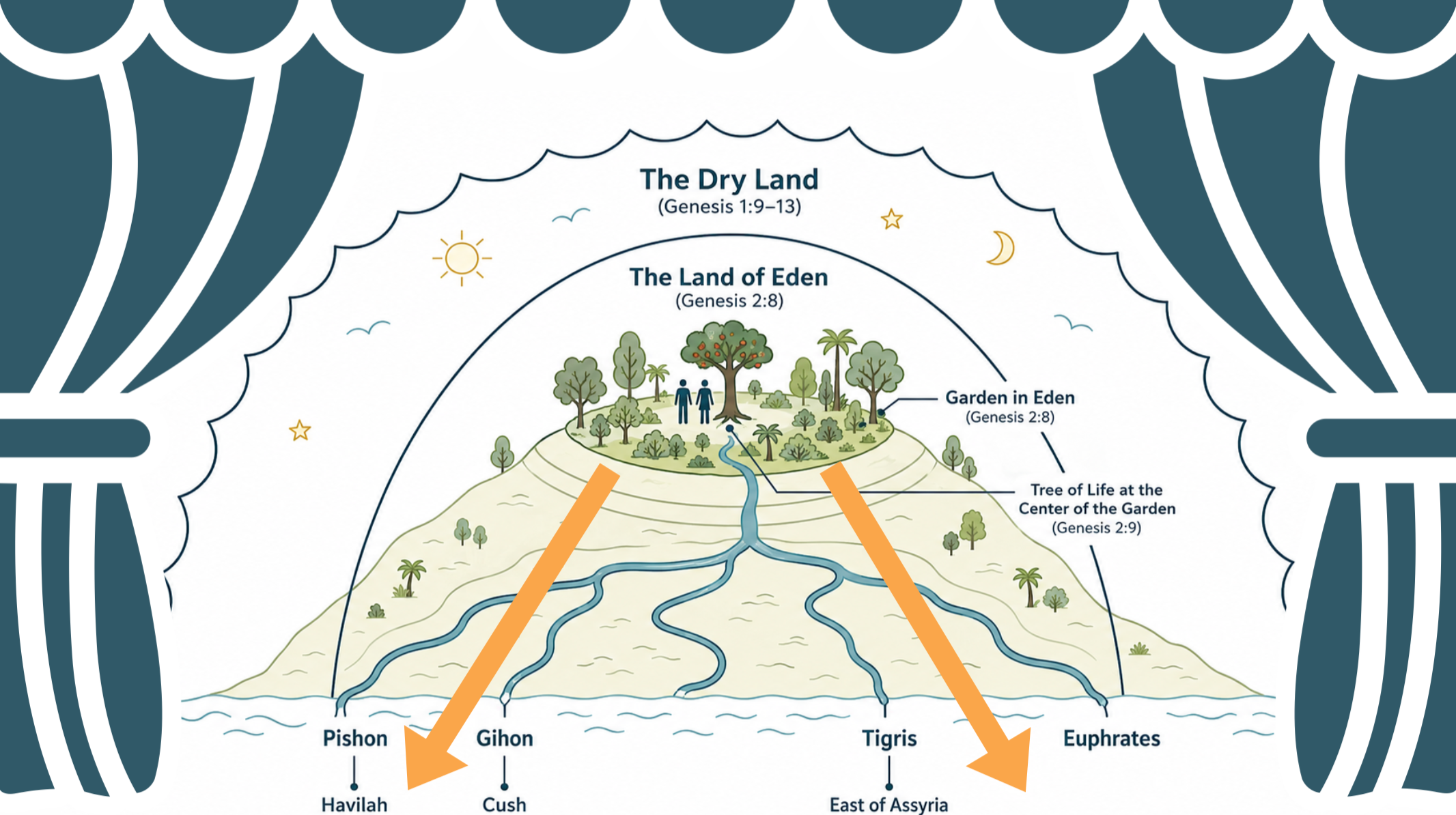
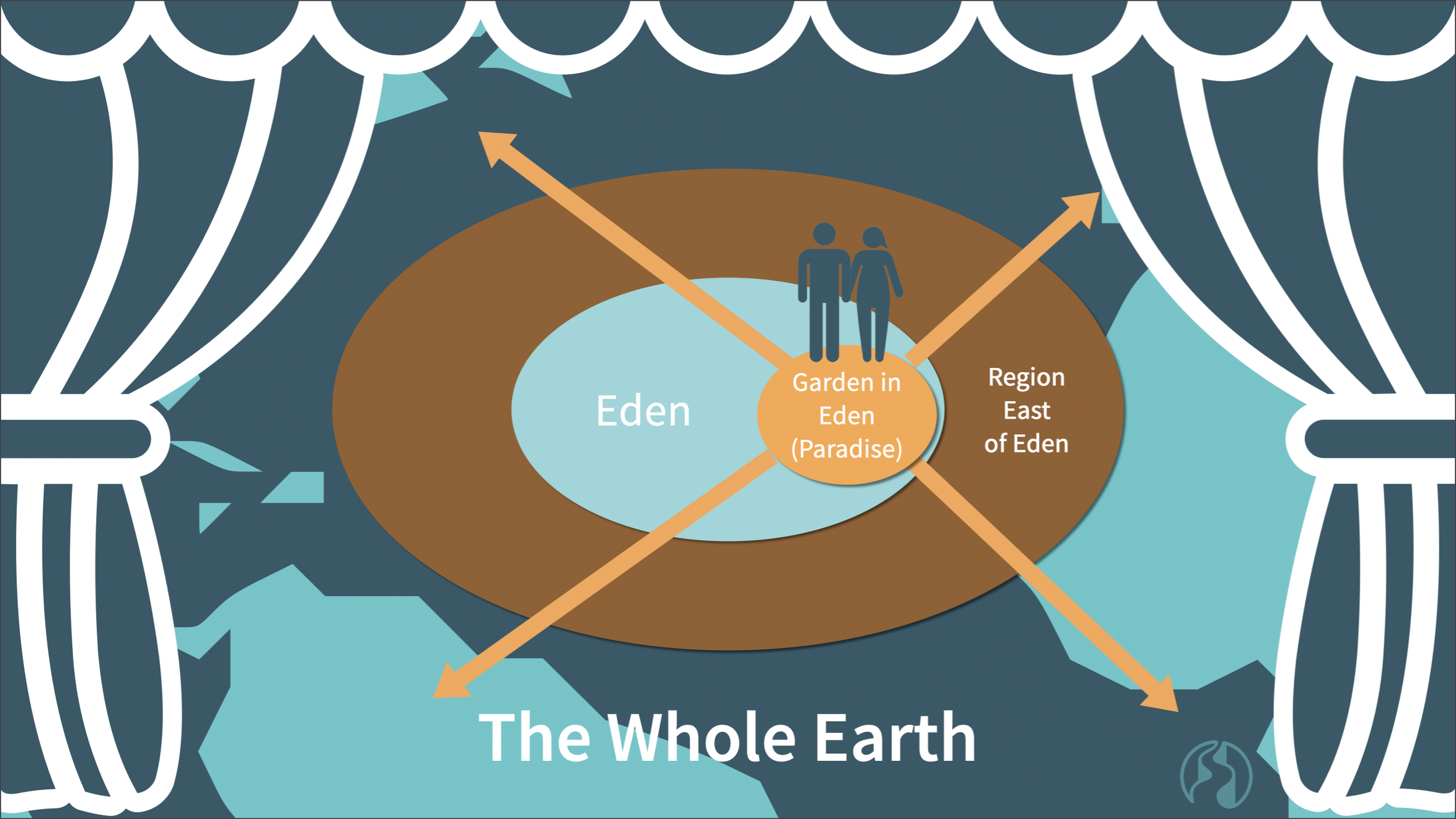
Genesis 2 also shows that the paradise of the garden of Eden was neither all of Eden nor the whole earth beyond it.
The biblical account narrows its focus
from the whole earth,
to one particular land called Eden,
and then, within Eden, to smaller garden-paradise that God planted there[8]
and put Adam and Eve in it.
The garden was a concentrated place of his presence, blessing, beauty, and order within a larger world waiting to be cultivated
The garden was the beginning, not the end.
There are also strong biblical reasons for seeing the garden of Eden as an original sanctuary or temple. The tree of life stood there. God manifested his presence there. Adam was placed there “to work it and keep it” (Gen. 2:15), Hebrew language that carries the ideas of cultivating and guarding that is later associated with priestly service in a sacred space.[9]
A river flowed from Eden to water the garden
and then outward toward surrounding lands, picturing God’s life and blessing moving beyond the garden. God’s purpose was for this garden-sanctuary to expand until the whole earth became his dwelling place—a worldwide temple filled with his presence, rule, blessing, and glory.
Humanity and the world were both good but not complete, and God intended them to develop together.
III. The Father Begins His Mission Through Humanity in the World
After creating Adam and Eve in his image, and putting them in the garden-paradise, God blessed them and gave them their mission:
“Be fruitful and multiply and fill the earth and subdue it, and have dominion...” (Gen. 1:28).
This is the Bible’s first great human commission, reflecting God's first great mission. The Great Commission to make disciples of all nations is essential to God’s redemptive mission, but it is not God’s first commission. Before humanity needed a rescue mission, humanity already had a creation mission.
That mission included two closely related dimensions: procreation and vocation.
First, procreation: “Be fruitful and multiply and fill the earth.” God intended the earth to be filled with image bearers who would know and enjoy him, reflect his character, and represent his gracious rule throughout his creation.
Second, vocation: “subdue it, and have dominion.” Genesis 2:15 says God placed Adam in the garden “to work it and keep it.” Humanity was commissioned to cultivate, develop, preserve, and protect what God entrusted to them.[10]
Put simply:
Procreation fills the earth with image bearers.
Vocation develops the earth through image bearers.
Many people are surprised that humanity’s original mission does not sound more “spiritual.” Genesis does not portray Adam and Eve spending all their time singing, praying, and praising God. Instead, God puts them to work.
This corrects a common misunderstanding of worship.
Singing, prayer, and gathered praise are essential expressions of worship, but biblical worship is much broader.
Scripture calls us to worship God by bringing him glory in all of life—including our work. Paul calls believers to present their bodies as “a living sacrifice” in “spiritual worship” (Rom. 12:1), and writes, “whether you eat or drink, or whatever you do, do all to the glory of God” (1 Cor. 10:31).[11] As R. C. Sproul writes, “To live coram Deo is to live one’s entire life in the presence of God, under the authority of God, to the glory of God."
As image bearers fulfilled God’s mission to multiply, fill the earth, and exercise his gracious rule, they would increasingly develop the possibilities embedded in creation. Genesis already gives glimpses of this in language, marriage, work, music, craftsmanship, and tools.
Richard Mouw illustrates the point by imagining Adam and Eve picking up a branch and using it as a rake instead of working only with their hands—an early step in developing tools. They name it, expanding language, then take turns using it, developing cooperation and social organization. His larger point is that God’s image bearers were meant to discover and develop the rich possibilities God had placed within creation for his purposes.[12]
Eden therefore corrects not only a common misunderstanding of worship, but also a common misunderstanding of happiness. God did not place humanity in paradise to escape meaningful work, but to worship God and flourish through it. Rest is a gift from God, but so is work.
Retirement from paid employment may be appropriate; but retirement from God’s mission is not. As long as God gives us life, he continues to call us to represent his rule and extend his blessing through all the particular spheres of influence he entrusts to us.[13]
This principle is already built into the creation account. Genesis 1 gives humanity a cosmic commission: fill and subdue the earth. Genesis 2 gives Adam a particular assignment: cultivate this garden. Adam could not cultivate the entire earth himself; he began with what God placed under his care.
The same principle applies to us. God sovereignly places us within particular relationships, families, vocations, churches, communities, responsibilities, gifts, and spheres of influence. We are not responsible for cultivating everything in God’s world, but we are responsible for faithfully cultivating what he has entrusted to us.[14]
The garden was meant to spread. God’s image bearers were meant to spread. God’s blessing was meant to spread. And ultimately, God’s glory was meant to spread and fill the whole earth.
God created human beings in his image to participate in this purpose as they:
enjoy his presence,
reflect his character,
represent his rule,
cultivate his world,
extend his blessing.
Act One therefore reveals the central mission of God:
God’s mission is to glorify his name by causing his kingdom to come throughout the earth through his people by the power of his Spirit.
Jesus later teaches us to pray according to this same great purpose: “Our Father in heaven, hallowed be your name. Your kingdom come, your will be done, on earth as it is in heaven” (Matt. 6:9–10).
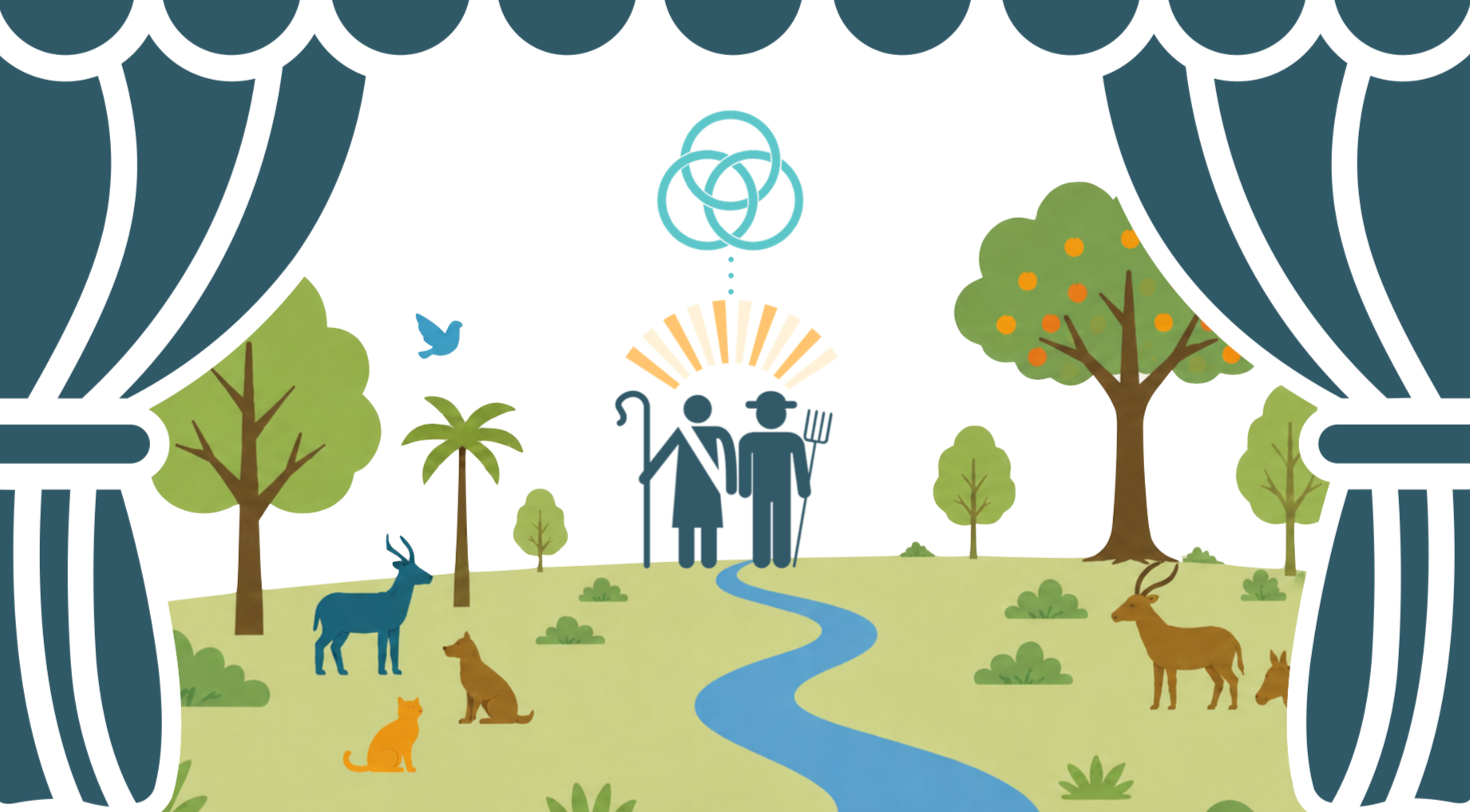
IV. How the Father’s Creation Mission Reshapes Our Mission
Understanding the Father's magnificent acts in creation reshapes how we understand God’s gospel, salvation, and mission.
A. First, it reshapes how we understand God’s gospel.
One of the first biblical truths in a clear presentation of the gospel is this: God created you to have a loving relationship with him and to flourish in this life and the next by living according to his purposes.
For many years, Bill Bright’s first Spiritual Law stated, “God loves you and has a wonderful plan for your life.” Though some theologians raised concerns about that wording, its worldwide appeal reflected a deeply biblical truth: God created us not only to know and enjoy him, but also to flourish by living according to his purposes for our lives.[15]
The good news of the gospel begins with the Father’s love revealed in creation. God is love (1 John 4:8), and in love he created the world and humanity as the crown of his creation—made in his image to know him, love him, enjoy him, and flourish in the fullness of life he designed for us.
That flourishing includes living for his purposes. We discover our deepest purpose by finding our story in God’s story, our mission in God’s mission, our plan in God’s plan, and God’s will for our lives within God’s will for the world.
B. Second, it reshapes how we understand God’s salvation.
Salvation at its core is re-creation—God reclaiming what sin and Satan have ruined, redeeming fallen humanity and creation from the curse, and restoring them toward his original purposes. As Herman Bavinck summarized, “Grace restores nature."[16]
This means that God’s saving grace restores what sin ruins. It not only reconciles us to God, but through that restored relationship renews our hearts and increasingly restores our relationships with ourselves, with others, and with the world—including our work, calling, and mission as his image bearers.
As we saw in Lesson One, God’s purpose in salvation is not only to forgive our sins so that we can go to heaven when we die—as important as that is. He also saves us from sin’s dominating and corrupting power over our hearts, which distorts all these relationships.
Salvation therefore moves toward the restoration and maturation of humanity according to God’s original design and mission. God does not save us simply to remove us from ordinary life, but to restore us within it so that, by his grace, we increasingly become the people he created us to be and fulfill the calling he gave humanity from the beginning.
C. Third, it reshapes how we understand God’s mission.
God’s creation mission and his redemptive mission to “make disciples of all nations” are not competing missions. They are distinct, yet inseparably related. Humanity’s rebellion made the redemptive mission necessary because sin corrupted the people through whom God’s creation mission was meant to advance.
Through the gospel, God redeems and restores fallen people to himself so that they can increasingly become the image bearers he created them to be. This is why the Great Commission calls us not merely to make converts, but to make disciples—people learning to live under Christ’s lordship in every area of life.
Biblical discipleship therefore includes our relationships, our work and calling, and the particular parts of God’s world entrusted to us. In this way, God’s redemptive mission restores his people so that they can once again participate in his creation mission.
Conclusion: The Mission Before the Rescue Mission (144)
The Bible’s story begins with the Father’s magnificent acts in creation.
God created humanity good but not complete—with a perfect standing before him, pure hearts that loved him, and a perfect world filled with potential.
Then he gave humanity a mission: to mature as his image bearers, cultivate his world, and extend his presence, blessing, kingdom, and glory throughout the earth.
Before there was sin, there was mission. We were created to enjoy his presence, reflect his character, represent his rule, cultivate his world, and extend his blessing.
But in the next act, the image bearers commissioned to represent the King rebel against the King. Their perfect standing becomes guilty, their pure hearts become corrupt, and their perfect world becomes broken.
Act One shows us the way things were supposed to be. Act Two shows us why they are no longer that way.
FOOTNOTES
[1] Theologians have sometimes used the Latin expression Magnalia Dei, “the magnificent” or “wonderful works of God,” to describe God’s mighty acts in history. See Herman Bavinck, The Wonderful Works of God: Instruction in the Christian Religion according to the Reformed Confession, trans. Henry Zylstra (Westminster Seminary Press, 2019).
[2] This emphasis on the Father as Creator does not divide the work of the Trinity. The Father, Son, and Holy Spirit always work inseparably as the one true God. Scripture nevertheless presents distinguishable emphases within the triune economy: the Father creates through the Son and by the Spirit. See Gen. 1:1–2; Col. 1:15–17; Heb. 1:1–3.
[3] Genesis 1:26–28 closely associates humanity’s creation in God’s image with the commission to exercise dominion. The image bearer may therefore be understood as God’s royal representative or vice-regent, reflecting the King’s character and carrying out his purposes within creation.
[4] Adam and Eve were created with perfect innocence and acceptance before God, pure and rightly ordered hearts, whole bodies, harmonious relationships, and a fruitful creation. Their relationship with God overflowed into flourishing spiritually, physically, mentally, relationally, and vocationally.
[5] Augustine describes Adam’s original condition as posse non peccare, “able not to sin.” See Augustine, On Correction and Grace, 33.
[6] Herman Bavinck writes that Adam “stood not at the end but at the beginning of the road.” Herman Bavinck, Dogmatiek, 2:606.
[7] The Pathway Learning Faith and Work book and course by Steven Childers describes God’s good creation as possessing “deep, untapped potential for development” that human beings were called to cultivate through their work.
[8] Genesis 1 describes the earth broadly as dry land that God made fruitful and good (Gen. 1:9–13). Genesis 2 narrows the focus to Eden and then to the garden God planted within Eden (Gen. 2:8).
[9] Genesis 2:15 describes Adam’s calling “to work” and “keep” the garden. These terms include the ideas of cultivating or developing and preserving or guarding. Their later use in connection with priestly service contributes to the biblical understanding of Eden as sanctuary or sacred space.
[10] See Gen. 1:28; 2:15. Humanity’s calling to cultivate and guard creation establishes work as part of God’s good creation purposes rather than as a consequence of the Fall.
[11] The historic Christian expression Coram Deo captures this whole-life vision: living all of life before the face of God. As R. C. Sproul writes, “To live coram Deo is to live one’s entire life in the presence of God, under the authority of God, to the glory of God." Scripture presents worship both in a narrower sense—including prayer, praise, and the gathered worship of God’s people—and in a broader sense embracing all of life. Romans 12:1–8 describes “spiritual worship” not only as presenting ourselves to God but as using our God-given gifts in service to others; see also 1 Cor. 10:31; Col. 3:23–24. The historic Christian expression Coram Deo, “before the face of God,” captures this comprehensive understanding of worship. R. C. Sproul writes, “To live coram Deo is to live one’s entire life in the presence of God, under the authority of God, to the glory of God.” See R. C. Sproul, “What Does ‘Coram Deo’ Mean?,” Ligonier Ministries; see also John M. Frame, Worship in Spirit and Truth (Phillipsburg, NJ: P&R Publishing, 1996).
[12] Richard J. Mouw, Abraham Kuyper: A Short and Personal Introduction (Eerdmans, 2011). The illustration is used here as an imaginative description of the development of culture, not as an exposition of a specific biblical event.
[13] This helps explain why people who leave paid employment often continue serving, creating, mentoring, caring, or contributing in other ways. Retirement from paid employment may be appropriate; retirement from God’s calling to purposeful service is not the biblical vision of flourishing. The biblical pattern includes both work and rest. The Fourth Commandment not only commands Sabbath rest but also assumes a pattern of meaningful labor: “Six days you shall labor, and do all your work” (Exod. 20:9). The point is not that believers must remain in paid employment throughout life, but that purposeful service and stewardship remain part of humanity’s calling.
[14] The biblical command to exercise dominion requires an important qualification: dominion is not domination. Human authority over creation is entrusted, not owned. Image bearers have no right to exploit other people or creation for their own purposes. They are servants of the true King, called to exercise delegated authority according to his character and purposes.
[15] Bill Bright’s original First Spiritual Law, published in Campus Crusade for Christ’s Four Spiritual Laws booklet in 1965, read, “God loves you and has a wonderful plan for your life.” In 1976, Campus Crusade revised “has” to “offers,” helping address concerns in some Reformed and Calvinistic circles that the original wording could imply that every person already possesses God’s saving plan apart from repentance and faith. The point here is not that every person possesses the same saving plan, but that God created humanity for his purposes and calls people through the gospel to be reconciled to him and, in Christ, to live within his redemptive purposes for the world.
[16] Herman Bavinck, Reformed Dogmatics, vol. 3, Sin and Salvation in Christ, ed. John Bolt, trans. John Vriend (Baker Academic, 2006), 577. Bavinck’s formulation “grace restores nature” expresses the conviction that redemption does not abolish creation but restores it from sin toward God’s original purposes.

We provide resources to help leaders
plant, grow, and multiply healthy churches worldwide.