The Son’s Magnificent Acts in Redemption
The Mission of God: Lesson Four
By Steven L. Childers
Listen to the Audio
Want to go deeper? Take the Learning Path.
What is a Learning Path?
A Learning Path is a guided sequence of ten practical steps designed to move you beyond simply understanding biblical truth toward applying it to your mind, heart, and life with others. They include the full lecture transcript with academic footnotes, reflection and discussion questions, a prayer guide, an interactive quiz with answers, hymns for worship, recommended books, and more to help you go deeper.
You can use the Learning Path on your own for personal study—or, even better, invite a friend, spouse, mentor, or small group to walk through the ten steps with you. Better still, consider leading the group yourself. You don't need to be a trained teacher; you simply need to be one step ahead, guiding others through what you've already begun to learn.
Why learn with others—and even more, why lead? Because truth deepens when shared, and nothing teaches us like teaching others. As Seneca said, "While we teach, we learn."
Introduction
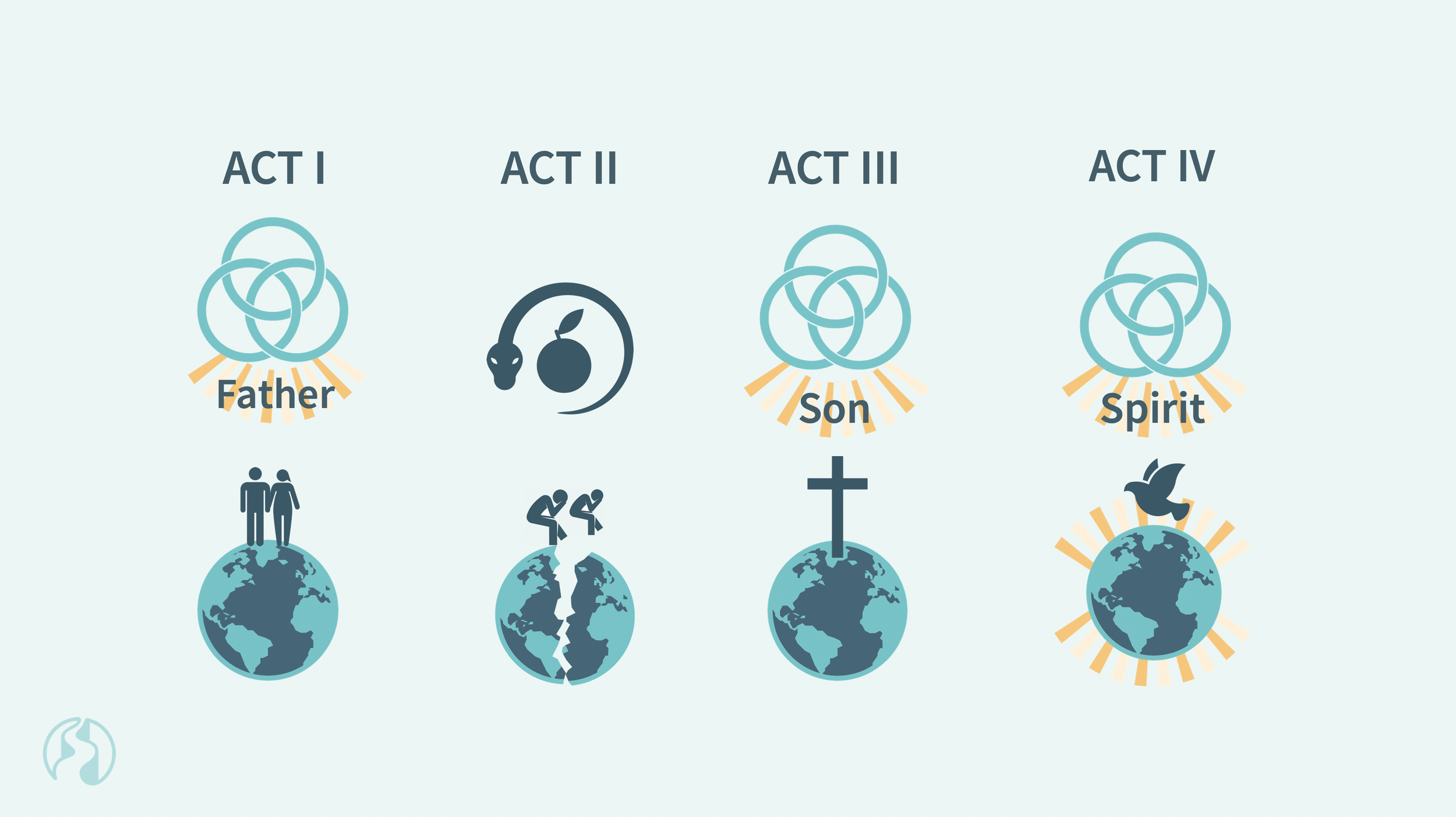
Act One began with Adam standing before God as humanity’s representative. God created him good and gave humanity a creation mission: to fill the earth with his image bearers, cultivate his good world, and extend his rule, blessing, and glory throughout creation.
But Act Two ended very differently.
Adam rebelled. His sin was not merely eating forbidden fruit; it was rejecting God’s word, will, and mission for his life in the world. As humanity’s representative, his disobedience alienated humanity from God—changing our standing from innocent to guilty, our hearts from pure to corrupt, and leaving us in a broken world under Satan’s tyrannical rule.
God’s creation mission was not erased, but fallen humanity could no longer fulfill it as God intended. We needed a new representative—a new Adam who would succeed where the first Adam failed.
And that is where God’s covenant of grace begins to unfold. Even as God pronounced judgment in Genesis 3, he promised that the offspring of the woman would one day crush the serpent’s head (Gen. 3:15).
From that point forward, the biblical story moves toward the promised Redeemer who would undo Adam’s ruin and restore God’s people, world, and mission.
That brings us to Act Three—the Son’s magnificent acts in redemption. Here we see the promised Redeemer first rescuing Israel in the Old Testament and then bringing his saving work to its climax in Jesus Christ, rescuing from captivity and curse a people from all nations.
So our first scene begins with the Redeemer at work through Israel, preparing the way for the One who would succeed where both Adam and Israel failed.
I. Scene One: The Son Redeems Fallen Humanity
A. Movement One: Old Testament — The Son Redeems Israel
The Son’s work as Redeemer did not begin at Bethlehem.
From Genesis 3:15 onward, God progressively revealed his promised Redeemer through covenants, sacrifices, priests, prophets, kings, and acts of deliverance.[1]
Through Noah, God preserved humanity and the world. Through Abraham, he promised a land and an offspring through whom “all the families of the earth” would be blessed (Gen. 12:3).
Through Moses, he redeemed Israel from slavery and formed them as his covenant people. Through David, he promised a royal Son whose kingdom would endure forever.
These acts of redemption were real, but they also pointed beyond themselves: the exodus to a greater liberation, Israel’s sacrifices to a greater sacrifice, her priests to a greater Priest, her prophets to a greater Prophet, and her kings to a greater King.
The eternal Son was already at work in Israel’s story. Through Moses, God brought Israel out of Egypt, and in the wilderness Moses struck the rock at Horeb so the people could live (Ex. 17:1–7). Paul later writes that Israel “drank from the spiritual Rock that followed them, and the Rock was Christ” (1 Cor. 10:4).
Jude makes the connection even more explicit, identifying Jesus as the one who “saved a people out of the land of Egypt” (Jude 5).[2]
So the Son who would later take on flesh in Bethlehem was already the divine Redeemer—delivering, sustaining, and preparing his people for the greater salvation to come.
Yet Israel, like Adam, repeatedly failed to live faithfully under God’s rule. God’s people still needed a faithful Israelite—a new Adam and true King—who would succeed where both Adam and Israel had failed.
B. Movement Two: New Testament — The Son Redeems All Nations
Then, “when the fullness of time had come,” God sent forth his Son (Gal. 4:4).
The eternal Son entered the story he had been directing.
His magnificent acts as Redeemer include not merely his death, but his entire saving mission: his incarnation and birth, his perfect life, his sacrificial death, his resurrection, and his ascension.[3]
In his birth, the eternal Son became truly human.
In his life, Jesus obeyed where Adam and Israel had failed, resisted Satan, proclaimed God’s kingdom, and displayed signs of the coming restoration.
In his death, he bore the guilt and judgment our rebellion deserved.
In his resurrection, he conquered death and emerged as the beginning of a new humanity.
In his ascension, the Father exalted him to his right hand, where he now reigns over all things.
The cross stands at the center of Jesus’ magnificent acts as Redeemer, but it does not stand alone. The gospel announces not merely something Jesus did, but who Jesus is because of what he did.
He is Savior—the only Redeemer God has given to rescue cursed humanity and creation.
And he is Lord—the risen King before whom every person and power must ultimately bow.
What began through Israel now opens outward toward every tribe, language, people, and nation.
The risen Christ is not one savior among many. He is the Redeemer King to whom every nation belongs.
C. The Good News of Jesus’ Redemption
Lesson Three showed us the problem: humanity stands guilty before a holy God. We do not merely need improvement. We need a new standing.
That is why Christ’s substitutionary death is at the heart of redemption.
God is perfectly loving and perfectly just. He cannot simply overlook evil. Yet in astonishing love, God himself provides the sacrifice his justice requires. Paul says that God put Christ forward as a “propitiation by his blood” so that he might remain “just and the justifier of the one who has faith in Jesus” (Rom. 3:25–26).[4]
Propitiation means that God’s just wrath against our sin is not ignored but satisfied. At the cross, that judgment falls on Christ in our place. God’s just wrath is turned away from us because it is poured out on Jesus for us—so that God can look on us without anger, and we can look on God without fear.
Christ therefore does more than make salvation possible; he actually accomplishes it. He truly suffers for us. “The LORD has laid on him the iniquity of us all” (Isa. 53:6). The Good Shepherd “lays down his life for the sheep” (John 10:11).[5]
But humanity is not the only captive Christ came to rescue.
II. Scene Two: The Son Redeems the Fallen World
Genesis 3:15 promised not only the rescue of fallen humanity, but the defeat of the serpent.
Jesus came to fulfill that promise.
Throughout his ministry, the conflict with Satan is unmistakable. In the wilderness, Jesus stands where both Adam and Israel had stood before him. Adam was tested and failed. Israel was tested and failed. But Jesus, the last Adam and faithful Israelite, is tested by Satan and remains perfectly obedient to his Father. Where Adam and Israel failed, Jesus succeeds.
He then publicly displays Satan’s defeat through signs and wonders—casting out demons, liberating the oppressed, healing the broken, and giving visible glimpses of what God’s future kingdom will one day look like on earth.
Then comes the cross.
To everyone watching, the crucifixion appears to be the triumph of darkness. The promised King is humiliated, tortured, and killed.
But what appears to be Satan’s greatest victory becomes his decisive defeat.
Paul writes that Christ “disarmed the rulers and authorities” and triumphed over them through the cross (Col. 2:15). John adds, “The reason the Son of God appeared was to destroy the works of the devil” (1 John 3:8).[6]
C. S. Lewis gives us a memorable picture in The Lion, the Witch and the Wardrobe. Edmund’s betrayal places him under the White Witch’s claim, and Aslan gives himself in Edmund’s place. The Witch thinks his death means victory.
But the very sacrifice she thinks secures her victory becomes the means of her defeat.[7] Aslan rises, her power is broken, and Edmund is not only released from condemnation but restored to his family and given a new future in a whole new world.
This is why the gospel is not merely personal; it is cosmic. Paul says that through Christ God purposes “to reconcile to himself all things, whether on earth or in heaven” (Col. 1:20).
The promised offspring has come. The serpent has been struck. Resurrection life has entered the world.
But Satan still attacks. People still die. Creation still groans.
How can Christ have won if the battle is still raging?
III. The Redemption Mission Accomplished,
But Not Yet Complete
Here we need an important distinction.
The Son fully accomplished redemption, but redemption accomplished is not the same as God’s entire mission completed.
Jesus could pray, “I glorified you on earth, having accomplished the work that you gave me to do” (John 17:4). From the cross he declared, “It is finished” (John 19:30).
Nothing needs to be added to Christ’s finished work.
Yet everything he accomplished has not yet been fully applied or brought to completion.
We can summarize the tension this way:
Satan is defeated, but not destroyed.
Death is conquered, but not yet removed.
The new creation has begun, but has not yet filled the earth.
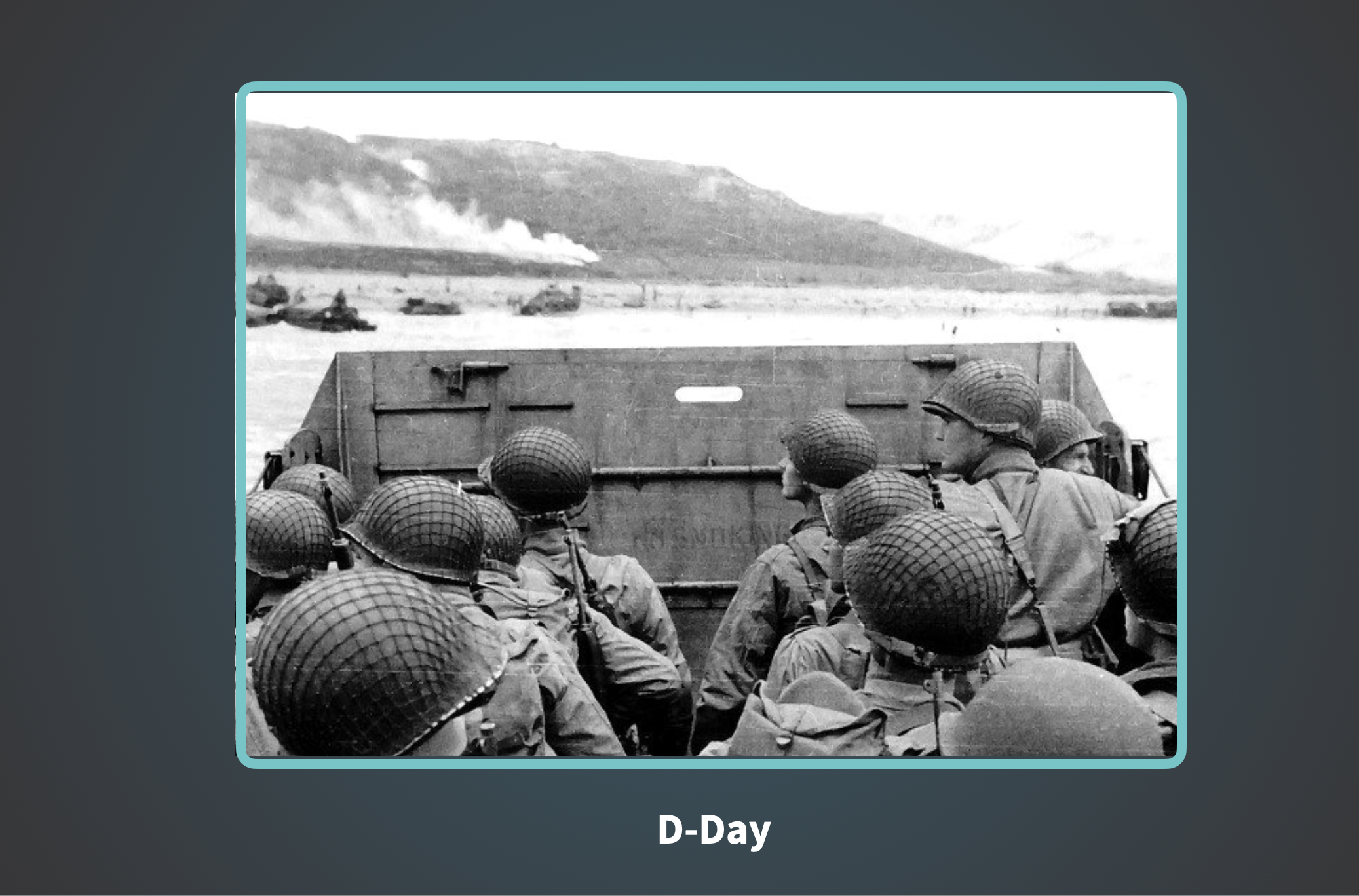

Think of D-Day and VE-Day in World War II. The Allied invasion of Normandy dealt Nazi Germany a decisive blow. The outcome had been determined, but fierce fighting continued until final victory.
Christ’s death and resurrection are like D-Day. The decisive victory has been won. But we are still awaiting the final VE-Day when Satan and every enemy will be completely removed.[8]
This distinction prepares us for Act Four.
In Act one the Father establishes his mission. After the Fall, in Act three, the Son accomplishes redemption. In the final act four, the Holy Spirit applies Christ’s finished redemption and carries God’s mission toward its appointed fullness.[9]
Redemption has been accomplished. Its saving benefits must now be applied, and restoration must unfold throughout God’s people and world.
IV. How the Son’s Redemption Reshapes Our Mission
The Son’s magnificent acts in redemption should reshape how we understand God’s gospel, salvation, and mission.
A. First, it reshapes how we understand God’s gospel.
The gospel is not only that Jesus died for us, but that he also obeyed for us.
Adam disobeyed. Israel disobeyed. We disobey. But Jesus perfectly obeyed the Father in our humanity. Paul writes, “by the one man’s obedience the many will be made righteous” (Rom. 5:19).[10]
Shortly before his death, J. Gresham Machen wrote to John Murray, “I’m so thankful for the active obedience of Christ. No hope without it.”[11]
Facing death, Machen knew his hope rested not in his record, but Christ’s.
Jesus lived the life we should have lived and died the death we deserved. Our hope before God rests not in our righteousness, but in his.
B. Second, it reshapes how we understand God’s salvation.
Salvation has three tenses:
We have been saved from sin’s penalty.
We are being saved from sin’s domineering power.
We will be saved from sin’s presence.
The gospel does not mean that sin no longer influences us. It does. But for those united to Christ, sin is no longer our rightful master. Christ has ransomed and liberated us from the bondage of Satan and sin.[12] Paul says that we have “died to sin” and are now “alive to God in Christ Jesus” (Rom. 6:2, 11).
Think of a tyrant who has been overthrown. He may still threaten, intimidate, and cause trouble, but he no longer sits on the throne. In the same way, sin remains present and powerful, but its reigning authority has been broken.
And one day, Christ will save us not only from sin’s penalty and domineering power, but from sin’s very presence.
C. Third, it reshapes how we understand God’s mission.
Christ’s redemption should give us enormous confidence in mission.
Jesus says of people not yet gathered to him, “I must bring them also, and they will listen to my voice” (John 10:16).
Those words are engraved beside the grave of David Livingstone in Westminster Abbey. Years later, the deeply discouraged missionary Peter Cameron Scott knelt there, read that promise, returned to Africa, and eventually founded Africa Inland Mission.
Several years ago, I stood at that same grave and looked down at those words myself: “I must bring them.”
Christ’s sovereignty does not weaken mission; it gives us confidence for mission. We go because the risen Shepherd has sheep among the nations, and he promises to gather them through the proclamation of his gospel.
Our confidence rests not in the missionary, the method, or even the response.
It rests in the Shepherd.
Conclusion
The promised Redeemer has come. Jesus succeeded where Adam and Israel failed, bore our curse, defeated Satan, and accomplished redemption.
But God’s mission is not finished.
Christ has secured redemption; now its saving benefits must be applied to God’s people and world.
That brings us to Act Four—the magnificent acts of the Holy Spirit in restoration.
FOOTNOTES
[1] The biblical covenants progressively unfold God’s redemptive promise from Adam and Noah through Abraham, Moses, David, and the prophetic expectation of a new covenant. The Pathway Learning Applied Theology material describes covenant as the principal biblical structure through which the triune God carries forward his redemptive purpose in history. See also Gen. 3:15; 9:1–17; 12:1–3; 17:1–8; 2 Sam. 7:12–16; Jer. 31:31–34.
[2] See Jude 5; 1 Cor. 10:1–4. Jesus himself teaches his disciples to read the Old Testament as Scripture ultimately pointing toward both himself and the worldwide mission accomplished through him (Luke 24:27, 44–47).
[3] The Apostles’ Creed preserves this historic emphasis on the saving events of Christ’s humiliation and exaltation: conception and birth, suffering and death, resurrection, ascension, heavenly reign, and return. Martin Luther similarly organized his explanation of the Creed around Christ as the eternal Son who “has redeemed me, a lost and condemned person.” See Martin Luther, Small Catechism, “The Creed,” Second Article.
[4] On propitiation as Christ’s satisfaction of God’s righteous judgment against sin, see Rom. 3:21–26; 1 John 2:1–2; 4:10. Leon Morris emphasizes that biblical atonement must take seriously both God’s personal opposition to evil and the objective dealing with guilt accomplished in Christ. See Leon Morris, The Apostolic Preaching of the Cross, 3rd rev. ed. (Eerdmans, 1965), esp. 144–213.
[5] See John 6:37–40; 10:11, 14–16, 26–29; 17:2, 6, 9. The Reformed tradition describes Christ’s atonement as definite because his death actually secures, rather than merely makes possible, the salvation of those given to him by the Father. This emphasis should be held together with Scripture’s indiscriminate command to proclaim Christ freely to all nations.
[6] See also Heb. 2:14–15, where Christ destroys “the one who has the power of death, that is, the devil,” and delivers those held in lifelong slavery through fear of death. The Pathway Learning Applied Theology materials describe redemption both as liberation through a ransom price and as deliverance through a champion’s victory.
[7] C. S. Lewis, The Lion, the Witch and the Wardrobe (Geoffrey Bles, 1950). The analogy is illustrative rather than exegetical, but Lewis memorably portrays sacrificial death becoming the unexpected means of defeating an apparently victorious tyrant.
[8] The D-Day/VE-Day analogy is intended to distinguish decisive victory from final consummation. Like all historical analogies, it should not be pressed in every detail. Its usefulness is simply that a decisive event can determine the outcome of a conflict while substantial resistance continues afterward.
[9] Ephesians 1 provides a particularly rich Trinitarian pattern: the Father’s eternal purpose (vv. 3–6), redemption accomplished in the Son (vv. 7–12), and the Spirit’s application and guarantee of the promised inheritance (vv. 13–14). Calvin similarly begins Book III of the Institutes by emphasizing that the benefits accomplished by Christ become ours through the Spirit: “The Holy Spirit is the bond by which Christ effectually unites us to himself.” See John Calvin, Institutes of the Christian Religion, 3.1.1.
[10] See Rom. 5:18–19; 2 Cor. 5:21; Phil. 2:8. Reformed theology commonly distinguishes Christ’s lifelong obedience to the Father—often called his active obedience—from his suffering of sin’s penalty, while regarding both as inseparable aspects of his saving obedience. The Heidelberg Catechism describes justification as receiving “the satisfaction, righteousness, and holiness of Christ” by faith alone; see Heidelberg Catechism, Q. 61.
[11] See John Murray, “Dr. Machen’s Hope and the Active Obedience of Christ.”
[12] See Mark 10:45; Col. 1:13–14; Titus 2:14; 1 Pet. 1:18–19. Roger Nicole notes that the biblical ransom imagery draws upon the liberation of prisoners and slaves through the payment of a price. See Roger Nicole, “C. H. Dodd and the Doctrine of Propitiation,” Westminster Theological Journal 17 (1955): 117–57. See also Leon Morris, The Apostolic Preaching of the Cross.

We provide resources to help leaders
plant, grow, and multiply healthy churches worldwide.