
The Spirit’s Magnificent Acts in Restoration, Part 1
The Mission of God: Lesson Five
By Steven L. Childers
Listen to the Audio (Coming Soon)
Want to go deeper? Take the Learning Path.
What is a Learning Path?
A Learning Path is a guided sequence of ten practical steps designed to move you beyond simply understanding biblical truth toward applying it to your mind, heart, and life with others. They include the full lecture transcript with academic footnotes, reflection and discussion questions, a prayer guide, an interactive quiz with answers, hymns for worship, recommended books, and more to help you go deeper.
You can use the Learning Path on your own for personal study—or, even better, invite a friend, spouse, mentor, or small group to walk through the ten steps with you. Better still, consider leading the group yourself. You don't need to be a trained teacher; you simply need to be one step ahead, guiding others through what you've already begun to learn.
Why learn with others—and even more, why lead? Because truth deepens when shared, and nothing teaches us like teaching others. As Seneca said, "While we teach, we learn."
Introduction
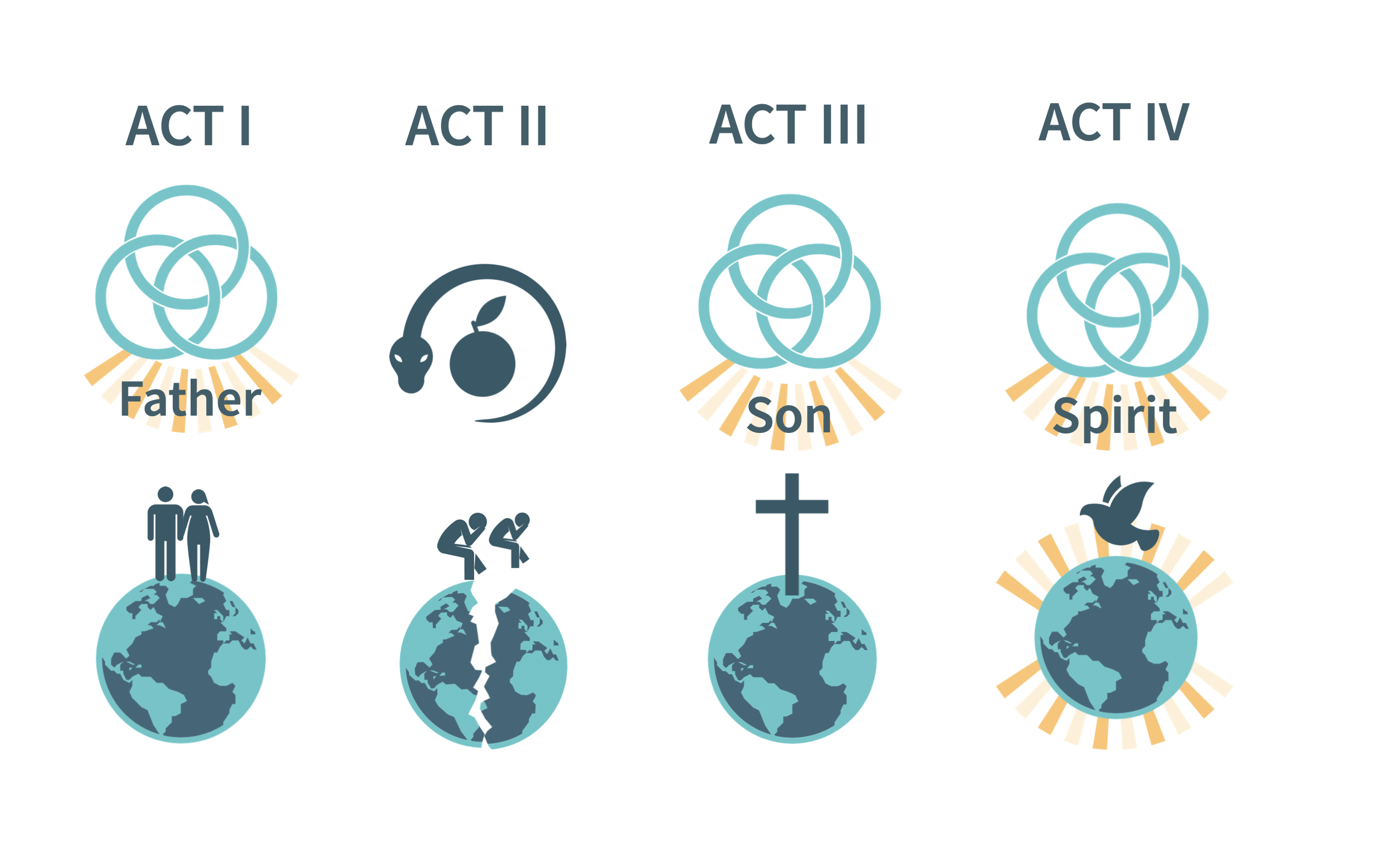
Where are we now in God’s unfolding story?
In Act One, the Father created humanity and the world through his Son and by his Spirit, good but not complete. He intended their completion to unfold through humanity’s faithful fulfillment of his creation mission: to multiply and fill the earth as his image bearers, representing his gracious rule by making his invisible kingdom visible in every sphere of life, until all things flourish according to his design and his glory fills the earth.[1]
In Act Two, Satan and humanity corrupted that mission, bringing both under God’s curse.[2]
In Act Three, the Son accomplished God’s redemption through his incarnation, sinless life, sacrificial death, resurrection, ascension, and reign. He secured the deliverance of a people from every tribe, tongue, and nation from God’s just curse and Satan’s tyrannical rule.[3]
So, what in the world is God doing now and how can we join him?
Now we come to the final act, Act Four—the Spirit’s magnificent acts in restoration.
This final act unfolds in two scenes.
Scene One, the focus of this lesson, is the Already: the period from Pentecost to Christ’s return when the Father, through his ascended Son and by the power of his Holy Spirit, is carrying out his redemptive mission through his church to begin restoring his redeemed humanity and the world to his original creation mission.
Scene Two, the focus of our final lesson, is the Not Yet: when Christ returns, God will fully restore his redeemed humanity and creation to his original mission. On the new earth, humanity will reign with the Son, cultivating and subduing his world by the Spirit’s power so that all things flourish according to his design, without opposition, forever.
The major points in this lesson include how:
the Spirit’s magnificent acts empower the church for mission.
the Spirit’s magnificent acts advance the church in mission.
the Spirit’s magnificent acts are unfolding today.
the Spirit’s magnificent acts are meant to reshape your story.
To understand the Spirit’s magnificent work that began at Pentecost, we must first understand the mission that Jesus had already given his disciples at the end of Act Three.
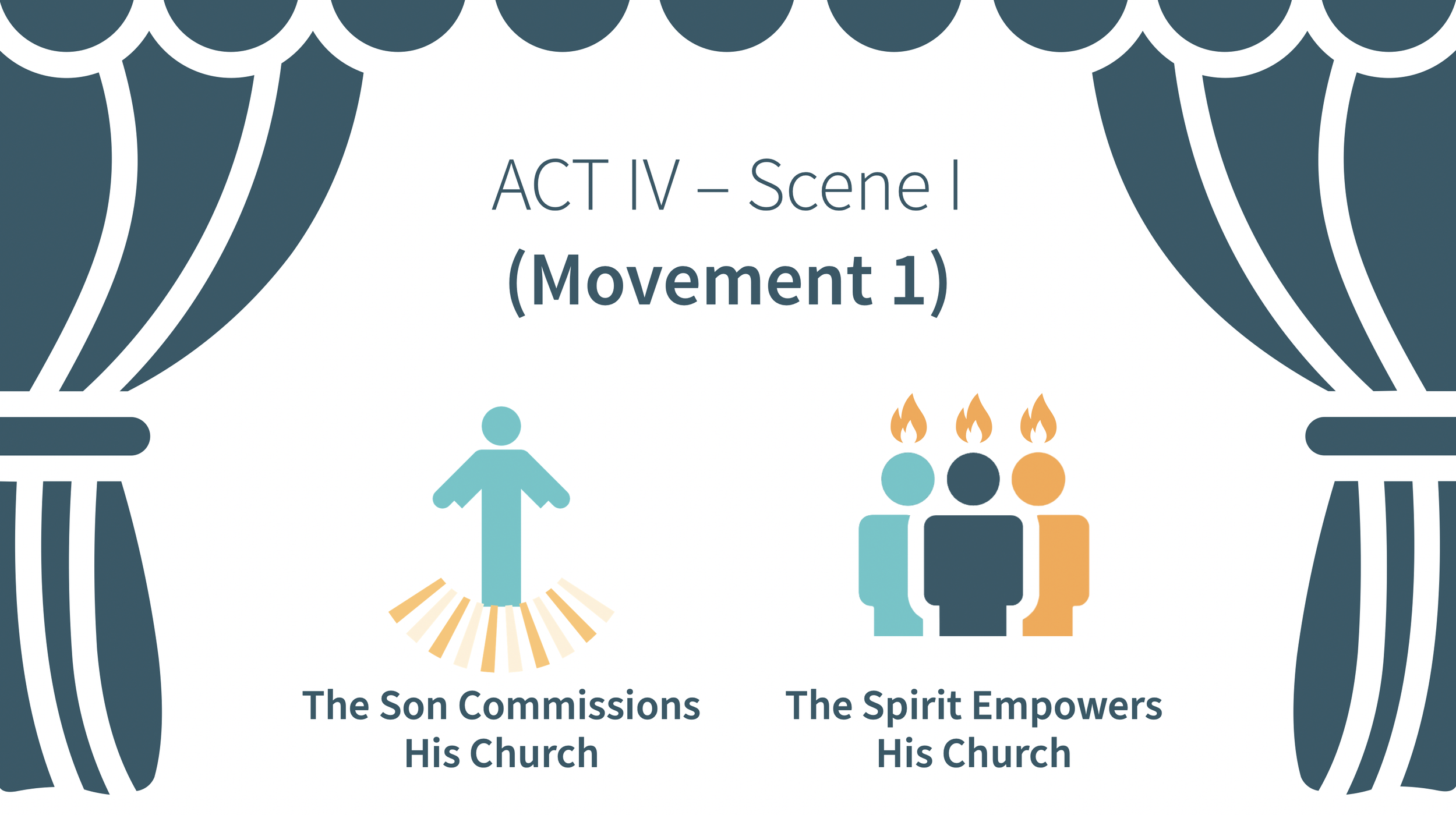
I. The Spirit’s Magnificent Acts Empower the Church for Mission.
A. The Son Commissions His Church
Before his ascension, the risen Christ gave his disciples the Great Commission. Its clearest and fullest expression is found in Matthew 28:18–20.[4]
But notice where Jesus begins: “All authority in heaven and on earth has been given to me.”[5] Why begin there?
Because he wants his disciples—then and now—to know where their confidence must rest.
Jesus does not send his church on its own authority, strength, or resources. He sends us under the authority of the risen King, who rules over heaven and earth.
Then Jesus gives his church its central redemptive assignment: “make disciples of all nations.”
How does the church do that? Jesus gives three inseparable directions.[6]
First, “Go.” Move outward, proclaiming the gospel and calling people everywhere to repentance and faith in Christ.
Second, “Baptize them in the name of the Father and of the Son and of the Holy Spirit.” Those who believe are publicly identified with the triune God and incorporated into his visible church.
Third, “Teach them to observe all that I have commanded you.”
Notice: Jesus does not merely say, “Teach them what I commanded.” He says, “Teach them to observe”—to obey—his commands.
The goal is not merely converts who know Christian doctrine, but disciples who increasingly learn to follow Christ in every area of life. God intends this disciple-making to unfold within local churches, where his people are taught, shepherded, encouraged, and formed into Christ’s likeness.
Then Jesus anchors the commission in a final promise: “And behold, I am with you always, to the end of the age.”
The mission begins with Christ’s authority and ends with Christ’s presence. When he sends you, he never sends you alone.
B. The Spirit Empowers His Church
But before the disciples could begin, Jesus gave them a surprising command: Wait for the promise of the Father.
He told them to remain in Jerusalem until they were “clothed with power from on high” (Luke 24:49).
Then, just before his ascension, he promised, “You will receive power when the Holy Spirit has come upon you, and you will be my witnesses” (Acts 1:8).
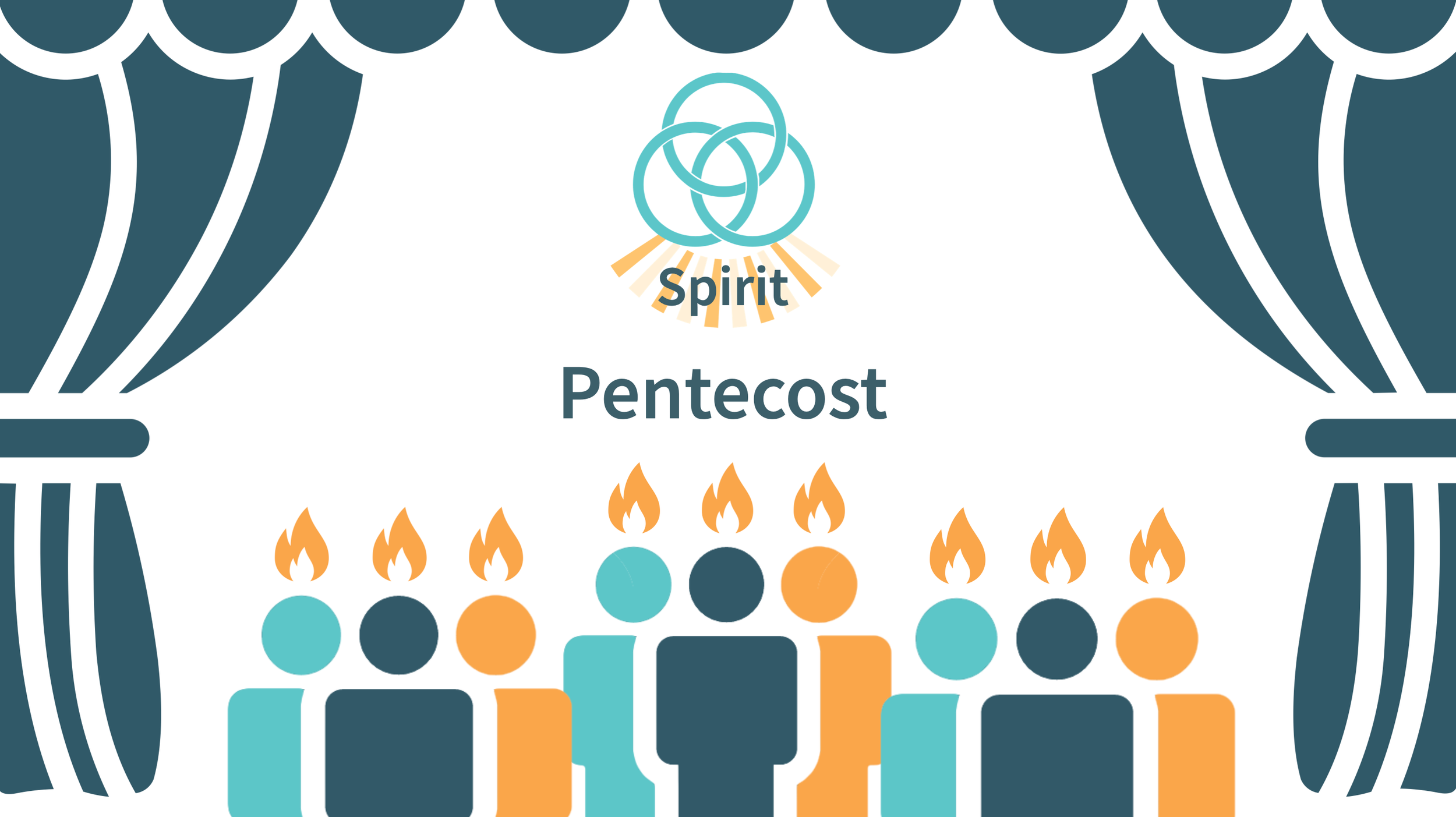
Then came Pentecost.
At Pentecost, the Father and the Son poured out the promised Spirit, inaugurating the new-covenant age of restoration in which we now live.[7]
The disciples who had been commanded to wait were now empowered to go. The Spirit enabled them to proclaim Christ’s accomplished redemption of humanity and the world, beginning in Jerusalem and carrying that good news to the ends of the earth.[8]
But the church is not carrying out an independent mission for an absent Christ.
The risen and ascended Christ is now continuing his own mission from heaven through his people by the power of his Spirit.
Paul understood this. Looking back on all his missionary work, he wrote, “I will not venture to speak of anything except what Christ has accomplished through me” (Rom. 15:18).
That is the secret of Christian mission. Christ accomplishes his work through dependent people by the power of his Spirit.
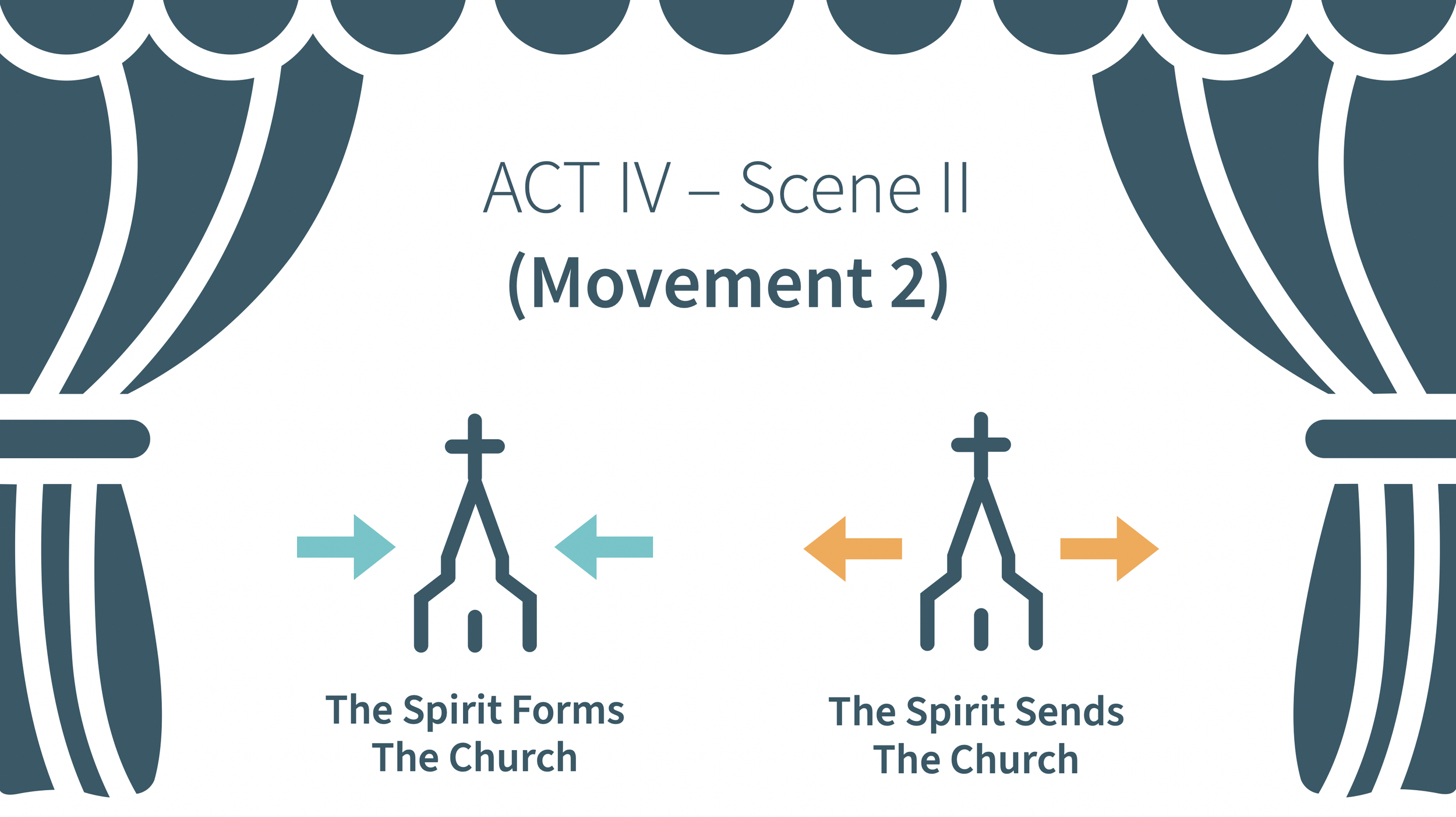
II. The Spirit’s Magnificent Acts Advance the Church in Mission
A. The Spirit Forms God’s New Humanity: The Church
What magnificent acts of the Spirit took place at Pentecost?
Jews from many nations had gathered in Jerusalem for the feast. Suddenly, a sound like a mighty rushing wind filled the house. Tongues as of fire appeared, and the disciples began speaking in other languages. The crowd was astonished to hear the mighty works ("Magnificent Acts") of God proclaimed in their own tongues (Acts 2:1–11).
But what was the Spirit doing through these extraordinary signs?
He was applying Christ’s accomplished redemption and beginning to reverse the curse of the Fall.[9]
Peter announced two inseparable gifts of the gospel: “the forgiveness of your sins” and “the gift of the Holy Spirit” (Acts 2:38).[10]
Humanity’s innocent standing had become condemned. Through Christ, the Spirit now gives believers forgiveness and a new standing before God. Humanity’s pure heart had become corrupt. The Spirit now gives them new hearts, new desires, and new life.
The first step toward making a new world is making new people by restoring their broken relationship with God.
But the Spirit does not restore isolated individuals. He gathers them into God’s new collective humanity—called the church.
As Acts unfolds, the gospel moves from Jerusalem to Samaritans and Gentiles, gathering people from the nations into one body under one Lord. The Spirit forms a community of worship, reconciliation, love, and obedience—a foretaste of the kingdom still to come.
First, the Spirit forms the church—then he sends the church.
B. The Spirit Sends God's New Humanity: The Church
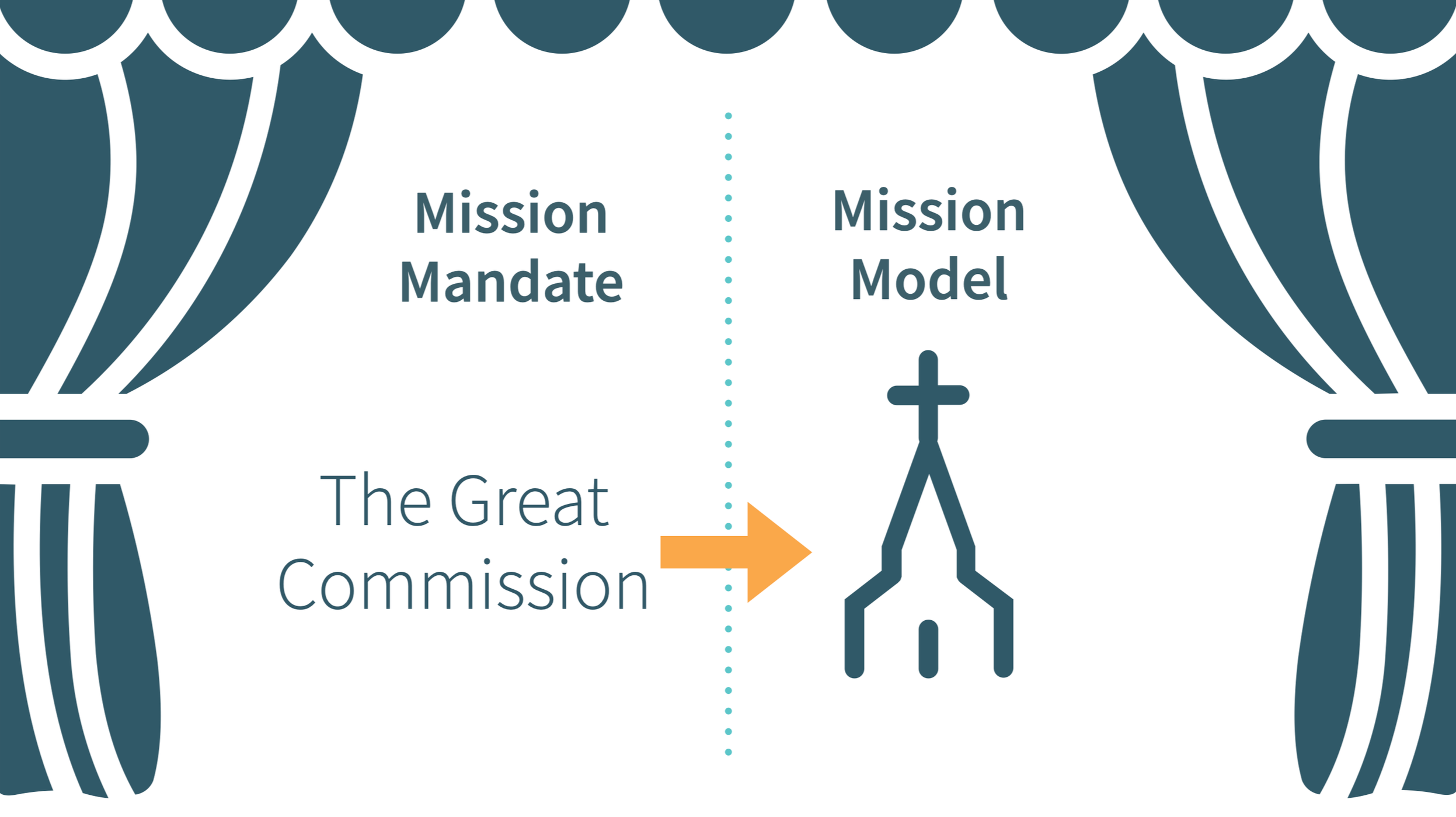
Jesus’ Great Commission gives us God’s mandate for missions: make disciples of all nations.
The magnificent acts of the Holy Spirit in Acts show us God’s model for carrying out that mandate: through his church.
Acts is not merely a record of early church history. It shows how the ascended Christ continues building his church among the nations by his Spirit.
In Acts 1, Jesus promises, “You will receive power when the Holy Spirit has come upon you, and you will be my witnesses” from Jerusalem “to the end of the earth.” And that is exactly what happens.
The gospel moves from Jerusalem and Judea, into Samaria, and then toward the Gentile world. By Acts 11, a visible, multiethnic church emerges in Antioch, where believers are gathered, taught, and formed as disciples.[11]
Then, in Acts 13, that planted church becomes a sending church.
As the church worships and fasts, the Holy Spirit sets apart Paul and Barnabas. The church lays hands on them and sends them out to plant more churches.
Christian mission, then, does not ordinarily advance through isolated individuals. Missionaries are commissioned by Christ, empowered by his Spirit, and sent through his church.[12]
By Acts 14, the pattern is clear:
The gospel is preached.
Disciples are made.
Churches are planted.
Elders are appointed.
And the mission continues.
Paul makes his missionary strategy especially clear in Romans 15. His ambition was to preach the gospel “not where Christ has already been named” (Rom. 15:20).
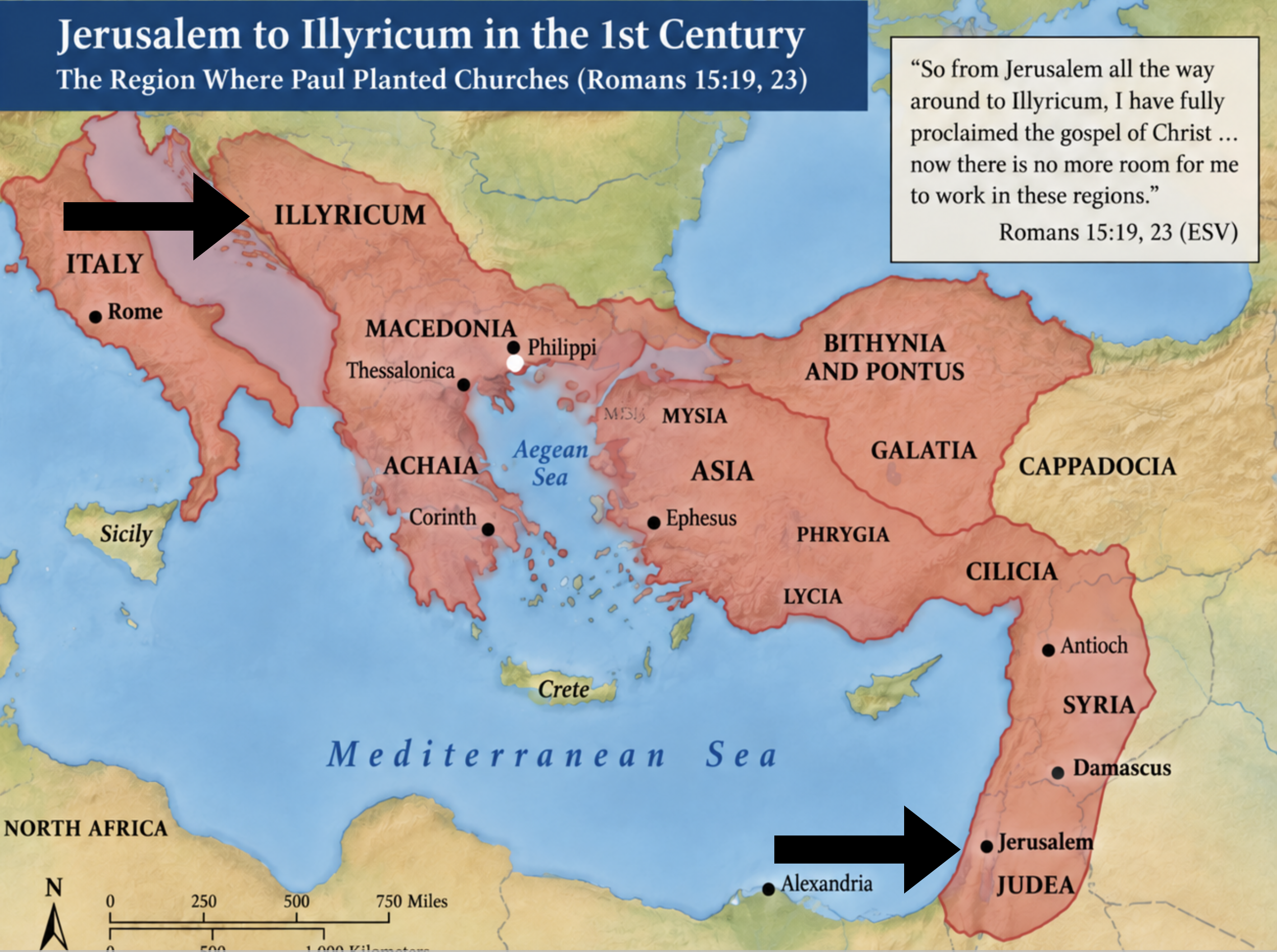
Remarkably, he could say that from Jerusalem to Illyricum--basically the entire Mediterranean world where he had planted churches--there was “no more room” for his missionary work—not because everyone had been evangelized, but because churches had been planted throughout all those regions that could continue the work.
So Paul pressed on toward Spain, where Christ was not yet known. His passion was not merely to win converts, but to plant healthy churches that could keep proclaiming the gospel, making disciples, and planting more churches long after he was gone.[13]
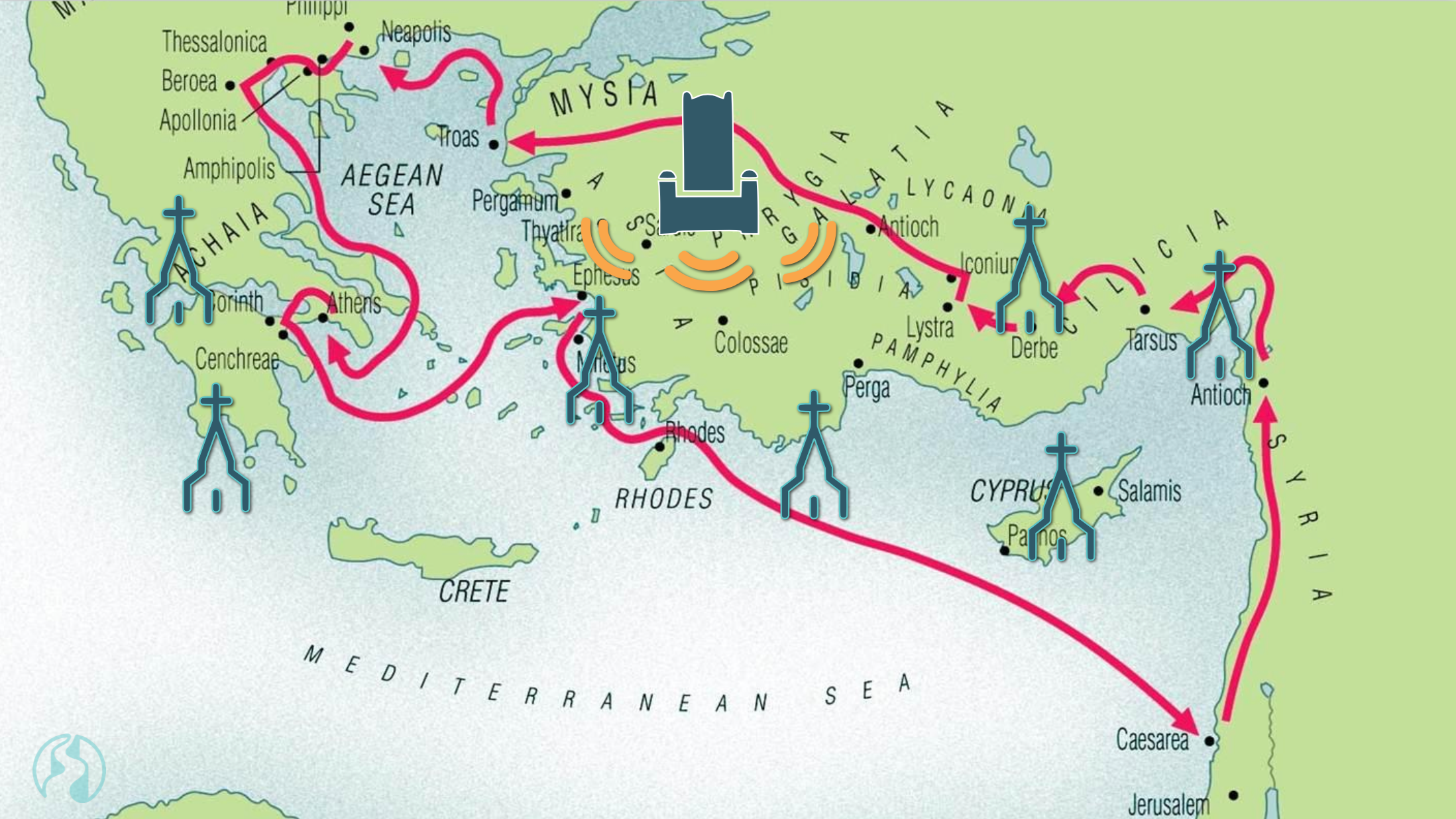
God's model for carrying out his mission mandate became clear: It was through planting, growing, and multiplying healthy churches that transform lives and communities.
III. The Spirit's Magnificent Acts of Restoration Today—Already
So what in the world is God doing now?
In Act Three, we saw the Father send his Son into the world to redeem his fallen people and restore his broken creation.
Then the Father and the Son sent the Holy Spirit to apply Christ’s redemption, give his people new life, and form them into God’s new humanity—the church.
Now the sending movement reaches its climax.
The Father sent his Son.
The Father and the Son sent the Spirit.
And now the Father, through his Son and by his Spirit sends his church into the world.
Jesus said and still says: “As the Father has sent me, even so I am sending you” (John 20:21).
So I send you.
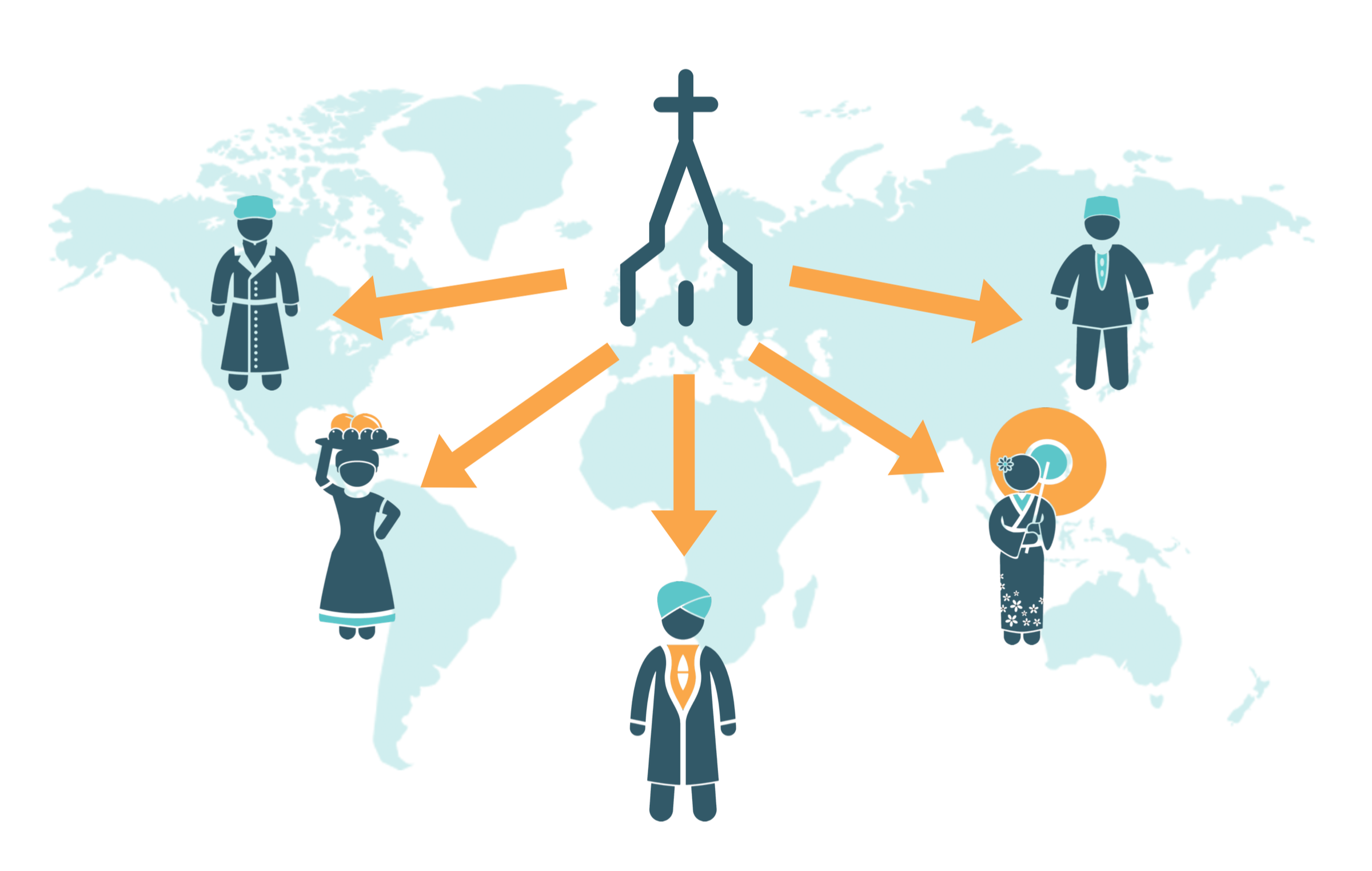
That is what God is doing now: sending his church into the world to fulfill his redemptive mission to make disciples of all nations.
God’s redemptive mission does more than rescue people from the effects of the Fall. Through his Son and by his Spirit, the Father restores us to his creation mission—the calling for which we were created—to live in communion with him, under his gracious rule, as his image bearers, as his instruments making his invisible kingdom visible in every sphere of life for his glory.
Richard Lovelace gives us a helpful way to understand this restored calling. United to Christ by the Spirit, we share in his continuing mission today as his prophets, priests, and kings:
As prophets, we proclaim and uphold God’s truth in a world filled with lies.
As priests, we pray and intercede for others to experience God’s mercy and blessing.
As kings, we use all our resources to help make God’s invisible kingdom more visible, not only in human hearts, but in every sphere of our lives until they reflect the order of heaven. [14]
The Great Commission therefore does more than make converts. It makes disciples whose whole lives are increasingly restored to God’s original creation mission under his triune Lordship.
What in the world is God doing? He is fulfilling his redemptive mission by restoring his people to his original creation mission...and he is calling you to join him.
IV. How the Spirit's Magnificent Acts Reshape Your Story
So how do we join him? In one sense, we already know the answer.
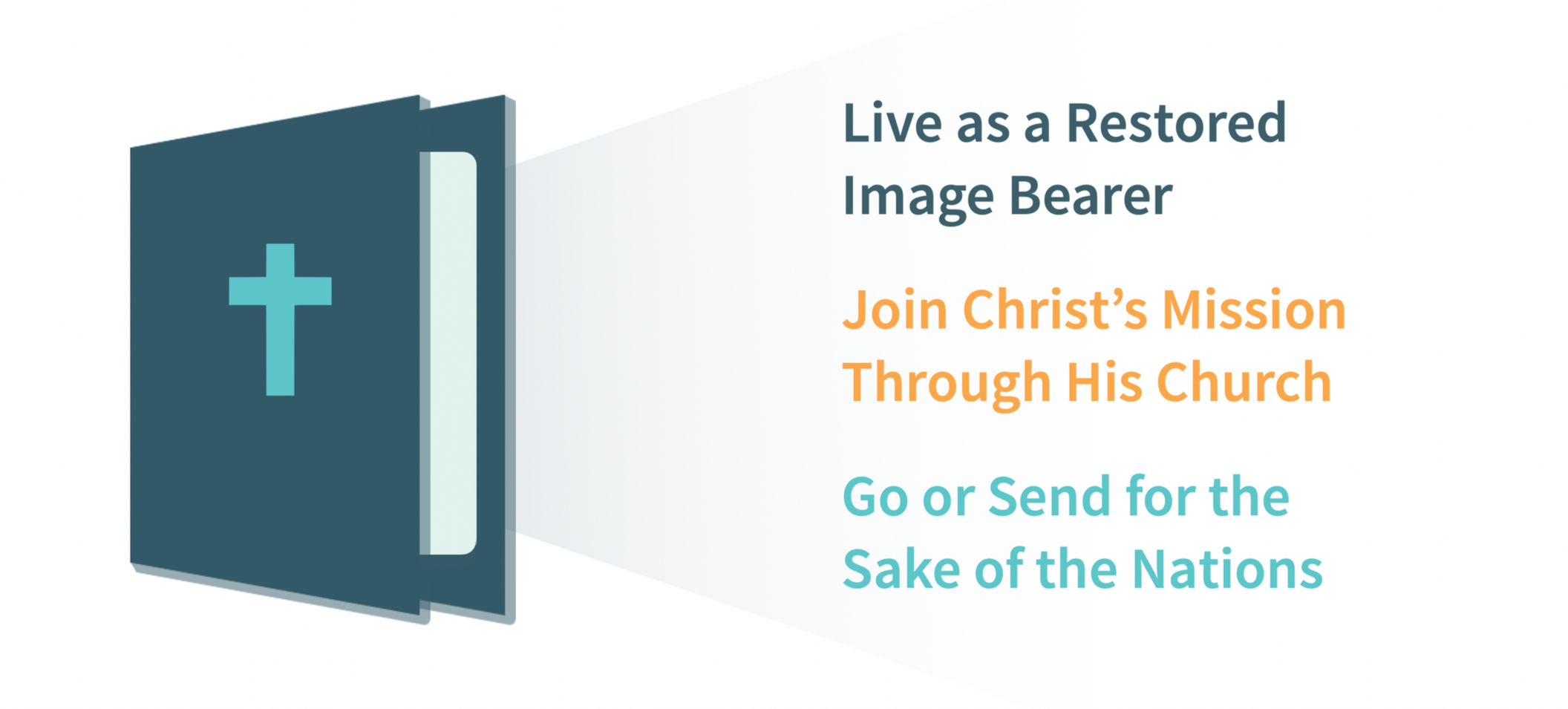
A. Live as Restored Image Bearers
Bring our whole lives increasingly under Christ’s lordship—as prophets, priests, and kings—in our relationships, work, neighborhoods, churches, and every sphere of influence.
B. Join Christ’s Mission Through His Church
Participate in the worship, prayer, evangelism, discipleship, mercy, leadership development, church planting, and sending ministry of our local church.
C. Go or Send for the Sake of the Nations
Dare to ask whether Christ is calling us to cross cultures ourselves or to become more radical senders through prayer, generosity, hospitality, encouragement, and sacrifice.
Conclusion
But perhaps the deeper question is not, “How do I join him?”
The deeper question is, “Why do I so often fail to align my story—my time, talents, and treasures—with his?”
One reason is that our hearts are captured by lesser loves: comfort, possessions, approval, pleasure, reputation, or control.
Here is a truth, often emphasized by Jonathan Edwards and more currently popularized by John Piper, that has deeply shaped my understanding of missions:
You cannot commend what you do not cherish.
You will not commend what you do not cherish.
When you discover a wonderful restaurant, read a great book, or welcome a new grandchild, you naturally want to tell someone.
We commend what we cherish.
So if we are not more radically aligning our lives and resources to commend Christ across the street or around the world, perhaps the first question is not, “How can I try harder?”
It is, “What has captured my heart more than Christ?”
The answer is not guilt-driven missionary activity. We do not serve to earn God’s acceptance. We serve from the acceptance Christ has already secured for us.
The answer is repentance and faith—turning from our idols and drawing nearer to Christ for pardon and power until our hearts increasingly cherish him above our lesser loves in this world.
And as our love for Christ deepens, our lives and resources will increasingly align with his mission—not merely because we ought to, but because we increasingly want to.
FOOTNOTES
[1] Richard J. Middleton, The Liberating Image: The Imago Dei in Genesis 1 (Grand Rapids: Brazos Press, 2005), 27–90, on the creation mandate and humanity's vice-regent commissioning; cf. Gen. 1:26–28.
[2] Derek Kidner, Genesis: An Introduction and Commentary, Tyndale Old Testament Commentaries (Downers Grove, IL: InterVarsity Press, 1967), 71–76, on the scope of the curse; cf. Gen. 3:1–19.
[3] John Frame, Systematic Theology: An Introduction to Christian Belief (Phillipsburg, NJ: P&R Publishing, 2013), 875–900, on the work of Christ in his incarnation, life, death, resurrection, ascension, and reign.
[4] The risen Christ gives the Great Commission in several complementary forms. In Matthew 28:16–20, its clearest and fullest expression, Jesus grounds the mission in his universal authority and commands his followers to “make disciples of all nations” by going, baptizing, and teaching them to obey all he commanded. Luke 24:46–49 emphasizes the proclamation of repentance and forgiveness to all nations and Christ’s command to wait until the disciples are “clothed with power from on high.” John 20:21–23 connects their sending with Jesus’ own mission from the Father and with the gift of the Holy Spirit. Acts 1:8 again joins worldwide witness with the promised power of the Spirit, extending from Jerusalem to “the end of the earth.” Taken together, these passages show that the church’s mission is not merely to make converts, but to make disciples of all nations as the risen Christ continues his mission through his people by the power of his Spirit. Mark 16:15–18 contains a similar commission, but because the longer ending of Mark is textually disputed, Matthew 28, Luke 24, John 20, and Acts 1 provide the strongest primary basis for this formulation.
[5] Matthew 28:18; Luke 24:49; Acts 1:4–8; 2:1–4, 32–36; Philippians 2:8–11; Ephesians 1:20–23. Christ’s declaration that all authority has been given to him does not imply that the eternal Son previously lacked divine sovereignty. Rather, following his humiliation and accomplished redemption, the incarnate Son—the God-man—has now been exalted and invested with the full exercise of his mediatorial kingship. As the last Adam and representative of redeemed humanity, he now reigns at the Father’s right hand, gathering and protecting his church and bringing his enemies into subjection. See Bavinck, Reformed Dogmatics, vol. 3, Sin and Salvation in Christ, ed. John Bolt, trans. John Vriend (Baker Academic, 2006), chap. 7, “The Work of Christ in His Exaltation.” Jesus' phrase echoes Daniel's vision of the Son of Man receiving “dominion and glory and a kingdom” from the Ancient of Days (Dan. 7:14). On the echo of Daniel 7:13–14 in Matthew 28:18, see R. T. France, The Gospel of Matthew, New International Commentary on the New Testament (Eerdmans, 2007).
[6] On the threefold structure of the commission—going, baptizing, teaching—as participial clauses subordinate to the main command “make disciples,” see D. A. Carson, “Matthew,” in The Expositor's Bible Commentary, rev. ed., vol. 9 (Zondervan, 2010).
[7] Luke 24:49; Acts 1:4–8; 2:1–4, 32–33. Pentecost marks the promised outpouring of the Holy Spirit by the exalted Christ and the inauguration of the new-covenant age. This does not mean that the Spirit was inactive before Pentecost, but that his work now takes a new redemptive-historical form in applying Christ’s accomplished redemption and empowering the church for its worldwide mission. See also Joel 2:28–32; John 7:37–39; 14:16–17; 16:7–15. See Richard B. Gaffin Jr., “Pentecost: Before and After,” Kerux 10, no. 2 (September 1995): 3–24, especially his discussion of Acts 2:32–33 and the resurrection–ascension–Pentecost complex. See also Joel 2:28–32; John 7:37–39; 14:16–17; 16:7–15.
[8] See John Murray, Redemption Accomplished and Applied (Eerdmans, 1955), 32–46, on Christ's decisive victory over sin, death, and Satan; cf. Col. 2:15; Heb. 2:14–15.
[9] Acts 2:38–47; 8:14–17; 10:44–48; 15:8–9; Romans 5:12–19; 8:1–4; 1 Corinthians 12:13; 2 Corinthians 5:17–21; Ephesians 2:11–22; Titus 3:4–7. The Spirit applies Christ’s accomplished redemption, giving believers a new standing before God and renewing their hearts and lives. This renewal is personal but not merely individual: the Spirit incorporates believers into Christ’s body, forming one new humanity from Jews and Gentiles. See John Murray, Redemption Accomplished and Applied (Eerdmans, 1955), chap. 9, “Union with Christ”; Herman Bavinck, Reformed Dogmatics, vol. 4, Holy Spirit, Church, and New Creation, ed. John Bolt, trans. John Vriend (Baker Academic, 2008), especially the sections on the application of salvation and the church.
[10] Acts 2:38–39 joins two central blessings of the new covenant: the forgiveness of sins and the gift of the Holy Spirit. Jeremiah 31:31–34 anticipates a covenant in which God will forgive iniquity and remember sin no more, while Ezekiel 36:25–27 promises cleansing, a new heart, and the indwelling Spirit. Together these texts show that the salvation announced at Pentecost includes both a new standing before God and new life through the Spirit. The clean heart and gift of the Spirit in Ezekiel 36 are presented as inseparable dimensions of God’s promised restoration. Jesus draws on this new covenant imagery in John 3:3–8 when he teaches that entrance into the kingdom requires being “born of water and the Spirit.” Paul likewise describes salvation as “the washing of regeneration and renewal of the Holy Spirit” poured out through Jesus Christ (Titus 3:5–6). On regeneration as the Spirit's application of a new heart and new life in fulfillment of Ezekiel 36:26–27 and Jeremiah 31:33, see G. K. Beale, A New Testament Biblical Theology (Baker Academic, 2011).
[11] On Antioch as the first visible, intentionally multiethnic sending church in Acts, see I. Howard Marshall, Acts, Tyndale New Testament Commentaries (Eerdmans, 1980).
[12] On Acts 13–14 establishing the apostolic pattern of proclamation, discipleship, and church formation, see John R. W. Stott, The Message of Acts, The Bible Speaks Today (InterVarsity Press, 1990).
[13] On Paul's missionary strategy as oriented toward planting healthy, reproducing churches, see Eckhard J. Schnabel, Paul the Missionary: Realities, Strategies, and Methods (InterVarsity Press, 2008).
[14] Richard F. Lovelace, Renewal as a Way of Life: A Guidebook for Spiritual Growth (InterVarsity Press, 1985). See especially his discussion of Christ as Prophet, Priest, and King and the believer’s participation in Christ’s ongoing kingdom mission. The formulation here is a summary of Lovelace’s categories rather than a direct quotation.

We provide resources to help leaders
plant, grow, and multiply healthy churches worldwide.