

LEARN
Article Resources
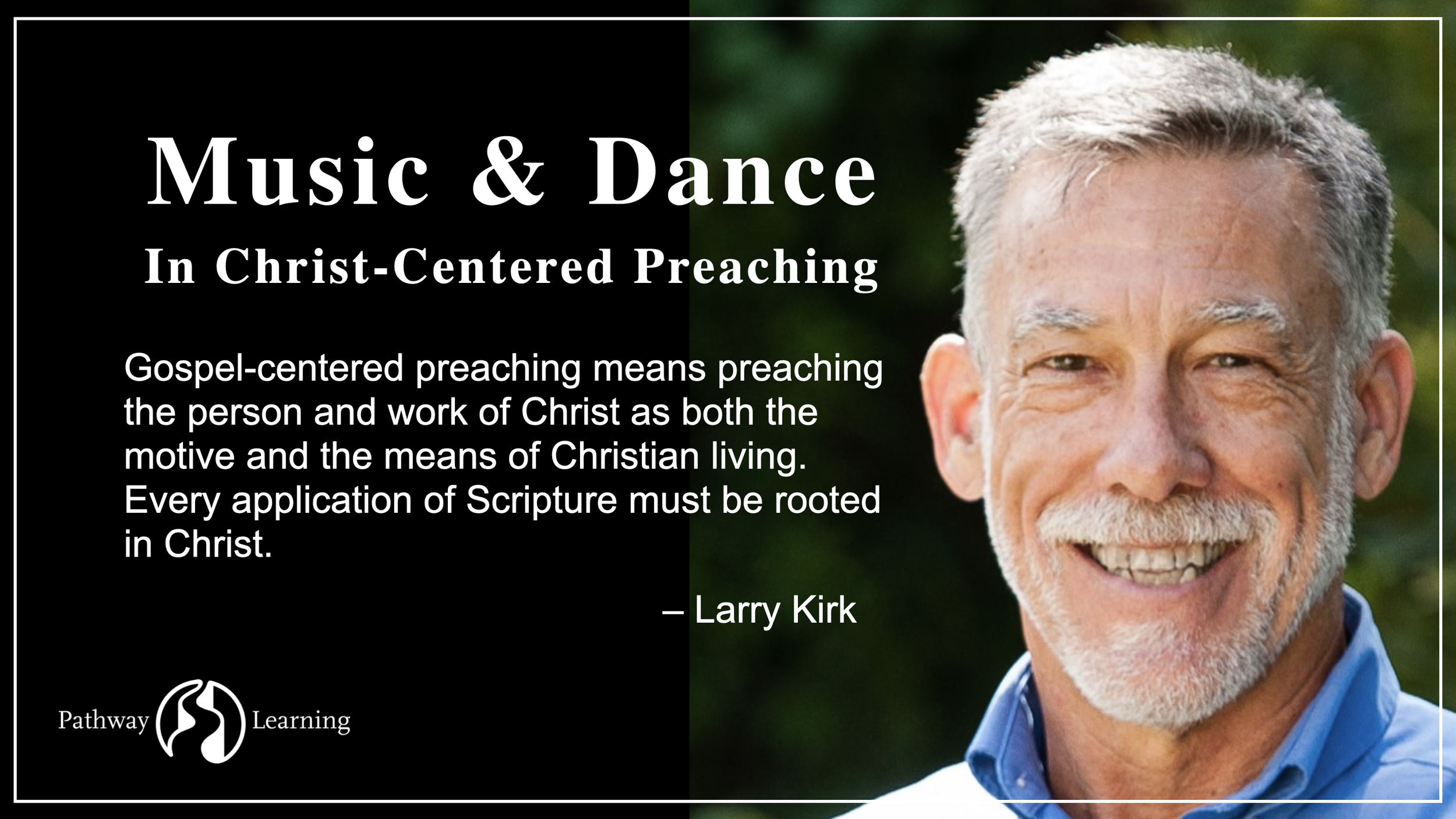
The Music and the Dance: Christ-Centered Preaching Series 2 of 6
Using his powerful “Music and the Dance” analogy, Larry Kirk explains why Christ-centered preaching must always unite gospel and obedience. When the music of God’s grace in Christ is heard clearly, the dance of loving God and others flows from joy—not duty.
By Larry Kirk
One of the most important convictions behind Christ-centered—or gospel-centered—preaching can be captured with a simple analogy I often use when teaching at the seminary, in the church, and even in my own personal life. I call it The Music and the Dance.
Imagine a large house where two kinds of people live together: some who can hear, and some who are deaf. Picture yourself as an observer looking in through a window.
A man walks into a room and presses a button on an entertainment system. Instantly, the room fills with music. It’s obvious he’s enjoying it. He doesn’t just stand still—he begins to move with the rhythm. At first, his movements are subtle, but before long he’s fully dancing. He’s caught up in the music, responding naturally and joyfully to what he hears.
Then a second man enters the room. He is deaf. He watches the first man carefully and thinks, That looks wonderful. I want to do that. So he begins to imitate the movements. At first it’s awkward and uncoordinated, but as he studies the other man closely, he starts to get in step. Eventually, he appears to be dancing in rhythm.
Now imagine a third person standing next to you at the window. He doesn’t know either man. From his perspective, both appear to be doing the same thing—listening to the music and dancing in response to it.
But are they really doing the same thing?
And does it matter that they are not?
That question gets to the heart of this analogy—and to the heart of preaching, ministry, and the Christian life.
There is a kind of preaching and ministry that focuses almost entirely on the dance. It is deeply concerned with whether people are moving correctly—whether they are in step, following the right rhythm, and obeying the proper commands. It prescribes steps, corrects missteps, and calls people out when they fall out of rhythm. But it doesn’t pay much attention to whether people are actually hearing the music.
Over time, this kind of approach can produce a familiar experience. People try very hard to live the Christian life. They keep moving. They keep serving. They keep obeying. But gradually—often quietly—they stop hearing the music.
For some, this happens because of the sheer longevity of ministry. Years of responsibility, disappointment, criticism, and unmet expectations can wear down the soul. The result is a kind of Christian living that still dances, but no longer delights. The movements continue, but the joy fades.
At the core of gospel-centered preaching is a refusal to separate the music from the dance.
Christ-centered preaching does not choose between grace and obedience, or between proclamation and application. It does both. It turns up the music and calls the dance.
In this analogy, the music represents the massive message of God’s redemptive love in Jesus Christ. It is not limited to forgiveness, justification, or the promise of heaven. It includes adoption into God’s family, the indwelling presence of the Holy Spirit, and the sure hope that all things will be made new at the end of history. It is the full kaleidoscope of grace that flows from the incarnation, life, death, resurrection, ascension, and ongoing reign of Christ.
The dance represents the whole Christian life—the call to love God and love others, and all the practical expressions of obedience that Scripture lays before us through its commands and exhortations.
The point of the analogy is not that we should turn up the music and forget about the dance. Nor is it that we should focus on the dance while ignoring the music. Faithful preaching requires both. The dance must always be connected to the music.
This is why gospel-centered preaching means preaching the person and work of Christ as both the motive and the means of Christian living. Every application of Scripture must be rooted in Christ.
The question preachers must ask as they prepare sermons is not simply What should people do? but How does the richness of our redemption in Christ supply both the reason and the power for this obedience?
The dance always has to be related to the music.
This conviction is not new. John Calvin put it plainly when he wrote:
“We ought to read the Scriptures with the express design of finding Christ in them. Whoever shall turn aside from this object, though he may weary himself throughout his whole life in learning, will never attain the knowledge of the truth; for what wisdom can we have without the wisdom of God?”
Charles Spurgeon echoed the same conviction in his own words:
“Preach Christ, always and everywhere. He is the whole gospel. His person, offices, and work must be our one great all-comprehending theme.”
Christ-centered preaching, then, is not about mastering techniques or perfecting steps. It is about ensuring that people hear the music of the gospel clearly and continually—so that their obedience flows from joy, gratitude, and love for Christ rather than from imitation, pressure, or exhaustion.
When the music is heard, the dance follows.