
A Call to Action for Church Leaders: Normalize Adult Baptisms in Worship
By Steven L. Childers
SPECIAL REQUEST: Please do not share this story on public social media platforms to respect Farhan’s privacy and safety, given his background as a former Muslim. However, you may share it with those whom you trust will truly pray for Farhan and not share this story publicly.
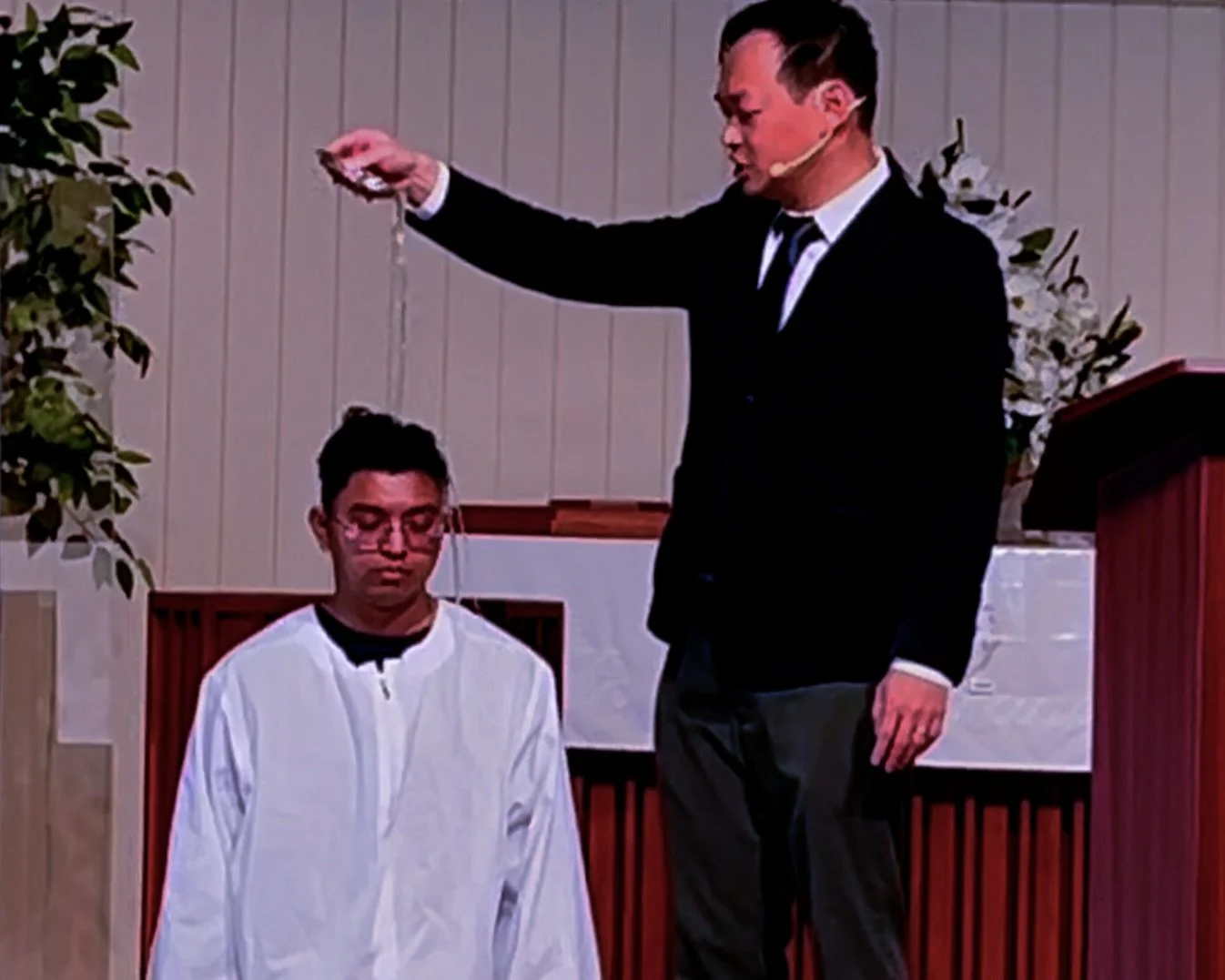
Farhan’s baptism by church planter Moses Han.
January 26, 2025 was a remarkable day in Orlando. Moses Han, a church planter, baptized Farhan—a former skeptic and Muslim—in the worship service of his multi-ethnic church plant.
Farhan’s journey to faith in Christ and baptism was neither quick nor easy, but it highlights an essential truth for church leaders: adult baptisms in worship should not be rare, exceptional events. Instead, they should be the joyful norm, flowing naturally from intentional evangelism and prayer as a way of life.
Farhan’s story began when Moses met him a few years ago. Moses was one of my teaching assistants when I was on faculty at Reformed Theological Seminary, and he now works with me at Pathway Learning. I’m also his church planting coach. So I have the privilege of meeting with him weekly to help him develop the essential ministries needed for his new church plant.
Farhan had many serious questions about Christianity. So Moses invited him to lunch, initiating an 18-month journey of regular conversations, Bible studies in the Gospel of John, and fervent prayer. During long periods of apparent disinterest from Farhan, Moses, I, and others continued to pray.
Eventually, through the faithful work of building a loving relationship, sharing the gospel, and persistent prayer, the Holy Spirit worked, and Farhan repented and believed in Jesus Christ as his Lord and Savior.
The January 26th worship service celebrated God’s grace and mercy demonstrated in Farhan’s baptism, a visible sign of God’s faithfulness. Yet, this experience also serves as a wake-up call. Why are such stories so uncommon in our churches?
Why do so many church leaders accept the absence of adult baptisms as normal?
One visiting Presbyterian minister at this January 26th worship service shared his surprise. He told me that upon hearing there would be a baptism, he assumed it would be an infant baptism. He confessed that he had witnessed only two adult baptisms in PCA worship services over the last several years. Why is this the case? The answer partly lies in how church leaders and members have drifted into patterns of neglecting evangelism.
The Link Between Evangelism and Baptism
The lack of adult baptisms in worship often mirrors a lack of intentional, effective evangelism by church leaders and members. Evangelism is not merely the pastor’s responsibility from the pulpit; it must also be lived out relationally by the church members as a whole. When church leaders fail to model personal evangelism and cultivate a broken heart for the lost, the result is often a congregation that remains inward-focused, fearful of rejection, and hesitant to share Christ with others.
Behind this hesitancy often lies a deeper issue: misplaced affections. People usually fail to evangelize because they cherish idols—like the approval of others—more than Christ. When we truly cherish something or someone, we are compelled to commend it or them. If Christ is our greatest treasure, we will naturally be compelled to share him with others.
Theological Missteps That Undermine Evangelism
Some leaders rationalize their lack of evangelism with a distorted view of God’s sovereignty, emphasizing it at the expense of taking intentional steps to build authentic relationships with unbelievers, effectively share the gospel with them, and pray for them with others. While it is true that God alone saves, he has ordained the means to that end—namely, the faithful proclamation of the gospel and prayer. Neglecting these means while claiming trust in God’s sovereignty is both poor theology and poor stewardship of the gospel.
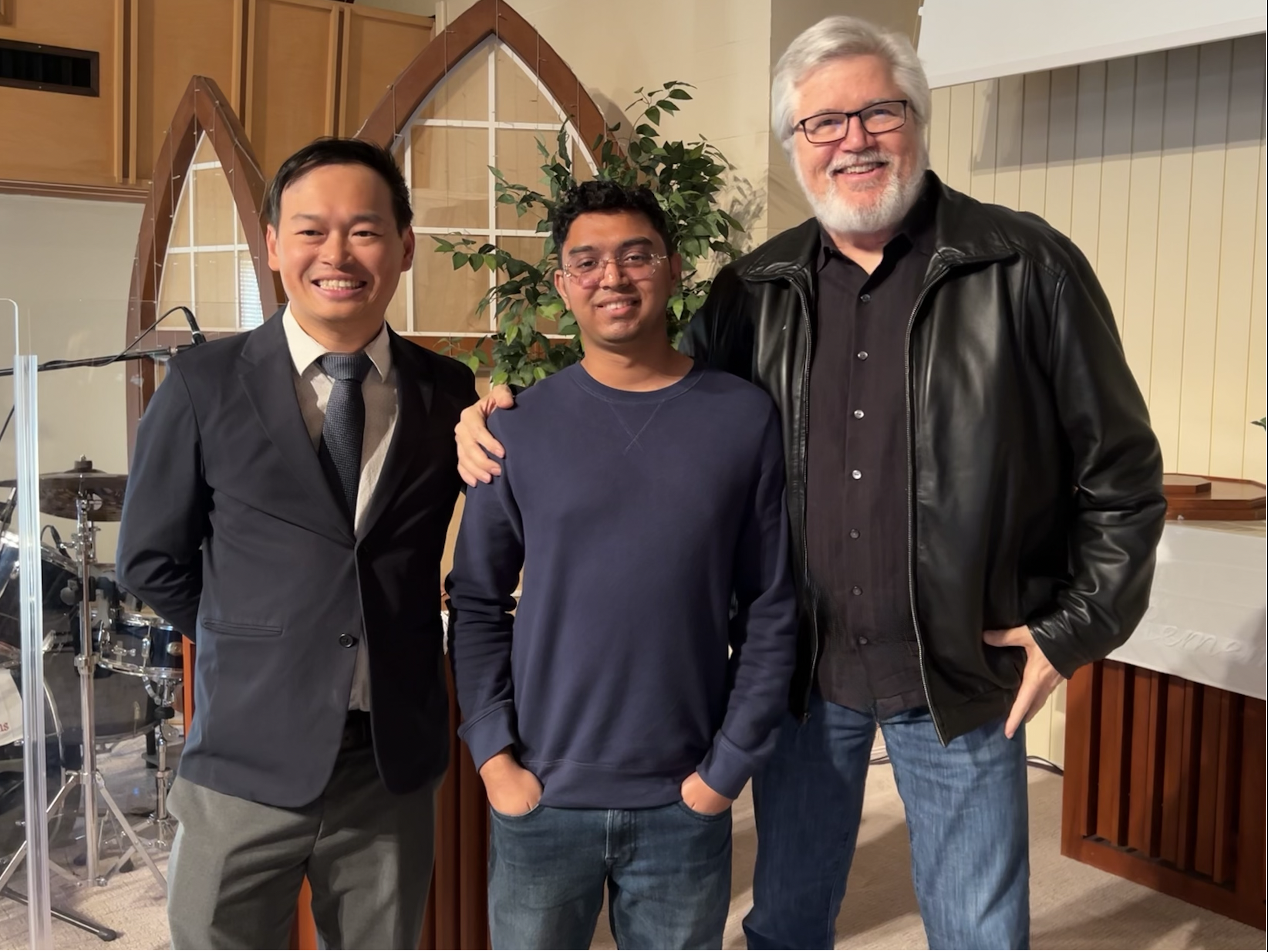
Moses, Farhan, and Steve after Farhan’s baptism.
A Call to Repentance and Renewal
Farhan’s story is a powerful reminder that God delights in blessing the sharing of his gospel, answering prayers for the lost to be saved, and drawing people to himself through the faithful witness of his people.
But for this to happen, church leaders must repent of theological rationalizations and their lack of broken hearts for the lost. They must shepherd by example, leading their congregations to build loving relationships with unbelievers, share the gospel boldly, and pray in faith with expectancy.
Moses’ example demonstrates what can happen when leaders and churches embrace this calling. God honored his dedication to Farhan—investing in his life, sharing the gospel, and persisting in prayer—resulting in today’s baptism.
And it doesn’t stop there. Moses has already started regularly meeting with another unbeliever who has many hard questions about the doctrine of the Trinity. Just like with Farhan, Moses and I are praying, as he shares the gospel with him, and we’re looking forward to the day when this man, too, will come to faith and be baptized in worship.