
Our Founder’s Story: A Path Forward for Leaders Who Can’t Leave
Because calling should never be crushed by geography, income, or circumstance.
By Steven Childers
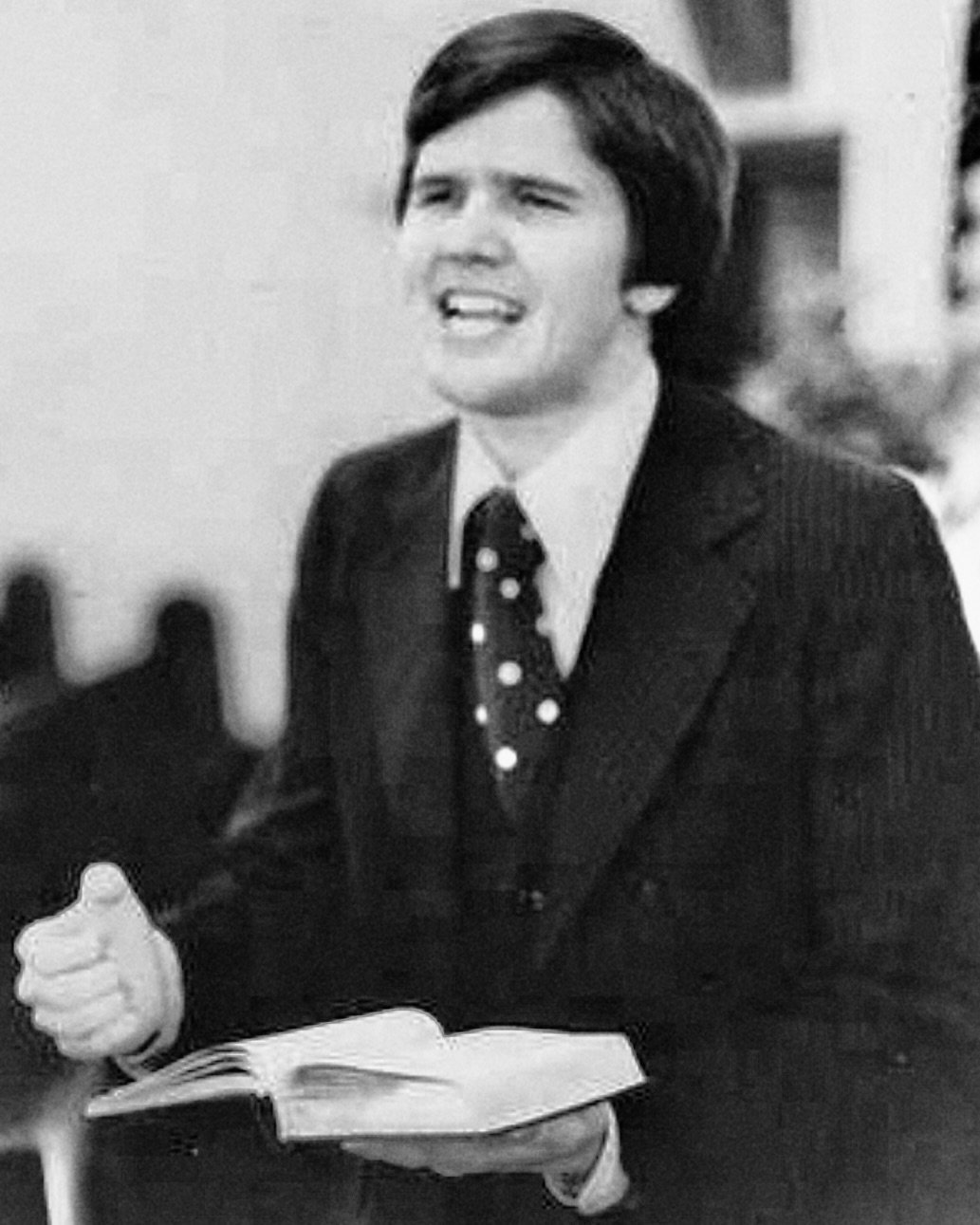
Steve Childers preaching at his first church plant in Oklahoma City in the 1970s before he was told by his denomination that he had to leave the church.
I was an underserved church leader.
I knew God had called me. Others affirmed my gifts. And I was planting a new church in a challenging urban neighborhood of a large city.
By God’s grace, people were coming to faith. Lives were being transformed. Small groups began to form. Ministries to a declining neighborhood took root. Worship services began.
Then, just as the church reached a fragile and more public stage, denominational leaders told me I had to leave.
I wasn’t ordained.
I said, “I can’t leave this church now. I’m their only leader. The church can’t afford a full-time pastor. Is there any other way?”
They told me there was one rare exception—but it hadn’t been used in decades. It went back to an old model once practiced by Princeton Seminary, sometimes called the Log Cabin approach: personal apprenticeship, close mentoring, and rigorous examinations—without leaving the field.
That’s when I met my guides.
Kyle Thurman was an older pastor who had faced the same problem years earlier. After returning from the Battle of Iwo Jima as a Marine, God called him into ministry, and this very exception had been used for him. When he heard my story, he felt compelled to help.
Bob Cox was another seasoned pastor, now retired, who was willing to think outside the box. He had been a close friend of Francis Schaeffer—whose writings had deeply shaped me—and he committed himself to walking with me, drawing from both his pastoral wisdom and his seminary training.
Bob Peterson was a young pastor in a nearby city, also willing to take a risk. Because of his proximity, he frequently opened his home to me and mentored me closely, grounding our work in the traditional seminary education he had received.
These men—wise, courageous, and credible—walked with me through a painful, humbling, and exhausting process that ran against the grain of our denomination’s most cherished traditions.
They didn’t lower the bar. They raised it.
I was required to take the same exams as seminary-trained candidates—including New Testament Greek. It was incredibly challenging, but by God’s grace, I passed the exams.
A commission of pastors from the denomination gathered around me—men from other states and nearby cities—and they ordained me by the laying on of hands.
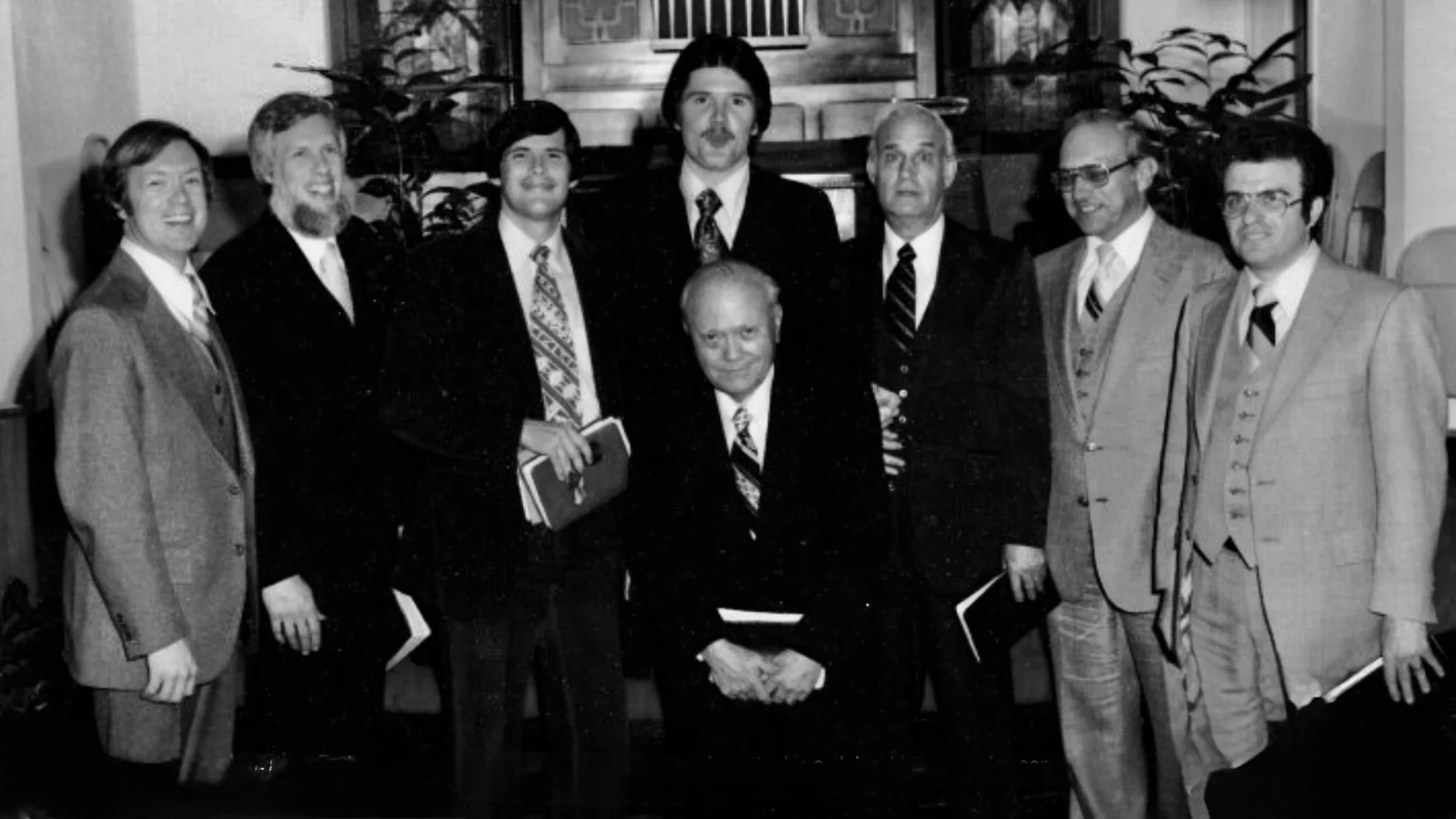
Childers’ ordination commission in 1979. Bob Cox-center front, Bob Peterson-Steve’s right, Kyle Thurman-Steve’s left. The denomination was the Reformed Presbyterian Church Evangelical Synod (RPCES) which later joined with the Presbyterian Church in America (PCA).
Over the next several years, leaders were raised up. Ministries to the community were strengthened. Lives were transformed. And when the church became stable, strong, and able to support a full-time pastor, I knew my work there was finished.
Then I went to seminary—not because I had to, but because I wanted to. Over time, I studied at four seminaries and graduated from three.
I planted another church in another large city, and after ten years—when it was healthy, strong, and well-led—I knew once again it was time to leave.
God gave me a heart to help raise up the next generation of church leaders to plant and grow healthy churches that transform lives and communities around the world. So I spent more than two decades as a seminary professor, training those who could afford to come.
But I never forgot the ones who could not.
Throughout those decades as a full-time seminary professor, I also traveled around the world, helping bring seminary-level training to called and gifted church leaders who would never have access to it otherwise.
After fifteen years of church planting and pastoring, and more than twenty years of teaching in seminary and training indigenous leaders and missionaries on the field, I began giving the rest of my life to help equip the underserved leaders around the world like I once was–leaders who shouldn’t have to abandon their churches to be equipped, leaders who shouldn’t be disqualified by geography, income, or circumstances, leaders who are called by God to plant and grow healthy churches that transform lives and communities.
That’s why Pathway Learning exists. Because there are millions of called and gifted church leaders around the world who deserve a clear path forward.
And this is where you come in.
Pathway Learning can serve as a guide, provide the learning paths for, and walk alongside these very leaders. But the story only moves forward because people like you choose to step in with us.
When you support us, you stand beside a called, gifted leader who cannot leave. You help provide the high-quality training desperately needed to plant and grow healthy churches.
You help turn callings into lifelong faithfulness—and faithfulness into transformed lives and communities around the world.
Your generosity doesn’t just support a mission organization. It changes the trajectory of leaders, churches, and communities—often for generations.
Together we can ensure that calling is never crushed by circumstance, that churches are strengthened where they already exist, and that leaders around the world are equipped to serve faithfully right where God has placed them.
This is the story God is still writing.
And you are invited to play a vital part in what comes next.
For the King!
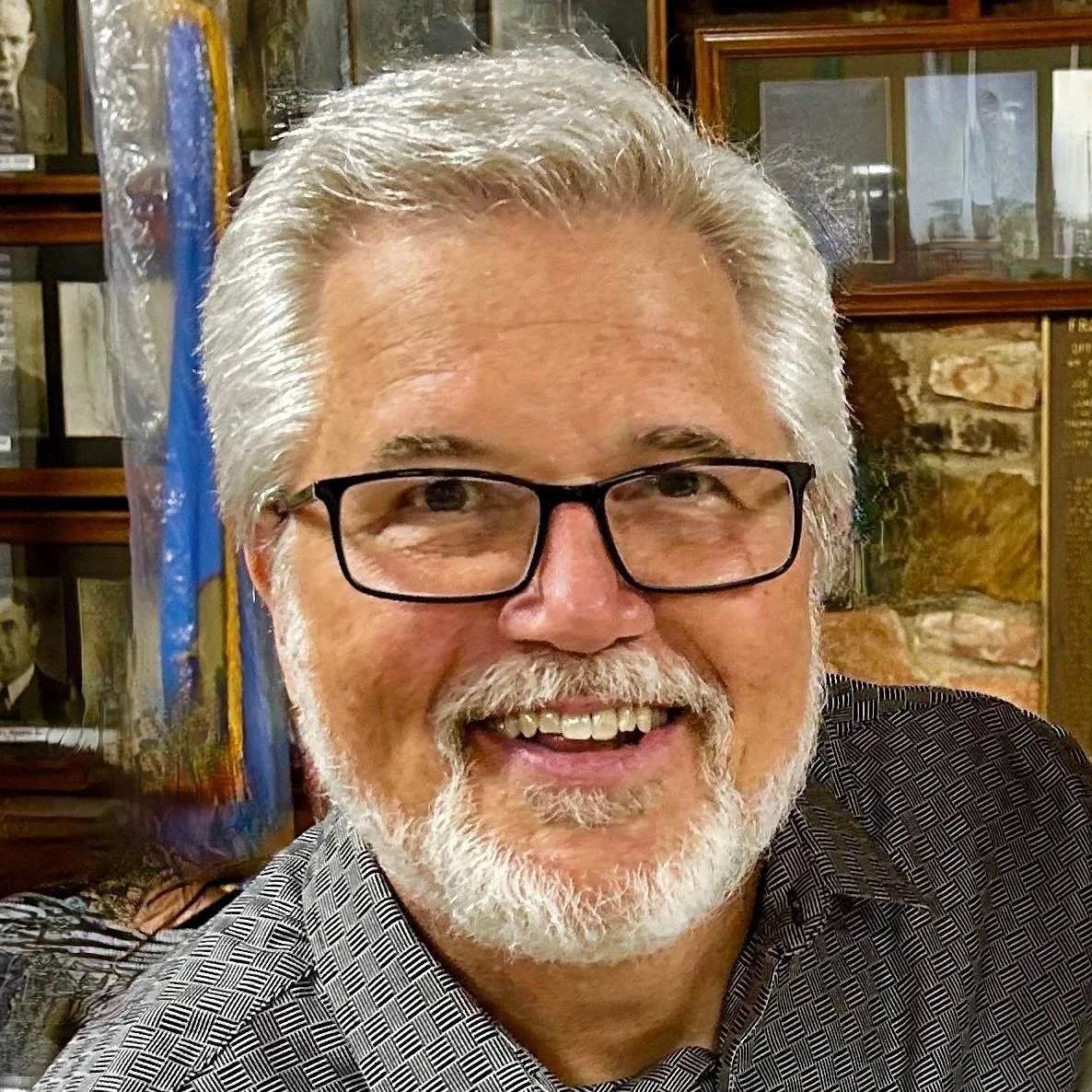
Steve Childers
President, Pathway Learning
P.S. We’re actively looking for new partners to help us bring this solution to more church leaders around the world. There are three simple ways you can be part of this story:
you can become a prayer partner and pray for our ministries around the world
you can become a giving partner and help support this work financially
you can become a ministry partner by using Pathway Learning resources to help equip leaders in your own church or network.
However you choose to engage, you are helping ensure that calling is never crushed by circumstance.
WAYS TO GIVE
Online
Give using your credit card or bank draft through our secure online form
Phone
Call us at 407-682-6942
Mail
Send a check:
Pathway Learning, P.O. Box 2062
Winter Park, FL 32790
Matching Gift
Many employers sponsor matching gift programs and will match any charitable contributions made by their employees. Your employer may be able to double your gift.
Other Ways to Give
Gifts from Donor Advised Funds and IRA accounts also help advance our mission. You may give securities either by transfer of the certificate of ownership or through account transfer arranged by your broker. In each case, you avoid the tax on any potential gain and receive a deduction for the full fair market value of securities. To give a gift of stock, email us at staff@pathwaylearning.org, call us at 407-682-6942, or write us at P.O. Box 2062, Winter Park, FL 32790.
