
My New Experiences in Worship Using Older Worship Forms
Reflections from Lookout Mountain Presbyterian Church
By Steve Childers
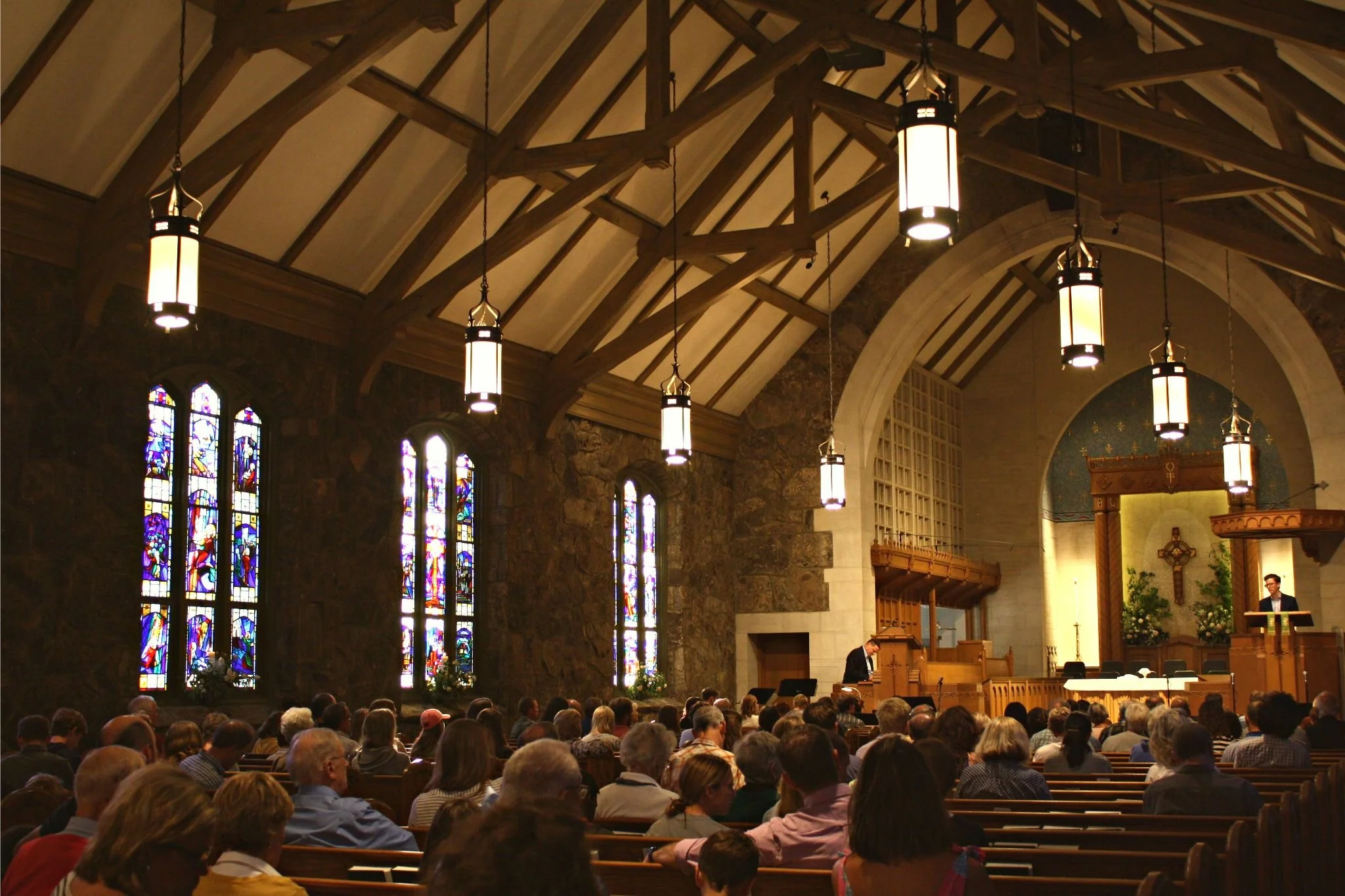
Lookout Mountain Presbyterian Church, Lookout Mountain, Tennessee
After recently relocating from Orlando, Florida to Lookout Mountain, I’ve begun worshiping at Lookout Mountain Presbyterian Church (LMPC). Each Sunday, LMPC offers four worship services—two more formal and two more contemporary. While their styles differ, all are remarkably Christ-centered and God-honoring.
This diversity in worship expression is rooted in LMPC’s stated core value of worship:
“Our busy, distracted lives require that we regularly reconnect with God and reorient ourselves to live by his truth. Therefore, we form weekly worship services that are robust, historic, liturgical, and varied. With hearts inflamed, we become emboldened to engage daily in worship of God alone.”
The service I’ve been attending follows a historically rooted and formal order of worship. The more contemporary services follow the same historic structure but with a less formal tone and a greater use of contemporary songs. Week after week, I find myself deeply encouraged by elements of this worship that are helping me experience the beauty and depth of my union with Christ in fresh ways.
As part of my weekly mentor/coach meetings with Rev. Moses Han—a former RTS student, now a dear friend, ministry partner at Pathway Learning, and church planter in Orlando—I’ve begun sharing these reflections as part of our ongoing conversations about worship and pastoral ministry.
What follows are a few reflections from my Lord’s Day worship yesterday that I plan to share with Moses this week. My hope in sharing them more broadly is not to suggest that more formal worship is better than less formal or more contemporary forms, but simply to highlight how these worship practices have been helping me draw nearer to the Father, through his Son, by his Spirit.
Rediscovering the Depth of Historic Hymns
One of the most meaningful aspects of worship at LMPC has been the regular singing of historic hymns. I often find myself singing lyrics I don’t recall ever singing before—even though I know I must have.
Yesterday, for example, we sang:
“Join All the Glorious Names” (based on Phil. 2:9), which ends with the powerful image: “behold I sit in willing bonds beneath thy feet.” The picture of joyful, intentional submission to Christ as the upside-down path to true freedom deeply stirred my heart.
“My Jesus, I Love Thee” (based on 1 John 4:19), which draws a connection between Christ’s suffering and our future glory: “I love thee for wearing the thorns on thy brow... I’ll sing with the glittering crown on my brow.” A beautiful portrayal of our union with Christ in both suffering and glory.
These gospel-rich words are helping me worship with renewed awe—not because of a change in musical style, but because of the theological substance of what we are singing.
Preserving a Sense of Sacred Focus
At LMPC, the leaders are deeply committed to uninterrupted worship. All announcements—including practical ones, such as the location of gluten-free communion bread—are made before the Call to Worship. Occasionally, videos or special presentations are shown before the service begins or after the benediction, when the congregation is invited to stay seated for no more than ten minutes.
This intentional structure has helped me remain more focused on Christ throughout the entire worship service. I’ve come to appreciate how every part of the liturgy contributes to an undistracted sense of reverence and joy.
Teaching Through the Order of Worship
Each Lord’s Day, the worship leaders take great care to guide the congregation through the service with brief, thoughtful explanations. Sometimes they explain the purpose of the confession of sin, the assurance of pardon, or the offering—not merely as tradition, but as meaningful acts of worship and mission, all centered on God’s glory among the nations.
Yesterday, I learned that 30% of LMPC’s annual budget goes to missions, and that $65,000 is given annually to their local presbytery specifically for church planting. That kind of transparency and missional clarity fills me with confidence and joy in giving. It reminds me that our giving is a tangible way we participate in the advancement of God’s kingdom and the spreading of his glory among the nations.
Fencing the Table with Pastoral Warmth and Theological Depth
The way the Lord’s Supper is served at LMPC—consistently led by all five teaching elders—is among the most pastoral and thoughtful I’ve experienced. The “fencing of the table” is clear, biblical, and full of grace:
The pastors remind the congregation: “This is not LMPC’s Supper, but the Lord’s Supper.”
An open invitation is extended to all baptized believers in good standing with a gospel-preaching church—those at peace with God and others.
Seekers are warmly welcomed, encouraged to observe and reflect rather than participate in something they’re not yet ready to embrace.
Covenant children who haven’t yet made a public profession of faith are also graciously addressed. They’re encouraged to watch carefully and ask their parents about the significance of the bread and the cup.
The tone is never mechanical or exclusionary, but consistently pastoral, invitational, and full of gospel hope.
Encouraging Communion Meditations
The Communion portion of the service is accompanied by Scripture-based meditations, hymns, and instrumental music that help center the congregation on Christ. Yesterday, we sang a hymn during the passing of the bread, followed by a quiet instrumental meditation during the passing of the cup. Printed gospel-rich lyrics provided meaningful reflection during this time.
These sacred pauses during the Lord’s Supper have helped me commune with Christ more fully.
A Concluding Word
This brief season of worship at LMPC has reminded me that the way we worship on the Lord's Day shapes how we see and respond to God in all of life—for who he is as triune LORD (his attributes) and for all he has done–the Father's acts of creation, the Son's acts of redemption, and the Spirits acts of restoration.
Again, I’m not advocating for one form of worship over another. But I am grateful for the way these particular words, rhythms, and practices are drawing me nearer to God in ways I didn’t expect. I hope these reflections might encourage fresh thought, deeper conversation, and greater attentiveness to the way all our expressions of corporate worship point us to the beauty and glory of our triune God.
