

LEARN
Article Resources
The Practice of Mercy: Mercy Series 6 of 6
True mercy requires more than good intentions. This article explores how defining poverty as broken relationships reshapes how we serve others. By understanding when to offer relief, rehabilitation, or development, churches can avoid harm and foster lasting transformation through wise, holistic, and biblically grounded mercy ministry.
By Dr. Steven L. Childers
How we understand and define poverty will determine the practical methods we use to help alleviate poverty. For example, if we think the root cause of poverty is a lack of material things, then our solution will focus mostly on giving material things to the poor.
If we think the root cause of poverty is oppression from unjust governments, our solution will focus on working for social justice. If we think the source of poverty is mostly sickness, our focus will be on providing health care to the poor. And if we believe poverty’s root is a lack of knowledge, we’ll focus on helping bring education to the poor.
In these articles, we’ve established from Scripture that the root cause of poverty is ultimately broken relationships with God, ourselves, others, and creation. This means we’re all poor, just in different ways, because each of us experiences some form of brokenness in all four foundational relationships.
Therefore, showing mercy to the poor is primarily a ministry of reconciliation, helping alleviate their suffering by strengthening their broken relationships with God, self, others, and creation.
To be effective in our ministry to the poor, we must realize that one approach or method will not work well in every situation. We must determine which of three general approaches will best serve the poor at a particular time and place. The failure to distinguish the appropriate approach can result in doing more harm than good.
The first approach is called “Relief.” Relief is appropriate when people are not capable of helping themselves. Brian Fikkert, co-author of the book When Helping Hurts, writes, “Relief can be defined as the urgent and temporary provision of emergency aid to reduce immediate suffering from a natural or man-made crisis.”
Jesus illustrates relief to the poor in his story of the Good Samaritan who stops everything in order to provide emergency care for the man who was beaten, robbed, and left by the side of the road. The Apostle Paul’s financial collections among all the churches is another example of providing relief to the hungry and poor at the Jerusalem church.
But we must always remember that some people are so critically ill and near death that they cannot help themselves. Effective mercy ministry to them is often just being with them and providing them comfort until they die.
The second approach is called “Rehabilitation.” This is appropriate when people can participate to some degree in their own recovery from a crisis. Fikkert writes: “Rehabilitation begins as soon as the bleeding stops; it seeks to restore people and their communities to the positive elements of their pre-crisis conditions.”
The third approach to showing mercy to the poor is called “Development.” This is appropriate when people are able to participate in improving their lives beyond their long-standing levels of poverty. Fikkert writes, “Development is not done to people or for people but with people.”
The development approach involves walking with the poor through a long-term, holistic reconciliation process that helps them alleviate their suffering and flourish by strengthening their relationships with God, self, others, and creation.
To be effective in showing mercy to the poor, we must determine which of these approaches is appropriate. One of the most common mistakes well-intentioned people make is using a relief approach with people who need rehabilitation or development. Giving temporary relief handouts of material assistance to people who need long-term rehabilitation and development is likely to do harm.
So what’s needed to help your church have an effective mercy ministry to the poor?
First, prepare your church for mercy ministry no matter how new or old your church. It’s not just the materially poor who struggle with addictions, mental illness, broken families, and unemployment, etc.
A mercy ministry is required in your church no matter what socio-economic group makes up your church or community. This involves preaching and teaching about the importance of ministries of mercy, as well as equipping and modeling mercy ministries to the poor both inside and outside the church.
On a practical level, this normally includes the church leaders establishing guidelines and policies for how the church will respond to the needs of the poor. These policies will differ between churches based on each church’s unique resources and communities. Randy Nabors created a series of questions to help churches establish their own policies, including:
Who has priority in receiving help?
What kind of help will you give?
What kind of help will you not give?
What is the limit of your help?
What structure will you use for members?
What structure will you use for strangers?
Who makes decisions on exceptions?
When do you call in the church leaders?
Regarding our priorities in assistance, since the Apostle Paul teaches in Galatians 6:10 that we should “do good to everyone, and especially to those who are of the household of faith,” we should give priority to caring for church members and their families. Some churches also give priority to people in their immediate community and to specialized mercy ministries.
Another way to help mobilize your church to have an effective mercy ministry is to diagnose the unique needs and brokenness in your church and community. This can be done by conducting informal and/or formal surveys inside and outside your church. A helpful question to consider answering is, “What are ways that sin has uniquely damaged our church and community?” This can help you determine the levels and forms of injustice, hunger, sickness, racism, prejudice, greed, materialism, etc.
But when diagnosing the needs of the poor inside and outside of the church, you must avoid having an inordinate focus on what is wrong with the poor that needs to be “fixed” by those outside of their community. The assumption that the solutions for poverty must come from people outside their community is often wrong, arrogant, and exacerbates their feelings of inferiority or the outsiders’ feelings of superiority.
Instead, effective mercy ministry starts by focusing on the gifts, abilities, and assets God has given to the poor, and it always includes the poor in the design, development, and implementation of mercy ministries.
Although every church should have its own mercy ministries under the oversight of church elders and deacons, it’s often wise and helpful to partner with other churches and organizations with a proven history of effectively serving the poor inside and outside the church.
Church historian, Richard Lovelace calls all who are in Christ to participate in his ongoing ministry to a broken and poor world as prophet, priest, and king.
We are priests as we pray for those near us and draw them into the sphere of God’s mercy and blessing. We are prophets as we hold a biblical straightedge against whatever is crooked around us. And we are kings as we use whatever powers we have to straighten what is crooked, reshaping whatever falls within the scope of our responsibility until it reflects the order of heaven.[1]
[1] Richard F. Lovelace, Renewal as a Way of Life, p. 168
The Heart for Mercy: Mercy Series 5 of 6
The Apostle Paul’s ministry was shaped by a deep heart for mercy—both for the lost and the poor. He viewed generosity not as duty, but as worship rooted in God’s grace. This article explores how mercy fueled his mission and challenges believers to live with the same sacrificial love.
By Dr. Steven L. Childers
We can know a lot about the Apostle Paul’s thinking and ministry methods from studying the New Testament. But we can also learn a lot about the underlying heart affections that motivated him to do his ministry.
Paul was not a cold-hearted, ivory tower theologian. He was a risk-taking church planting missionary with a heart for mercy. Two of the most prominent objects that captured his heart for mercy were the lost and the poor.
His heart of mercy for the lost includes both Gentiles and Jews without a saving knowledge of Jesus. Yet Paul had another object of his merciful heart much less known. Throughout his ministry and writings, he places a high priority on encouraging the churches to show mercy to the poor.
During Paul’s ministry, under the rule of the Roman Emperor “Claudius” (Acts 11:28), there were several years of bad harvests resulting in a widespread famine. Israel and Jerusalem were hit especially hard. The first century Jewish historian, Josephus, writes about the impact of the famine on Jerusalem. “[T]here was a famine in the land that overtook them, and many people died of starvation.” (Antiquities 20, chapter 1.3-2.5)
So, how did Paul respond? He did not ignore it and just continue doing his church planting work, as if the only thing that matters are people’s souls. Instead, throughout all the years of his ministry, wherever he planted and developed churches, he called on the churches to show mercy to the poor.
More than once, Paul established relief funds for the poor. This is why significant portions of his letters focus on financial collections he was receiving from the Gentile churches to deliver to the poor among the Jewish believers in the Jerusalem church. (1 Cor 16:1–4; 2 Cor 8:1–9:15; Rom 15:14–32)
In Acts 11:28 we read that after hearing about the “great famine over all the world … the disciples determined, every one according to his ability, to send relief to the brothers living in Judea” (Acts 11:29). These “disciples” were the leaders and members of the Antioch church – Paul’s sending church. In Acts 11:30, we learn what happened next: “And they did so, sending it to the elders [at the Jerusalem church] by the hand of Barnabas and Saul [Paul].”
Paul saw his commitment to help raise and deliver money for the relief of the poor as a vital and deeply spiritual part of his ministry for which he was willing to take great risks and sacrifice (Rom 15:30-31).
When Paul, along with Barnabas and Titus, went to Jerusalem to meet with the elders and Apostles to take the offering, he also set before them the message of the gospel he was proclaiming to the Gentiles. Paul wanted the Apostle’s affirmation of the gospel he was preaching “in order to make sure I was not running or had not run in vain” (Gal 2:2).
After the Apostles and elders heard about Paul’s message and ministry, they strongly affirmed his message and his ministry to the Gentiles by giving him “the right hand of fellowship (Gal 2:9).” But Paul wrote that these “pillars” of the Jerusalem church had one special request they wanted him to remember as he continued to proclaim the gospel to all the Gentiles. He wrote, “All they asked was that we should continue to remember the poor, the very thing I was eager to do” (Gal 2:10).
Showing mercy to the poor was not just a duty to Paul. He was “eager” to continue remembering the poor in his church planting among the Gentile nations. Why was he so eager to care for the poor?
His eagerness was not only because of his compassion. Instead, Paul saw the church’s participation in giving sacrificially for the poor as an act of worship. To the church at Corinth, Paul wrote about the financial collection he was receiving from the Gentile churches for the poor in Jerusalem.
Now concerning the collection for the saints: as I directed the churches of Galatia, so you also are to do. On the first day of every week, each of you is to put something aside and store it up, as he may prosper. (1 Cor 16:1-2)
The Greek term Paul uses for “the collection” (λογεία) has strong worship overtones. It was intended to be a significant part of their Lord’s Day gatherings for worship.
In his second letter to the Corinthian church, Paul tells them about an amazing display of God’s grace toward the poor in Jerusalem shown among the churches of Macedonia (Europe) who themselves were suffering “severe afflictions” and “extreme poverty.” Paul writes:
We want you to know, brothers, about the grace of God that has been given among the churches of Macedonia, for in a severe test of affliction, their abundance of joy and their extreme poverty have overflowed in a wealth of generosity on their part. For they gave according to their means, as I can testify, and beyond their means, of their own accord, begging us earnestly for the favor of taking part in the relief of the saints. (2 Cor 8:1-4)
Paul saw this example of the poor churches in Macedonia giving sacrificially and cheerfully to the poor churches in Jerusalem as originating from one source, “the grace of God.” A few verses later, Paul amplified this saying, “For you know the grace of our Lord Jesus Christ, that though he was rich, yet for your sake he became poor, so that you by his poverty might become rich” (2 Cor 8:9).
In this succinct summary of the gospel, Paul reminds them and us of the amazing grace of God that is ours only because Jesus sacrificed all his heavenly riches so we would no longer be spiritually poor. And here Paul calls them, and us, to draw deeply from the riches of God’s grace toward us in Christ and give sacrificially and generously, not only our money, but also our lives for the sake of the poor.
Paul makes clear to one of the Macedonian churches at Philippi, that their giving to him was about much more than helping him or others in need. He says it was for their sake. He writes, “Not that I seek the gift but I seek the fruit that increases to your credit”(Phil 4:17).
What was this credit, this benefit, he longed for all the members of the churches to receive through the sacrificial giving of their lives and money to the poor? It was for them to experience doing this in response to God’s mercy to them, as “a fragrant offering, a sacrifice acceptable and pleasing to God” (Phil 4:18).
The Goal of Mercy: Mercy Series 4 of 6
True mercy addresses more than immediate needs—it targets the root of human suffering: broken relationships with God, self, others, and creation. By restoring these connections, mercy points beyond temporary relief to lasting transformation and the hope of God’s coming kingdom.
By Dr. Steven L. Childers
Earlier we saw that the essential building blocks of all human flourishing and happiness are found in four relationships: our relationship with God, ourselves, others, and creation.
All the brokenness in the world is merely a symptom of the deeper problem of brokenness in these relationships that lies at the heart of the human condition. This relational brokenness causes people to be alienated from God, themselves, others, and creation. This alienation is at the heart of the human predicament and the primary reason why humanity does not flourish as God designed.
This is why there is so much physical, spiritual, social, cultural, economic, and political brokenness. And this is why there is so much suffering, violence, poverty, disease, and injustice in the world.
Humanity and creation are in desperate need of redemption and restoration to God’s original design. And it’s into this fallen world that Jesus came to declare that God’s original purpose for humanity established at creation still stands.
This is the good news that the Father’s creation, ruined by humanity’s sin, is being redeemed and restored through the person and work of Jesus Christ, by his Spirit, into the kingdom of God.
So what does this have to do with the ministry of mercy?
Everything. Since the root cause of poverty is relational brokenness, the essential goal of mercy ministry must be the alleviation of relational brokenness by helping people be reconciled to God, themselves, others, and creation.
Just as there are different types and degrees of relational brokenness, so there are different types and degrees of corresponding ministries of mercy. Think for a moment of this worst case scenario, someone experiencing severe brokenness and alienation in all four essential relationships in life:
Relationship with God: They’re alienated from God, lost, under God’s just wrath, and at risk of eternal suffering.
Relationship with Self: They’re alienated from themselves, filled with shame and self-contempt, often rooted in mental illness.
Relationship with Others: They’re alienated from their family and former friends, without a community of care and support. They’re alone.
Relationship with Creation: They’re alienated from work, without an adequate job, housing, food, health, dignity, and purpose.
A chronically homeless person often experiences severe brokenness in all these relationships at once. Some are without Christ, some are mentally ill, chemically addicted, estranged from family and friends, and without an adequate job. So they’re often without adequate, affordable housing, food, health, dignity, and purpose. It’s into this kind of brokenness we’re called to show love and mercy.
No individual or church normally has the ability to meet all the needs of someone experiencing such severe brokenness and alienation. But it’s helpful to understand that the ultimate goal of mercy ministry, although rarely attained, is to help alleviate all their suffering, brokenness, and alienation in all four of their essential relationships in life so they can flourish in life according to God’s design.
The greatest possible alleviation of suffering and the greatest possible human flourishing in this life is only a small foretaste of the life to come. When Jesus returns, he will eliminate all suffering and restore all broken relationships so his followers can flourish on a new earth forever.
In the meantime the Scriptures teach we are living in a unique time between the first coming of Jesus, when he inaugurated God’s promised kingdom on earth, and his second coming, when he will bring God’s promised kingdom to earth in all its fullness. God’s kingdom has already comepartially on earth, but it has not yet comefully like it will when Jesus returns to make all things new.
Jesus’ acts of mercy to the poor were not just displays of God’s love. They were also intentional displays and foretastes of God’s coming kingdom on earth. Jesus didn’t heal everyone, and those he healed were only healed temporarily. Even those he raised from the dead, later got sick and died.
The reason Jesus “temporarily healed” people was to make God’s invisible kingdom “partially visible” over broken bodies and souls so that people would worship and honor him as the promised King and begin longing and praying for the fullness of his kingdom to come on earth as it is in heaven.
This concept of God’s king and kingdom coming to earth partially at Jesus’ first coming, and then coming to earth fully at Jesus’ second coming, was a new and confusing concept to the Jewish people. They anticipated the coming of God’s king and kingdom only in the final sense of him immediately bringing all things under his rule and making all things new.
This is why John the Baptist was so confused about Jesus identity and mission. Jesus’ ministry was not at all what John expected for the Messiah. Jesus was not defeating and ruling over all the evil governing authorities unjustly oppressing the Jews. Instead John was sitting in a jail under the evil ruler Antipas, about to have his head cut off for preaching righteousness and justice
Filled with doubts, John sent two of his closest disciples to ask Jesus, “Are you the one who is to come, or shall we look for another?” Matthew records Jesus’ answer:
Go and tell John what you hear and see: the blind receive their sight and the lame walk, lepers are cleansed and the deaf hear, and the dead are raised up, and the poor have good news preached to them. And blessed is the one who is not offended by me. (Matt 11:4-6)
Jesus is telling John that his acts of mercy give evidence that he is the anointed King that the prophets foretold would come proclaiming good news to the poor. Then Jesus graciously encourages John not to allow this partial display of God’s king and kingdom to cause him to stumble.
Again, what does this have to do with the ministry of mercy? Again, everything!
Just as Jesus proclaimed the good news of God’s kingdom to the poor in the first century, he continues to proclaim it today by his Holy Spirit and through his Church. As the visible body of Christ, God’s people are called to be his hands and feet showing his mercy to those who suffer from broken relationships with God, themselves, others, and creation.
Just as there are many different types and degrees of relational brokenness, so there are many different types and degrees of corresponding ministries of mercy. Acts of mercy include everything from giving a thirsty stranger a cup of cold water to sacrificing decades of your life to care for suffering widows and orphans.
But our ultimate goal in showing mercy must always be to display in our words and deeds the good news of God’s kingdom, so that people will worship Jesus as King and begin living for his kingdom to come on earth as it is in heaven.
The Vision for Mercy: Mercy Series 3 of 6
Jesus’ mission, revealed in Luke 4, goes beyond forgiveness to restoring lives and creation. By bringing good news to the poor and freedom to the oppressed, He inaugurated God’s kingdom on earth. Today, the Church continues this mission, offering a living picture of the future where Christ makes all things new.
By Dr. Steven L. Childers
Introduction
Two thousand years ago God’s kingdom entered our world in a new way through the person and work of Jesus Christ. In Luke 4, Jesus begins his public ministry by giving his inaugural address in a Jewish synagogue in Nazareth. After standing up to speak, Jesus unrolls the scroll of the prophet Isaiah, finds the place we call Isaiah 61, and reads these words:
“The Spirit of the Lord is upon me,
because he has anointed me
to proclaim good news to the poor.
He has sent me to proclaim liberty to the captives
and recovering of sight to the blind,
to set at liberty those who are oppressed,
to proclaim the year of the Lord's favor.”
Jesus’ audience represents generations of Jewish people longing for God to send his promised anointed one, the Christ, the seed of King David, to restore God’s kingdom to Israel and rule over it forever. Isaiah prophesied that a King was coming who would usher in a new kingdom on earth.
God promised them that the dominion of his coming kingdom would never end. And his anointed King will defeat all of his and their enemies and then cause righteousness, peace, and justice to rule over all the earth forever. When God’s anointed King arrives, he will proclaim this good news to the poor.
Who are the poor? Isaiah describes the poor as captives who will be liberated, blind who will receive sight, and the oppressed who will be liberated. The blind will see, the deaf will hear, and the lame will walk.
But centuries past for the Jewish people with no anointed Messiah King. Instead, the Jews listening to Jesus in the synagogue that day were suffering under the harsh oppression and injustice of the Roman government. They were wondering if this king and kingdom would ever come.
What happened to them next came as quite a shock. After reading this passage from the scroll of Isaiah, Luke 4 tells us he rolled up the scroll and gave it back to the attendant and sat down. And the eyes of all in the synagogue were fixed on him. And he began to say to them, “Today this Scripture has been fulfilled in your hearing.”
Jesus is telling them that he is God’s promised, anointed King they’ve been waiting for and he has come to preach the good news of the kingdom of God to the poor.
To the surprise of many, the essential message Jesus came to preach was not only the good news of forgiveness of sins. It includes forgiveness, but it’s much more. This is the good news that, through the person and work of Jesus Christ, God is at work restoring his fallen humanity and creation to its ultimate intended destiny, the kingdom of God on earth.
This is the good news that 2000 years ago God’s kingdom came to earth in a new way through Jesus Christ and by his Spirit. And our God is now reigning over all things through the ascended King Jesus as he advances God’s kingdom on earth today through his Church.
And it’s the good news that God’s kingdom will come in all its fullness when Jesus returns to bring heaven back down to earth, restoring God’s rule over all spheres of human life and creation forever. Everything in our badly broken and corrupt world will be brought back under Christ’s authority as Jesus makes all things new.
Therefore, central to Jesus’ mission and ministry is proclaiming the good news in word and deed to the spiritual and physical poor:
And he called the twelve together and gave them power and authority over all demons and to cure diseases, and he sent them out to proclaim the kingdom of God and to heal … And they departed and went through the villages, preaching the gospel and healing everywhere … Heal the sick in it and say to them, ‘The kingdom of God has come near to you.’ (Luke 9:1-2, 6, Luke 10:9)
Although Jesus did not immediately overthrow the Roman government and establish himself as an earthly king, his focus on caring for the spiritual and physical poor was proof that Jesus was indeed the promised Messiah who was bringing God’s kingdom to earth.
So, how is King Jesus continuing his ministry of word and deed today to the spiritual and physical poor? He continues his kingdom mission on earth today as head of his visible body the Church. His Church is the only institution on earth he promises to build and bless. Jesus promises, “I will build my church and the gates of hell shall not prevail against it” (Matt 16:18).
Jesus’ church is not just individual believers scattered throughout the world, but also local, visible gatherings of believers who are carrying out ministries of word and deed to the spiritually and physically poor in their communities under the oversight of church leaders. God gives elders to the church for overseeing these ministries of word and prayer and deacons for overseeing the ministries of deed.
But the Church is not only God’s primary instrument of kingdom mercy to the spiritually and physically poor. It’s also the primary sign of God’s kingdom on earth. Just as Old Testament Israel displayed a foretaste of God’s coming kingdom to all the pagan nations by how they cared for the poor, so God means for his Church today to be a “sneak preview” of what the world will look like when Jesus returns and makes his invisible kingdom visible over all things.
Therefore, in the first passage that describes the church in the book of Acts, we read, “There were no needy persons among them” (Acts 4:34). This is the same vision God gave to his people Israel in Deuteronomy 15:4, saying, “There shall be no poor among you.” When the people of God care for the poor in their midst, the world catches a glimpse of God’s coming kingdom on earth.
The Scriptures teach that God’s people are to show mercy to everyone who is poor, but especially to the poor within the church. Paul writes, “So then, as we have opportunity, let us do good to everyone, and especially to those who are of the household of faith” (Gal 6:10). God calls his people to eliminate poverty within the church but to also help alleviate poverty outside the church.
In his church, God creates a new society that is not only his instrument to bring good news to the poor, but also his vision of what all of life will one day look like when Jesus returns to restore the kingdom of God on earth forever.
The Marks of Mercy: Mercy Series 2 of 6
Biblical mercy reflects the very character of God and reveals the authenticity of Christian faith. This article explores four key marks of mercy found in Scripture, showing how believers are called to reflect God’s mercy through both words and actions while bringing healing to the broken relationships and suffering caused by sin.
By Dr. Steven L. Childers
When God created the world everything was perfect. Humanity and creation flourished according to God’s original design. But Evil entered the world through a real villain, Satan—who enticed humanity to sin.
Then something horrible happened. God’s paradise on earth was lost. All of humanity and creation came under the just curse of God. Our broken relationship with God resulted in brokenness in all our vital relationships of life, producing poverty, disease, violence and injustice. This is why things are not the way they’re supposed to be.
But the good news is that God, in his mercy, entered our broken world in the person and work of Jesus Christ to redeem and restore fallen humanity and creation.
This good news is that our just God has shown us his mercy in Christ and calls us, as his image bearers, to reflect his mercy in our broken world. Our awareness of God’s astonishing mercy toward us in Jesus Christ is meant to be our driving motivation to be channels of his mercy in the church and the world.
In the Old Testament, there are a cluster of Hebrew words that are often translated as “mercy” depending on their context in the Scriptures. These words refer to God’s enduring love and steadfast loyalty to his people. Probably the chief Hebrew term is hesed (חֶסֶד) referring to God’s covenant “lovingkindness.”
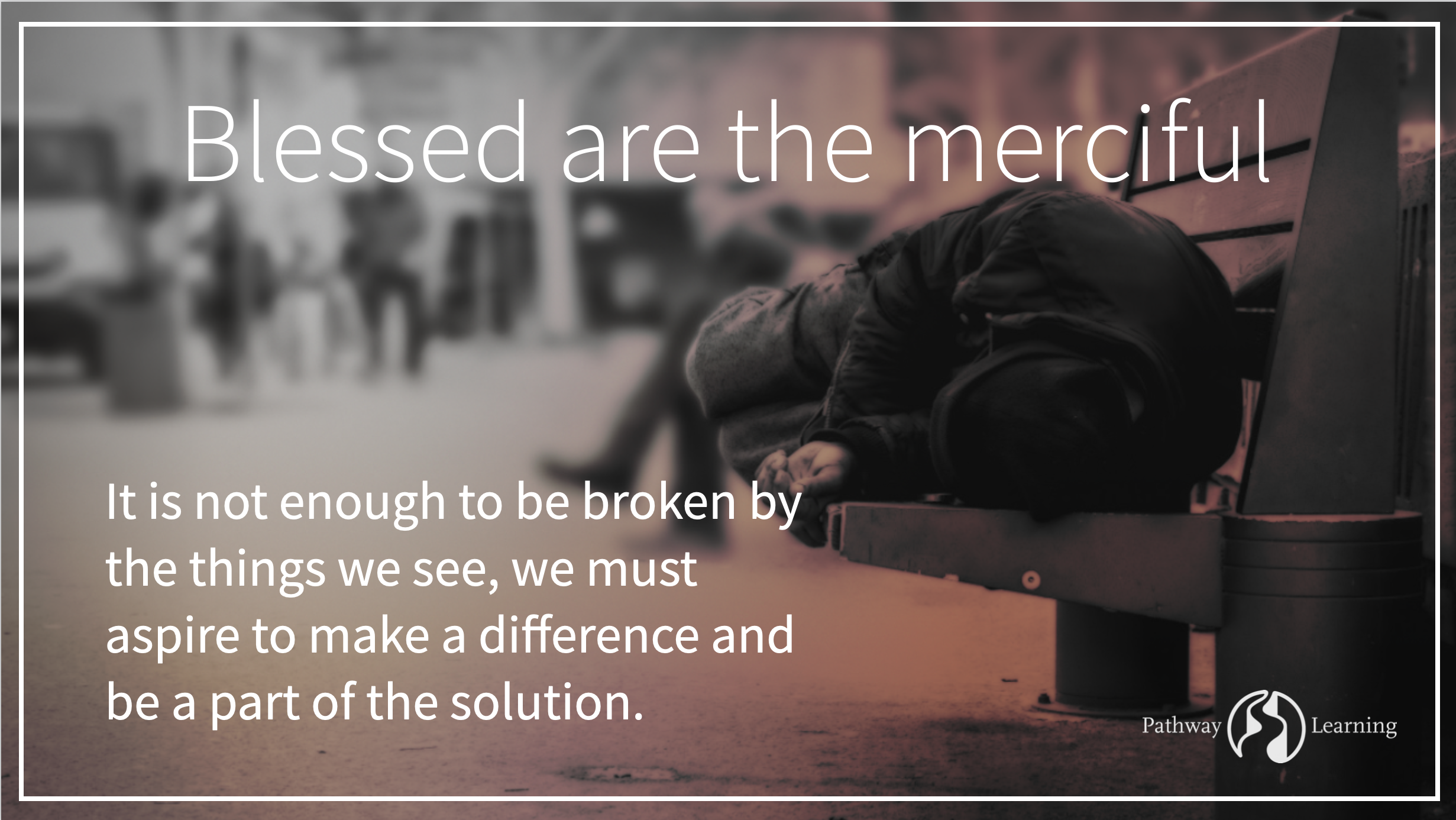
The New Testament echoes these Old Testament concepts and points us to the greatest display of God’s mercy in the person and work of Jesus Christ and the salvation God offers to the world through him. In the Sermon on the Mount, Jesus describes mercy as an essential mark of all those who are truly in his kingdom, “Blessed are the merciful, for they shall receive mercy.” (Matt 5:7)
In the Gospels we see Jesus strongly reprimanding the religious leaders of his day for emphasizing all kinds of religious activities but neglecting mercy. Quoting the prophet Hosea, Jesus tells them, “Go and learn what this means: ‘I desire mercy, and not sacrifice.’ For I came not to call the righteous, but sinners.” (Matt 9:13)
In Paul’s writings, he refers to the heirs of salvation in Christ as “vessels of mercy.” (Rom 9:23) He describes his privilege of being in gospel ministry as a display of God’s mercy (2 Cor 4:1). And he refers to mercy as a common blessing of one believer to another (2 Tim 1:16, 18) and often includes the hope of mercy in the opening greetings of his letters (1 Tim 1:2, 2 Tim 1:2).
So, what is a biblical understanding of mercy? Let’s look at four key marks of mercy found in Scripture:
1. Mercy is an attribute of God we are to reflect
First, mercy is an attribute of God he reveals to us in Jesus Christ that we are to reflect. Jesus said, “Be merciful, just as your Father is merciful.” (Luke 6:36). The Apostle Paul calls us to “be imitators of God” (Eph 5:1) and be conformed to the image of Jesus Christ (Rom 8:29). And just as mercy is not only what God does but who he is, so mercy is not only what we do, but who we are.
2. Mercy is the alleviation of suffering from broken relationships
Second, the essence of mercy is the alleviation of human suffering caused by the Fall of humanity into sin. Because of sin, mankind’s relationship with God was broken, causing all man’s other vital relationships for life and joy to be broken – including our relationships with ourselves, others, and creation.
The Scriptures teach that all the brokenness in the world is merely a symptom of the deeper problem of brokenness in these four relationships that lie at the heart of the human condition. As a result of sin, humanity is under God’s curse and our perfect world is now corrupt and broken, not just spiritually, but also socially, culturally, economically, and politically.
This is why there is so much suffering, poverty, disease, violence, and injustice in the world. And this is why the world is in such desperate need of God’s mercy to help alleviate this suffering and bring restoration of these broken relationships according to God’s design.
Although the focus of biblical mercy should be on helping alleviate human suffering in all mankind’s broken relationships, the Scriptures make clear that there is no act of mercy as great helping restore people’s broken relationship with God through Jesus Christ. No suffering can compare to eternal suffering in hell.
3. Mercy is the integration of word and deed
Therefore, biblical mercy includes the integration of word and deed, helping to meet both the spiritual and physical needs of people. Although we must acknowledge the priority of evangelism as a word-ministry, sometimes people are suffering so much physically they can’t hear your words until they experience your deeds of mercy.
Every person is created by God as a whole being with a soul and a body. In the resurrection of Jesus and the coming final resurrection of all his followers we learn that God restores humanity in both soul and body. Therefore, our ministries of word and deed should be seen as two sides of the same coin that often need to be held in tension in mercy ministry.
4. Mercy is a mark of true spirituality
Finally, the Bible presents the ministry of mercy as a vital mark of true spirituality. In Micah 6:8 the prophet describes the kind of spirituality the Lord requires of his people to please him, saying:
He has told you, O man, what is good;
and what does the Lord require of you
but to do justice, and to love kindness,
and to walk humbly with your God?
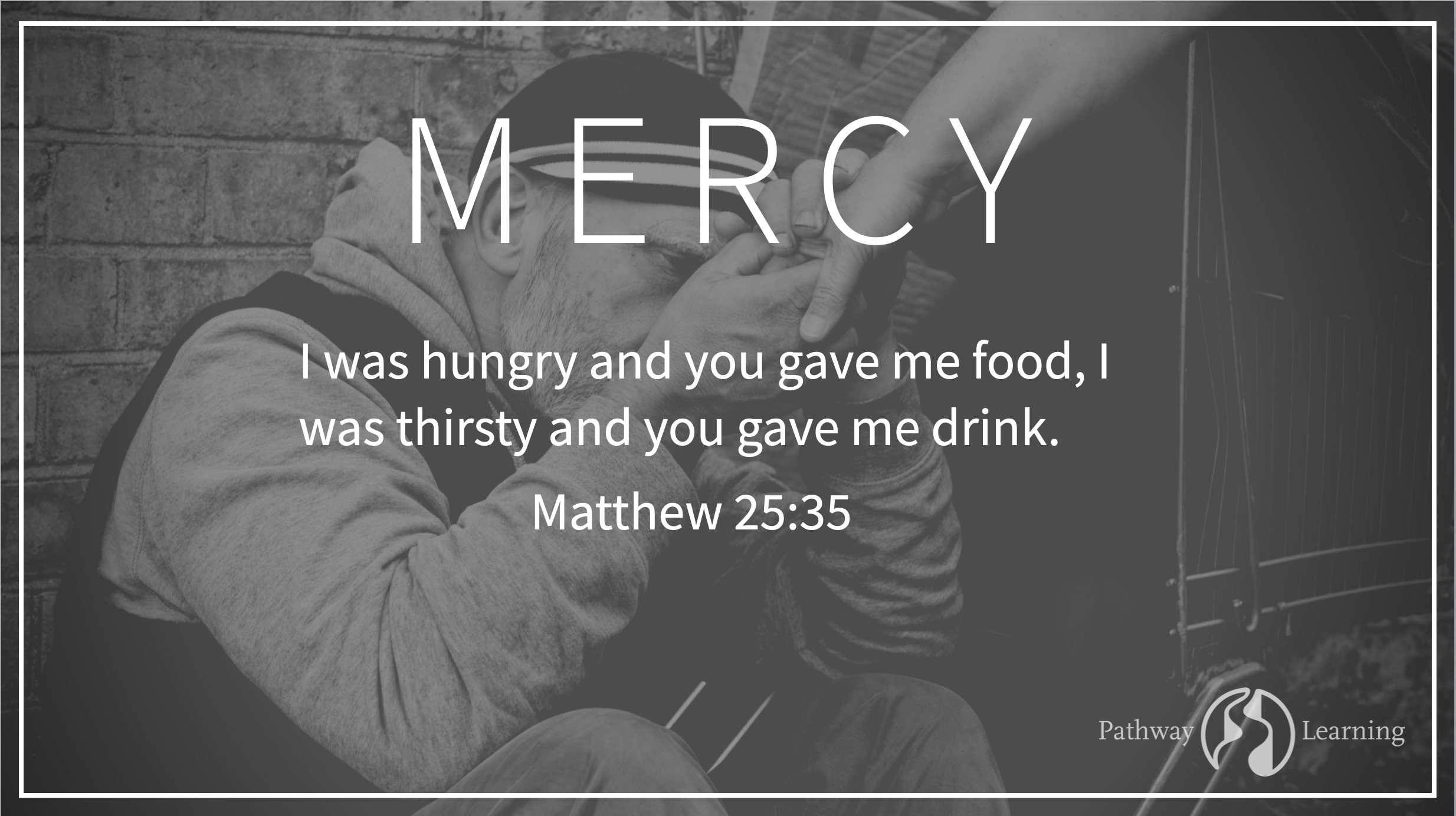
The word translated “kindness” is the Hebrew word hesed (חֶסֶד) that can also be translated as covenant lovingkindness or mercy. Here God commands us not just to show mercy but to love mercy as the Lord loves mercy. This means we are not only to give food to the hungry, drink to the thirsty, a warm welcome to the stranger, clothes to the naked, and visits to the sick and imprisoned. We are also to love and take great delight in doing these things.
Notice in this verse that true spirituality always manifests itself in two ways: outwardly and inwardly. Outwardly it’s revealed by doing justice and loving mercy. And inwardly it’s revealed by walking humbly with God.
The New Testament also teaches that true spirituality always reveals itself outwardly and inwardly. In James 1:27 we find a very clear description of true spirituality. James calls it “religion that is pure and undefiled before God” when he writes:
Religion that is pure and undefiled before God the Father is this:
to visit orphans and widows in their affliction,
and to keep oneself unstained from the world.
Notice again the outward and inward marks of what God considers true spirituality and how the outward acts are again mentioned first. The outward acts are visiting orphans and widows in their distress. And the inward acts are keeping oneself unstained from the world. Like the Prophet Micah before him, the Apostle James presents us with the ministry of mercy as a vital mark of true spirituality.
The Ministry of Mercy: Mercy Series 1 of 6
In Luke 10, Jesus’ story of the Good Samaritan reveals the heart of biblical mercy. This article explores why strong mercy ministries are essential for healthy churches and how God uses the church to bring gospel transformation to broken communities through both proclamation and compassionate service.
By Dr. Steven L. Childers
In Luke 10, Jesus responds to an expert in God’s law who was trying to trap him into saying something derogatory about Scripture. The man asks Jesus, “What shall we do to inherit eternal life?” Jesus answers by asking him a question: “What is written in the Law? How do you read it?”
The man responds, “You shall love the Lord your God with all your heart and with all your soul and with all your strength and with all your mind, and your neighbor as yourself.” Jesus replies, “You have answered correctly; do this, and you will live.” Jesus responds to the religious leader’s trap by putting him in a trap to show that he and the Jewish leaders are the ones who don’t keep God’s law to love God and their neighbors well.
“Trying to justify himself,” the man attempts to trap Jesus again with another question, “And who is my neighbor?” Jesus responds this time with his famous story of the Good Samaritan:
“A man was going down from Jerusalem to Jericho, and he fell among robbers, who stripped him and beat him and departed, leaving him half dead. 31 Now by chance a priest was going down that road, and when he saw him he passUped by on the other side. 32 So likewise a Levite, when he came to the place and saw him, passed by on the other side. 33 But a Samaritan, as he journeyed, came to where he was, and when he saw him, he had compassion. 34 He went to him and bound up his wounds, pouring on oil and wine. Then he set him on his own animal and brought him to an inn and took care of him. 35 And the next day he took out two denarii[c] and gave them to the innkeeper, saying, ‘Take care of him, and whatever more you spend, I will repay you when I come back.’ 36 Which of these three, do you think, proved to be a neighbor to the man who fell among the robbers?” 37 He said, “The one who showed him mercy.” And Jesus said to him, “You go, and do likewise.” Luke 10:30-37
Jesus is teaching that someone who truly loves God and others is like this Good Samaritan who is willing to give up his plans and risk his safety to provide costly, personal care to a total stranger of another social class and race. When Jesus tells us to “go and do likewise” he’s calling us to show our love for God and others by how we love those without housing, money, health care, etc.
We’re facing a serious problem today. Never has there been a time in history when there have been more churches and more professing Christians. And yet despite the remarkable spread of Christianity, spiritual darkness, cultural, and societal decay are reaching unprecedented levels.
Even where the church is growing most rapidly (in Asia, Africa and Latin America) the results are often inch-deep, mile-wide forms of Christianity with little or no true, lasting transformation of individuals, families and cultures. As a result, violence, poverty, disease, and gross injustice are on the rise around the world and in our communities.
Most of Christianity in our day has lost sight of its historic roots by often proclaiming a pragmatic, privatized, prosperity gospel that rarely results in: 1) authentic Christian conversions, 2) holistic discipleship, and 2) societal transformation. As a result, the Church of Jesus Christ is slowly losing its transforming influence on the world at large.
According to Scripture, the only ultimate hope for the world is found in a very foolish-sounding story called the Good News of Jesus Christ. It’s the Good News that 2000 years ago God’s kingdom entered our world in a new way through the person and work of Jesus to restore God’s fallen humanity and creation—as far as the curse is found.
This is the Good News that the Father's creation, ruined by humanity's sin, is now being redeemed by Christ and renewed by His Holy Spirit into the Kingdom of God. This is the Good News that through the birth, life, death, resurrection and ascension of Jesus, God has given him authority to form a New Humanity on earth made up of his people from every tribe, tongue, and nation who will repent, believe in, and follow Jesus Christ.
The Bible calls this New Humanity the Church through which the ascended King Jesus continues his ministry of word and deed on the earth today until he returns to make all things new. After Jesus revealed himself as the promised King, he promised, “I will build my church and the gates of hell will not prevail against it.”
The church is the primary means God uses to carry out his purposes on earth today and the only institution on earth Jesus promises to build and bless for the sake of the world. This is why the Apostle Paul’s ministry was not merely to proclaim the gospel in evangelism, strengthen Christians in discipleship, and care for the poor. His ultimate goal was always planting churches that would continue these essential ministries for generations after he was gone.
Paul writes, “God’s intent is that now, through the church, the manifold wisdom of God should be made known to the rulers and authorities in the heavenly realm.” (Eph 3:10). This is why church planting is the most effective evangelistic, discipleship, and mercy methodology under heaven.
History has proven that when churches flourish, people and societies flourish. When followers of Jesus gather every week for worship, preaching, prayer, and fellowship, they are renewed as they experience a foretaste of the kingdom to come.
When they leave, they scatter like salt and light into all their individual spheres of public life, where they evangelize the lost, serve the poor, and stand against all forms of injustice, bearing witness to the glory of their future home.
Our special focus in this course is on developing the church’s ministry of mercy to the poor, not only outside the church, but especially inside the church. Paul writes, “As we have opportunity, let us do good to everyone, and especially to those who are of the household of faith (Gal 6:10).”
A strong mercy ministry is necessary in every church no matter what socio-economic group makes up the church or the community. Biblical mercy is much broader than mere physical acts of charity or development for the materially poor. It seeks to alleviate not only suffering from physical brokenness, but all forms of spiritual, mental, emotional, and relational brokenness.
Since the church is the most effective mercy ministry method under heaven, the best thing we can do for the poor is to help establish a healthy, gospel-centered church in their midst to evangelize and disciple them out of poverty. In our next video, we’ll learn some key marks of mercy that can help individuals and churches be more biblical and effective in ministries of mercy.