

LEARN
Article Resources
Preaching Methods, Part 2: Christ-Centered Preaching Series 5 of 6
In Lesson Five of Christ-Centered Preaching, discover how to move from preparation to proclamation. Learn how to unify your sermon around one clear proposition, explain with purpose, craft contextual applications, connect every point to Christ, and engage the heart for gospel-driven transformation.
By Larry Kirk
Introduction: From Preparation to Proclamation
Last week in Part 1, we walked through a practical pathway and checklist for sermon preparation. We considered six foundational practices that together form a disciplined and repeatable approach to preaching:
Prepare yourself and your materials. Cultivate your own Christ-centered life. Read biblical theology. Listen to Christ-centered preachers.
Read and reflect on the text with redemptive sensitivity, looking for themes that point to God’s saving purposes.
Exegete the text in its original context.
Ask contextual and pastoral questions.
Construct a clear outline.
Highlight and hone the big idea.
Part 1 focused on preparation. Part 2 now moves from preparation to proclamation.
Once you have identified and refined the big idea of the text, how does that idea shape the sermon itself? How do you move from outline to living, Christ-centered proclamation?
In this lesson, we consider five essential practices:
Unify with a proposition
Explain with a purpose
Craft contextual applications
Connect to Christ and the gospel
Engage the human heart
1. Unify with a Proposition
Bryan Chapell calls it the proposition. Others call it the big idea, the burden of the passage, or the central theme. Whatever term you use, the principle remains the same: everything in the sermon must pull in the same direction.
Years ago, when I practiced jujitsu and judo, I learned that a smaller person can overcome a stronger opponent—not by relying on isolated strength, but by locking the entire body into one unified movement. When you apply a joint lock correctly, you do not use your arms alone. You bring your hips, your back, your legs—your whole body—into focused force on a single point.
That is what a sermon should feel like.
Your introduction introduces it.
Your main points develop it.
Your subpoints clarify it.
Your applications press it home.
Everything is brought to bear on one central proposition.
For example, in preaching a passage from 1 Peter built around two imperatives—“Be subject to every human institution” and “Live as servants of God”—a simple outline might be:
Be subject
Be servants
But what unifies those commands?
The central proposition is this: As followers of Jesus in a hostile culture, we must live as model citizens.
How?
By being subject.
By being servants.
Our primary posture toward government and culture is not red-faced confrontation but Christlike service. We silence ignorance not through rage but through doing good. When a sermon is unified, every explanation and every application reinforces that central burden.
2. Explain with a Purpose
Explanation is not an academic data dump. It is disciplined clarity in service of the big idea.
Yes, there are times when you must explain words like propitiation, justification, or sanctification. Yes, you may need to clarify historical background or theological nuance. But explanation must be selective and strategic.
Ask yourself:
What must my listeners understand to grasp the burden of this text?
What clarification will serve the proposition?
What details can I leave out?
If you spend twenty minutes wandering through technicalities that do not advance the main idea, you dilute the sermon’s force. The goal is not to impress people with what you know. The goal is to help them understand what God is saying.
Every explanation should move the listener closer to the heart of the passage.
3. Craft Contextual Applications
Application requires as much care as exegesis.
It is easy to say, “You should pray more,” or “You should give more,” or “You should be more loving.” But faithful application requires pastoral wisdom. Why do people struggle? What fears, idols, wounds, or pressures stand in the way? How does the gospel speak into those struggles?
Strong application answers four essential questions:
What?–What is the text calling us to believe, repent of, or do?
Where?–Where in real life does this confront us—our marriages, our parenting, our work, our leadership, our cultural moment?
Why?–Why should we obey? What gospel motivation fuels this call?
How?–How do we find the strength, the power, and the practical steps to obey?
Application that answers only “What?” often produces guilt.
Application that answers “What, Where, Why, and How?” produces gospel-shaped transformation.
A sermon is never delivered in the abstract. It speaks to real people in a particular congregation with unique needs and pressures. Wise application requires you to know your people.
4. Connect to Christ and the Gospel
Every faithful sermon must flow from and point back to Jesus Christ.
This does not mean forcing artificial connections. It means recognizing that every text stands within the unfolding drama of redemption and ultimately finds its fulfillment in Christ.
As you preach, you may “play the music” of the gospel quietly throughout—subtly reminding listeners of who Christ is and what he has done. And there may be moments when you intentionally turn up the volume and explicitly anchor the application in the finished work of Jesus.
When you call people to obedience, show them:
Christ’s obedience on their behalf
Christ’s forgiveness for their failure
Christ’s Spirit empowering their growth
Without Christ, application becomes moralism.
With Christ, application becomes worship.
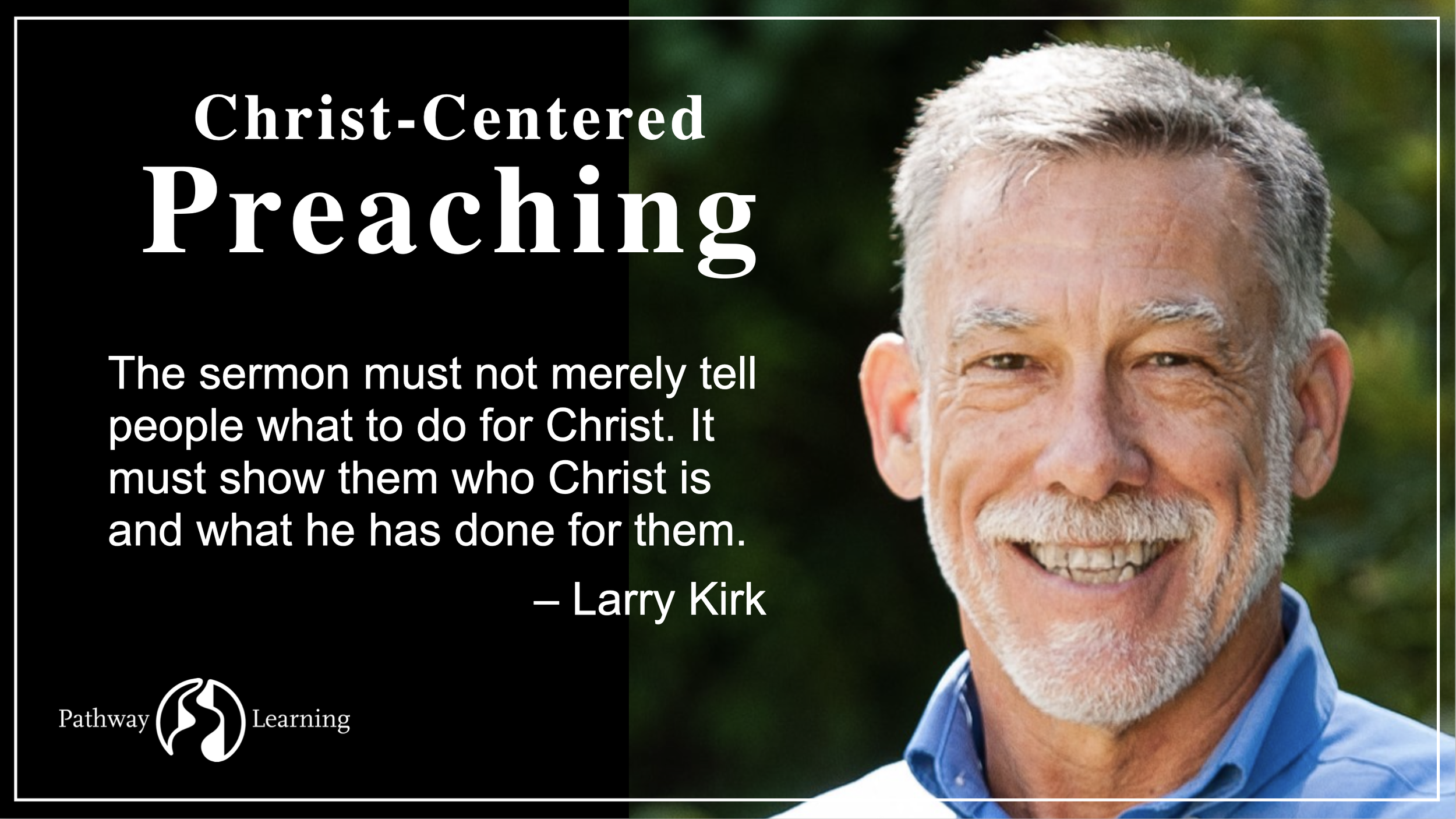
The sermon must not merely tell people what to do. It must show them who Christ is and what he has already done.
5. Engage the Human Heart
Preaching is not merely the transfer of information. It is an appeal to the whole person—mind, will, and affections.
The psalmist says, “Taste and see that the Lord is good.” It is not enough that people know God is good. They are called to taste his goodness.
So how do we engage the heart in non-manipulative, genuine ways?
Through well-chosen illustrations that illuminate rather than distract
Through stories that serve the text and expose its beauty
Through vivid language—metaphor, analogy, word pictures—that help listeners feel the weight and wonder of truth
Through pastoral vulnerability and appropriate passion
Sometimes engaging the heart means leaning in and allowing people to see how the text has first confronted and comforted you.
But we must guard against emotional manipulation. We are not trying to engineer feelings. We are seeking to faithfully present Christ so that the Spirit awakens holy affections.
Conclusion: Bringing It All Together
In this lesson, we have seen that:
Everything in a sermon must be unified around the central proposition.
Explanation must serve clarity, not complexity.
Application must answer What, Where, Why, and How.
Every sermon must flow from and lead to Jesus Christ.
The preacher must aim for the heart in genuine, Spirit-dependent ways.
When these elements come together, the sermon becomes more than a lecture. It becomes a unified, Christ-centered proclamation that explains the text, applies the gospel, and calls believers into joyful obedience.
As you prepare your next sermon, ask yourself: Is everything in this message pulling in the same direction?
If it is, then by God’s grace, your preaching will not only inform minds—it will transform lives.